
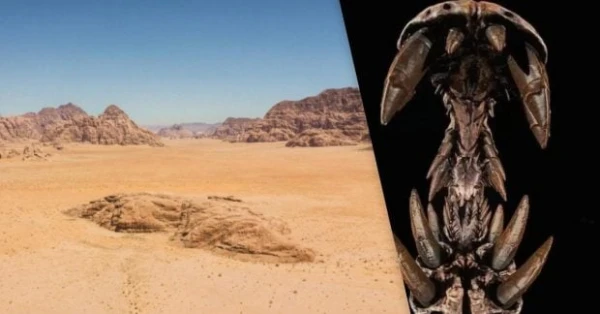
Spinosaurus mirabilis, astonishing researchers with its enormous crest, turned out to be a more terrestrial predator than previously thought, changing former theories about the life of these ancient reptiles.
Researchers have discovered a completely new species of dinosaur with an impressive crest resembling a blade. This ancient predator lived significantly farther from coastal waters than previously thought, calling into question established views of spinosaurids (Spinosaurus mirabilis) as entirely aquatic creatures, reports Daily Galaxy. A team of scientists led by Paul Sereno from the University of Chicago found the fossil in Niger in 2022, and after thorough analysis, reached a stunning conclusion: Spinosaurus mirabilis were much more terrestrial, preferring to hunt in inland waters rather than in the ocean.
Discovery in the Heart of the Desert
The story of this remarkable discovery began in 2019 when fragments of a crest and jaw bones were found in the vast expanses of the Sahara. Initially, researchers could not determine their origin, but in 2022, returning with an expanded team, they uncovered new fossils. It was then clear that they were facing a completely new species of dinosaur found in a remote area of Niger, far from ancient shorelines.
Paul Sereno, the team leader, recalls with excitement: "This find was so sudden and astonishing that it became a truly emotional event for the team. After one of the team members created 3D models of the bones we found, that’s when we realized the full significance of the discovery."
The most impressive feature of Spinosaurus mirabilis is its colossal curved crest. Scientists suggest that this crest was covered in keratin, similar to human nails, and may have had bright coloring, serving to attract mates or demonstrate strength to rivals.
A Turn in Ideas About Spinosaurids
For many years, paleontologists were convinced that spinosaurids led a predominantly aquatic lifestyle, spending most of their time in the water hunting fish. However, Spinosaurus mirabilis completely refuted this established theory. Its remains were found 500–1000 km from the ancient coastline, in a wooded area interspersed with rivers, which is completely inconsistent with the typical location of spinosaurus fossils, usually found along the coast.
Sereno vividly described this dinosaur as a "hellish heron," capable of diving into deep waters, but suggested that it primarily spent its time hunting in shallow waters. The scientist clarified: "This 'hellish heron' would wade into water up to 2 m deep on its sturdy legs. However, it likely spent most of its time stalking large fish in shallow waters."
The unique structure of the dinosaur's teeth, capable of tightly closing to hold slippery prey, indicates its high skill in hunting in shallow waters. This discovery further confirms that spinosaurids were not exclusively aquatic animals, but rather versatile predators.
















Leave a comment