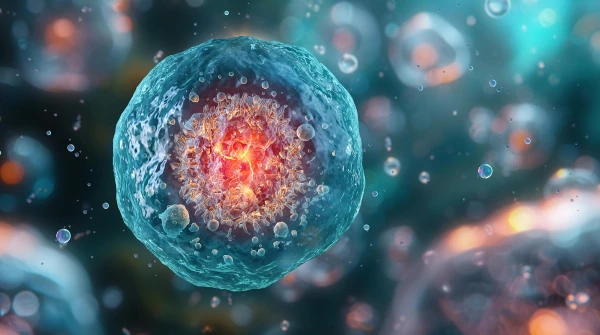
Researchers have discovered that aging cells accumulating in the body can be forced to self-destruct by suppressing the activity of the protein GPX4, opening new horizons in medicine.
Biologists have made an important discovery: aging cells that accumulate in the body can be induced to self-destruct. This can be achieved by suppressing the activity of the protein GPX4, which, as experiments on mice have shown, slows down tumor development. This sensational result was reported by the press service of the UK Medical Research Council (MRC).
MRC researcher Mariantonietta D'Ambrosio noted that previously, aging cells were not considered a threat in the context of cancer treatment, as they do not divide. However, studies have shown that these cells begin to actively release compounds over time that stimulate the growth of neighboring malignant formations. This discovery has become a powerful impetus for scientists in their search for methods to target and eliminate these cells, as reported by TASS.
A New Approach to Combating Aging
In modern medicine, senolytics are actively being developed—special drugs designed to combat cellular aging. British scientists have made a breakthrough by discovering an entirely new class of such compounds. They tested more than ten thousand different molecules on cultures of aging cells.
Four of these molecules triggered a previously unstudied form of cell death known as ferroptosis. This process represents the self-destruction of a cell caused by excessive accumulation of iron or aggressive oxidizers. Subsequent experiments confirmed that these molecules initiate ferroptosis by blocking the function of the protein GPX4, which normally protects cell membranes from oxidative stress.
The Key Role of Protein GPX4
Researchers found that aging cells are constantly under the influence of powerful oxidative stress. Without the protective function of the protein GPX4, they become vulnerable and die. Notably, a high level of oxidative stress is also a characteristic feature of many tumors.
Experiments on laboratory mice demonstrated that the new senolytics significantly enhance the effectiveness of standard chemotherapy. They were successfully used in the treatment of breast, prostate, and ovarian cancer, extending the lifespan of rodents by several weeks. Biologists view this discovery with great optimism, seeing enormous potential for future cancer treatment methods.
What Are Aging Cells?
Aging cells are those that have ceased to divide due to accumulated damage or telomere shortening. Some of them have a highly negative impact on the functioning of tissues and organs. That is why scientists are actively searching for effective methods for their complete elimination or, conversely, rejuvenation.