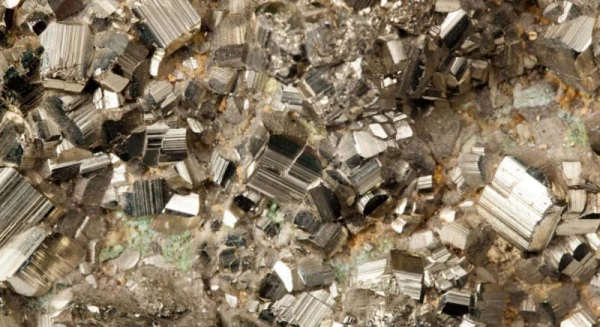
In ancient shales, among the mineral known as 'fool's gold,' scientists have discovered unexpected lithium reserves. This groundbreaking discovery promises to revolutionize the extraction of this valuable metal, making it more environmentally friendly and accessible, significantly reducing the cost of producing modern batteries.
The global scientific community is abuzz with a new discovery: significant deposits of lithium have been found in the mineral pyrite, which has long been considered an entirely useless waste product. This sensational study, conducted by West Virginia University, is reported by ScienceDaily.
As part of the project, scientists carefully examined fifteen samples of ancient shale that formed about 380 million years ago in the Appalachian basin. It is in this rock that pyrite, widely known as 'fool's gold' due to its deceptive luster, was discovered.
Experts were astonished to find that within this 'fool's gold' lies lithium – a metal that is absolutely essential for the production of modern batteries. Sedimentary geochemist Shelley Bhattacharya, a key participant in the project, emphasized that the discovery of such significant amounts of lithium in shale pyrite is 'unprecedented.'
She considers this discovery truly unique, as very little has been known about any connection between lithium and sulfur-containing minerals. 'I am trying to understand how lithium and pyrite might be related,' Bhattacharya shared in a press interview, expressing her scientific curiosity.
Scientists enthusiastically note that this innovative extraction method promises to be much more environmentally friendly compared to traditional mining. The use of industrial waste and already existing shale formations will allow for the extraction of valuable metal without the need to create new, destructive quarries.
According to current data, the demand for lithium is steadily increasing, driven by the global shift to electric vehicles and the active development of solar energy. Although the research is still in its early stages, it instills great hope for the development of more economical and environmentally friendly extraction methods.
'We can talk about sustainable energy without using a lot of energy resources,' concluded Shelley Bhattacharya, highlighting the potential of the discovery for the future of energy.