
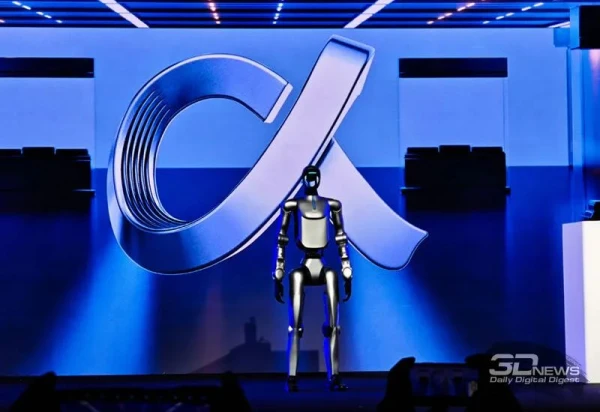
In Beijing, where an annual half marathon for robots is held, a real breakthrough occurred this year: humanoid machines not only massively took to the start but also showed incredible results. The Honor robot not only won but finished several minutes ahead of even the most outstanding professional athletes, setting a new standard for robotics.
Humanoid robots in China have long gone beyond ordinary festive shows, demonstrating their incredible capabilities. Now their autonomy and impressive kinematic abilities are being evaluated at the annual half marathon in Beijing, where they compete over a distance of 21 km. This year, the number of robot participants has significantly increased, and the winner, the Honor robot, finished several minutes faster than a professional athlete.
Impressive Progress
Just last year, the best result for robots over 21 km was 2 hours and 40 minutes, which was more than twice the time of an experienced athlete. However, this year at the Beijing Half Marathon, we witnessed a colossal breakthrough.
The number of robot participants soared from 21 to over a hundred, which is impressive in itself. But the real sensation was the Honor Lightning robot, which finished about 10 minutes ahead of the Ugandan athlete who set a world record in Lisbon a month earlier. This Chinese cyber-runner completed the 21 km in a phenomenal 50 minutes and 26 seconds, completely autonomously, without any remote control.
Moreover, about half of all participating robots this year no longer required human control. The Honor team proudly took all three prize places at the Beijing Half Marathon. Their humanoid machines, moving entirely on their own, not only won but also set new world records in robotics.
Secrets of Honor's Success
Honor engineers have been working on these robots for over a year, meticulously designing every detail. They equipped their creations with lower limbs measuring 90-95 cm, mimicking the structure of the best athletes, and integrated a liquid cooling system borrowed from their famous smartphones. Although at first glance the robots' fast running ability seems like just a spectacular trick, the technologies underlying it promise wide applications in other areas of robotics.
Meanwhile, on a separate track in Beijing, about 12,000 people — men and women — also ran their half marathon. For safety reasons, robots and humans did not intersect during these thrilling competitions.
Challenges and Prospects
Experts emphasize that the sports successes of humanoid robots have not yet caught up with their progress in the industrial sector. There, the flexibility of upper limbs, precise perception of the environment, and the ability to perform numerous complex operations are much more important. Therefore, the current victories of robots in the half marathon, while impressive, are more about enhancing the country's prestige than directly advancing industrial technological progress.














Leave a comment