

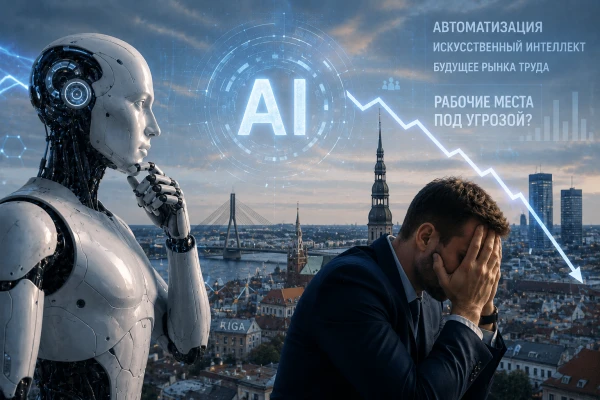
A recent report by Writer and Workplace Intelligence revealed a troubling trend: nearly a third of office workers actively obstruct the integration of artificial intelligence. Among Generation Z, this figure reaches almost half, indicating serious concerns about the future of their jobs.
Global corporations are actively implementing artificial intelligence, striving to maintain their market positions and remain competitive. However, as Naked Science notes, unexpected resistance is coming not from competitors, but from within — from their own employees. A recent study conducted by Writer and Workplace Intelligence revealed that a significant portion of office workers is deliberately obstructing the implementation of their companies' AI strategies.
As part of this large-scale study, 2,400 office employees in the USA, UK, and Europe were surveyed, including 1,200 senior executives. Surprisingly, 29% of respondents admitted to actively sabotaging the integration of AI in their organizations. This trend was particularly pronounced among Generation Z, where the share of "saboteurs" reached an impressive 44%.
What is AI Sabotage?
Researchers define sabotage as a broad range of actions aimed at undermining the implementation of artificial intelligence. This can include uploading important corporate information to public AI services or using unauthorized tools. Some employees also openly refuse to work with new technologies or actively attempt to present them in a negative light.
Moreover, some respondents intentionally falsified performance reports or deliberately degraded the quality of their work. Their goal was clear: to demonstrate that artificial intelligence does not deliver the expected benefits and even hinders productivity.
Reasons for Concern: Does AI Threaten Jobs?
Such employee concerns are by no means unfounded and have serious grounds. A recent report from Anthropic convincingly demonstrated that artificial intelligence is already theoretically capable of handling the overwhelming majority of tasks. This applies to key areas such as computer science, law, finance, and other important aspects of office activities.
With each new wave of automation and the development of AI technologies, more people, especially the younger generation, are beginning to worry seriously. They fear that their jobs may be at risk and that their skills may become obsolete.
Career Opportunities and Risks
However, not everything is so pessimistic: some employees, on the contrary, actively perceive new tools as a powerful catalyst for their career development. Managing Partner of Workplace Intelligence Dan Schawbel emphasizes: "In the past year, AI 'super-users' were promoted and received raises about three times more often than those who adopted such tools slowly."
The survey results also revealed another important aspect: 77% of executives are categorically unwilling to consider for promotion or leadership positions those employees who stubbornly refuse to acquire skills in working with artificial intelligence.
Moreover, nearly 70% of top managers (69%) confirmed their plans for workforce reductions directly related to the integration of AI. Nevertheless, Writer's CEO and co-founder May Habib asserts that truly successful companies do not limit themselves to layoffs. She emphasizes: "A greater effect comes from restructuring processes, where the capabilities of AI agents are combined with human work."














Leave a comment