Serious genetic anomalies make development impossible.
Biologists have pondered whether it is possible to create a clone of an animal that reproduces sexually. It turns out it is possible; the most famous example is the sheep Dolly. The method by which she and many other clones of various species came into being is called somatic cloning. The essence of it is that DNA is taken from a cell of an adult organism, for example, from a skin cell, and transplanted into an egg cell; the egg cell's own DNA is removed beforehand. DNA is contained in the nucleus, and in practice, it all comes down to removing the egg cell nucleus and replacing it with the nucleus from another cell (the egg cell also contains mitochondrial DNA, but this is disregarded in this case). The nucleus of a non-germ, or somatic, cell is transplanted, hence the name of the method.
As is known, an egg cell initially contains a single, or haploid, set of chromosomes. Upon fertilization, a second set of chromosomes from the sperm enters it, which gives rise to the development of the embryo. By transplanting a foreign nucleus into the egg cell, we immediately provide it with a double set of chromosomes necessary for full development, and it remains only to slightly stimulate the egg cell with special molecular signals, transplant it into a surrogate mother, and wait for the result.
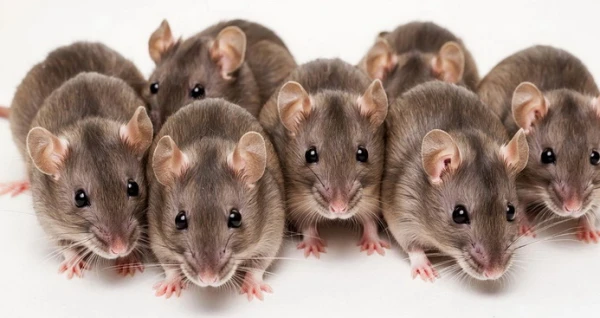
The cloning procedure can be repeated multiple times, taking both somatic cells and egg cells (if we are cloning a female) from the clones themselves. However, it turned out that this process is not infinite. Many years ago, researchers at Yamanashi University began an experiment with mice, aiming to see the limits of cloning, if any exist. In 2013, they reported on the twenty-fifth generation of clones and expressed hope that cloning could potentially be infinite. But recently, researchers published a new article in Nature Communications stating that after the twenty-seventh generation, problems began to arise with the clones, in particular, not all of them made it to birth. (It is obvious that in one generation of clones, there can be as many as egg cells we can fill with nuclei from somatic cells.) And the fifty-eighth generation became the last!
The clones experienced three times more mutations, and the frequency of major genetic changes increased in the last generations. Major mutations refer to chromosomal rearrangements, where entire pieces are transferred from one chromosome to another, copied, flipped in place, or even disappear entirely. Entire chromosomes can even disappear, as happened with one of the X chromosomes. Such serious genetic anomalies make the development of a clone impossible. The molecular mechanisms involved here warrant further study: major defects in DNA arise not only in connection with cloning, and although they are being actively researched, much remains unclear. Perhaps observations of clones will help clarify some fundamental questions.
A clone is an organism that exactly replicates the "original," that is, the one that was cloned. Clones arise through asexual reproduction, for example, through simple cell division (the simplest form of such reproduction). The offspring receives a complete copy of the genetic material from the ancestor, and although the environment may leave unique marks on the clone in the future, initially the clone is identical to the parent. In sexual reproduction, which is practiced by mammals, birds, generally vertebrates, and many other animals, offspring are produced by the fusion of genetic material from two parents. Two gametes combine into one, and the resulting single-celled embryo becomes increasingly multicellular, incorporating traits from both the father and the mother.
<iframe width="560" height="315" src="https://www.youtube.com/embed/MqMMDWNVzCU?si=mPDuSURXcrqX1LvU" title="YouTube video player" frameborder="0" allow="accelerometer; autoplay; clipboard-write; encrypted-media; gyroscope; picture-in-picture; web-share" referrerpolicy="strict-origin-when-cross-origin" allowfullscreen></iframe>