
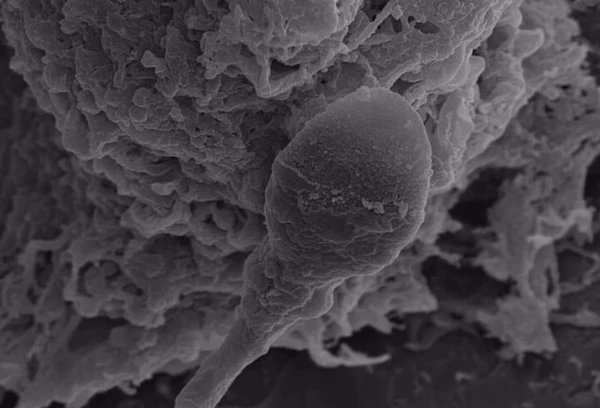
Results from a new study have uncovered another obstacle to human birth in space — the findings indicate that spermatozoa get lost in microgravity conditions.
The idea of giving birth beyond Earth is a relevant topic, and some believe it should become a "top priority" for the future of humanity. However, having children in space may actually be more complicated than previously thought: results from a new study show that spermatozoa can get lost in microgravity conditions, writes Focus.
A new study by a team from the University of Adelaide shows that the absence of gravity negatively affects the ability of spermatozoa to navigate in space. According to the lead author of the study, Dr. Nicole Macpherson, this is the first instance where scientists have managed to demonstrate that gravity is indeed an important factor in the ability of spermatozoa to move through the reproductive tract.
During the study, researchers observed a significant decrease in the number of spermatozoa that successfully navigated through a maze in microgravity compared to normal gravity conditions. It is noteworthy that the decrease was observed in all models, despite no changes in the physical movement of the spermatozoa. In simple terms, the data suggest that the loss of orientation in spermatozoa was caused not by a change in motility but by other factors.
For their analysis, the team took sperm samples from humans, mice, and pigs, which were then placed in a machine simulating weightlessness. The researchers then observed how spermatozoa moved through a maze mimicking the female reproductive tract and "got lost" significantly more often than previously thought.
As a result, the scientists observed a decrease in the number of eggs successfully fertilized by spermatozoa by up to 30%. Overall, fertilization rates declined over four to six hours of microgravity exposure. Moreover, prolonged exposure to microgravity proved even more detrimental and led to developmental delays. In some cases, this reduced the number of important cells that form the embryo at the earliest stages of development.
However, there is good news: the scientists found that adding the sex hormone progesterone helped a greater number of human spermatozoa overcome the negative impact of microgravity on navigation.














Leave a comment