The French automaker Renault plans to use humanoid robots at a greater number of its plants.
The German automaker BMW is already actively using humanoid robots for car manufacturing. Now, Renault has announced plans to deploy 350 humanoid AI robots called Calvin-40 at its existing plants over the next 18 months. This is one of the largest implementations of humanoid AI robots in active production within the automotive industry. This move demonstrates the growing trend of integrating humanoid robots into existing manufacturing environments, rather than just using them for research and demonstration projects, writes Focus.
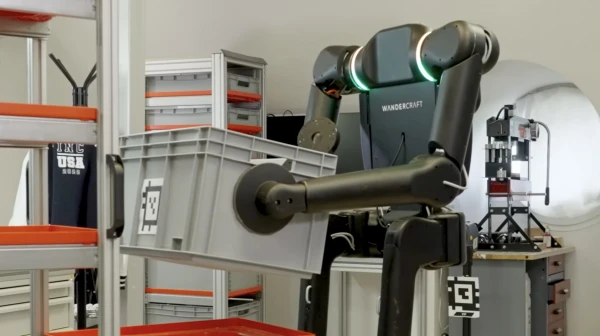
The Calvin humanoid robots are already operating at one of Renault's plants in France. Currently, they perform operations related to automotive tires, including lifting and moving them within the production process.
The new version of this robot, Calvin-40, is designed to work at existing plants. The AI robot is intended for moving heavy components, autonomous navigation within factory premises, and operating within workflows designed for humans.
Traditional industrial automation typically relies on stationary robotic cells, structured workflows, and specialized equipment. In contrast, humanoid robots are being developed to work in environments originally designed for humans. In such conditions, humanoid robots are expected to perform repetitive or physically demanding tasks that are difficult to automate with conventional industrial robots.
Humanoid robots can move around factory floors, transport materials, and interact with equipment and production lines without the need for significant changes to the factory infrastructure. Renault's approach suggests that humanoid robots can be used to complement existing automation systems rather than completely replace them.
The Calvin robots utilize AI-based perception and navigation systems, allowing them to operate in less structured environments compared to traditional industrial robots, which typically function in fixed and predictable workspaces.
Renault's planned deployment of hundreds of humanoid AI robots in automotive assembly processes within a relatively short timeframe indicates a movement towards the large-scale rollout of such robots in the near future.
<iframe width="560" height="315" src="https://www.youtube.com/embed/YddS-aI097Q?si=9frjeKh_dLhsp4Yg" title="YouTube video player" frameborder="0" allow="accelerometer; autoplay; clipboard-write; encrypted-media; gyroscope; picture-in-picture; web-share" referrerpolicy="strict-origin-when-cross-origin" allowfullscreen></iframe>