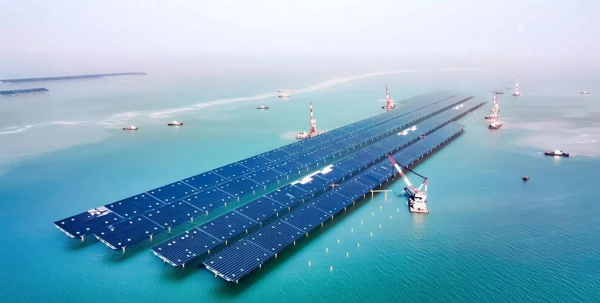
Water scarcity threatens billions of people worldwide, but Chinese floating solar power plants solve several problems at once.
China is home to the two largest floating solar power plants in the world: Dezhou Dingzhuang with a capacity of 320 megawatts and Three Gorges with a capacity of 150 megawatts. This is not an experimental project, but installations that effectively generate electricity while floating on reservoirs. These huge solar power plants produce clean energy and also shade the reservoirs to prevent water evaporation. Thus, they address two issues: the shortage of water and clean energy, writes Focus.
The technology of installing solar panels on floating platforms turns unused water surfaces into energy generators, while the solar panels do not occupy valuable agricultural land. These installations simultaneously preserve space for growing crops, generate clean energy, and provide water for the population.
Cooler solar panels produce more electricity while simultaneously reducing the problem of water scarcity. Floating solar panels provide shade, reducing evaporation from the surface of reservoirs. This is particularly beneficial in arid regions. Such a system offers a dual benefit: water remains in the reservoirs for agriculture and drinking, while the cooling effect increases the efficiency of the panels by up to 10%.
Rooftop solar panels heat up during the summer heat, but floating solar panels remain cooler due to the natural thermoregulation of water. As a result, more electricity is generated from the same amount of sunlight.
Covering just 1% of artificial water bodies on the planet could provide electricity for 400 million homes worldwide. The capacity of floating solar power plants in the world already exceeds 3 gigawatts. Utilizing even a small portion of existing reservoirs, lakes, and artificial water bodies could generate 400 gigawatts of clean energy.
However, environmental issues remain a concern. Changes in water temperature and habitat disruption worry ecologists, and material degradation can lead to the release of pollutants into the water.
At the same time, floating solar panels also reduce algal blooms by limiting sunlight penetration, creating cleaner water while simultaneously generating electricity.
China's leadership in floating power plants demonstrates how renewable energy can address issues beyond simply reducing carbon emissions.