
American scientists conducted hundreds of experiments on humans.
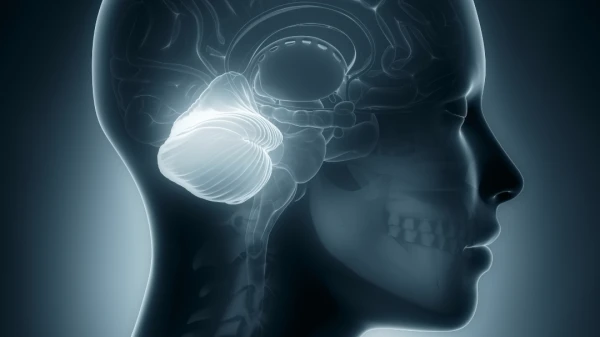
It is commonly believed that the cerebellum is primarily responsible for motor responses, balance, and basic coordination. However, American neurobiologists have discovered areas within it that consistently respond to speech stimuli. One of these areas turned out to be a "specialist" exclusively in processing linguistic information.
One recent study fundamentally changed the understanding of the centers in the human brain responsible for the formation and processing of speech. It turned out that the functions attributed to Broca's area are performed by the precentral gyrus.
Experts from several universities in the U.S. made another discovery related to the neural mechanisms of human speech: they found that the cerebellum plays a much more significant role in processing linguistic information than previously thought. The results of the study were published in the scientific journal Neuron.
The authors of the publication collected data on brain activity from 846 adults over 16 years. They used a non-invasive method of functional magnetic resonance imaging to visualize brain activity while volunteers performed various tasks. In total, the researchers conducted 1,033 scanning sessions and 26 experiments.
Participants in the study performed both purely linguistic (reading, listening) and non-linguistic tasks: solving mathematical problems, listening to music, and watching silent films. In some experiments, it was required to use speech and motor skills simultaneously, such as typing text and voicing it while typing.
In 754 participants (89%) of the study, four areas in the right posterior part of the cerebellum consistently responded to speech during both reading and listening. The reaction of one of them, LangCereb3, was specific to speech stimuli and reflected the language network of the cerebral cortex. The other three areas were less selective: they were activated during both linguistic and non-linguistic tasks.
As noted by the authors of the work, LangCereb3 could become a target for treating patients who have lost the ability to understand speech or speak due to stroke or aphasia. Furthermore, this will likely allow for the development of more effective therapy and rehabilitation strategies for those who experience speech difficulties after cerebellar damage.














Leave a comment