
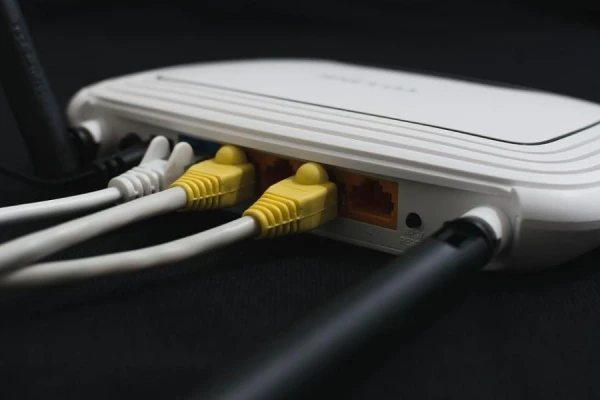
Scientists from the Karlsruhe Institute of Technology (KIT) have discovered a way to identify people by passively studying signals in radio networks. The method uses ordinary Wi-Fi devices. This raises serious privacy concerns.
When radio waves propagate through space, they interact with objects, creating characteristic "patterns" that can be captured and analyzed. These patterns are comparable to images created by cameras, but they are formed using radio signals rather than light.
"This technology turns every router into a potential surveillance tool," warns researcher Julian Todt. "If you regularly pass by a café operating on Wi-Fi, you can be identified there, and you may be recognized later, for example, by government agencies or companies."
"By observing the propagation of radio waves, we can create an image of the environment and the people present," says KIT professor Torsten Strufe. "It works similarly to a regular camera, the only difference being that in our case, radio waves are used for recognition instead of light waves. Thus, it does not matter whether you carry a Wi-Fi device or not."
According to him, turning off your own device does not provide protection; "it is enough for other Wi-Fi devices in your vicinity to be active."
Wi-Fi networks can now be found in most homes, offices, restaurants, and public places. These ubiquitous wireless networks could become an almost all-encompassing surveillance infrastructure with one alarming property: they are invisible and do not raise suspicion.














Leave a comment