
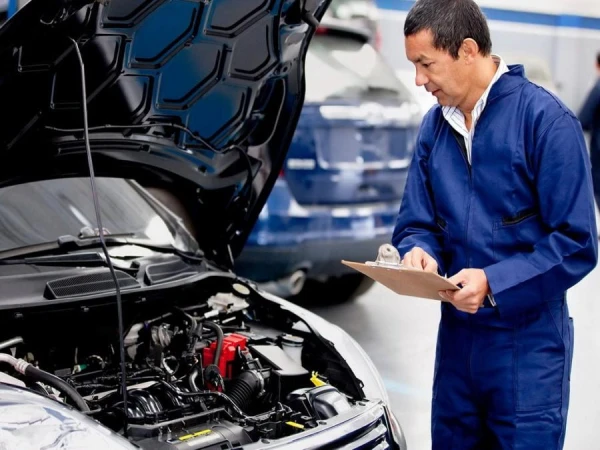
New diesel emissions checks — few vehicles are filtered out, standards in Latvia are not the strictest.
(Latvijas Radio sports correspondent and LSM.lv author) In Latvia, a new system for checking diesel vehicle emissions has been in place for the second year, which more accurately determines whether emissions meet established requirements, reminds LSM+ citing Latvijas Radio.
Last year, the system operated in a transitional mode, and even when deficiencies were identified, a vehicle could still pass inspection; however, this year there are no more leniencies: if a defect is found, the vehicle must be repaired. So far, only a few cars are being “filtered out” during inspections. At the same time, Latvia has chosen not to adopt the strictest emission testing standards.
The new diesel emissions check during the technical inspection is conducted more leniently than before: the probe of the measuring device is inserted into the exhaust pipe, and measurements are taken at idle. The system measures the number of particles per cubic centimeter of air and is applied only to diesel vehicles registered since January 1, 2013. The inspection procedure for older vehicles has not changed.
Ainars Abolins, head of the technical inspection supervision department at the Road Traffic Safety Directorate (CSDD), noted that Latvia did not implement the strictest possible standards.
“If we compare with other countries, Latvia has chosen, you could say, the safest option — we use the upper limit of the standard that is applied in Belgium and the Netherlands.
In Germany, this standard is lower, but even with our indicators, it is clear which vehicles require repairs and which do not.
Vehicles with properly functioning systems have nothing to worry about: their measurement results are quite low,” explained Abolins.
In Latvia, the permissible number of particles is one million per cubic centimeter, while in Germany, for example, it is 250,000, which is four times lower.
During trial inspections organized by CSDD, Latvijas Radio observed that technically sound newer vehicles may have a particle count even below 1,000. Even vehicles with mileage in the hundreds of thousands of kilometers usually have figures of only a few thousand particles — significantly below the permissible limit.
Most Diesel Vehicles Pass Inspections
According to Ainars Abolins, head of the technical inspection supervision department at CSDD, the overall situation remains calm, and most vehicles subject to the new requirements pass inspection without issues.
“During the transitional period, many were unprepared and did not pay attention to this — at that time, the problem was noted in about one in ten vehicles. Now the trend is declining: people are preparing in advance, visiting service centers, and it becomes clear where exactly the filters are worn out,” he said.
The diesel particulate filter, or DPF, is a relatively expensive component, and its replacement can cost from several hundred to several thousand euros. Therefore, illegal practices of removing the filter and altering the vehicle's software were previously widespread. While such vehicles could pass inspection before, this is now practically excluded.
Auto journalist Avotins clarifies that, as with other expensive repairs, there is a market for used parts for these filters: “There’s no need to despair immediately if you have a vehicle younger than 2013 and this DPF or particulate filter starts to fail or some technical problem arises; now you might have to pay 2,000–5,000 euros for a new filter. People in such situations are very resourceful, and a noticeable market for slightly used DPF filters has already formed. These filters from vehicles with mileage of about 150,000 kilometers and so on are available for half the price or even cheaper compared to a new filter.













Leave a comment