
The space top manager Dmitry Bakhanov has made similar statements before.
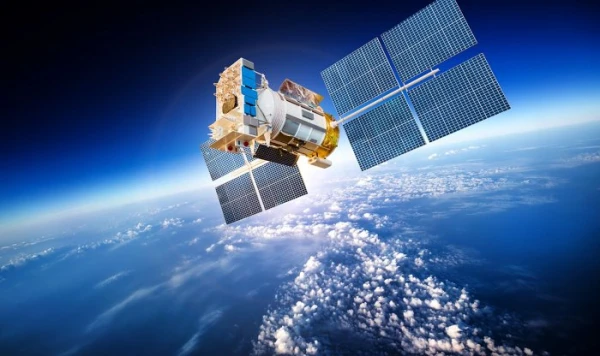
The head of the state corporation Roscosmos, Dmitry Bakhanov, stated that by 2027, Russia will deploy a low-orbit grouping of more than 300 satellites in orbit, intended to provide broadband internet access based on the Starlink system. According to him, serial production of ground terminals for connecting to this system will begin as early as 2026.
"It is very important to ensure communication in all areas that are not covered by terrestrial communication networks," he said on the air of Channel One. The head of Roscosmos also spoke about other Russian space developments, including the Zorkiy satellite, which captures images of the Earth from space, and the data obtained is then used to create digital maps, which are applied, in particular, in the operation of unmanned vehicles.
Dmitry Bakhanov has made similar statements before.
In September 2025, he mentioned that Russia would launch its own analogue of the Starlink satellite system within "the next two years." At that time, he claimed that the low-orbit grouping of three hundred devices as part of the first phase of the project would be deployed by the end of 2025; however, this did not happen. "We are deploying it from December this year with 300 devices — this is the first phase, and 900 devices — the second phase," Bakhanov stated at that time.
The project to create a Russian analogue of Starlink was announced by the Kremlin back in 2018. It was named Sphere and envisaged the formation of a satellite grouping of 600 devices, which was supposed to provide the country with internet and telephone communication. However, after Vladimir Putin began the war in Ukraine and sanctions were imposed, the implementation of the project was disrupted.
The Starlink system from Elon Musk's SpaceX already has more than 7,000 satellites in orbit and is actively used by Ukraine to ensure communication for the Armed Forces and civilian infrastructure. At the end of December, the Associated Press reported, citing intelligence data from NATO countries, that Russia is developing "zone action" weapons to target Starlink satellites, which could pose a threat to other orbital groupings as well.
At the same time, Russia continues to lose positions in the global space market. According to Deputy Prime Minister Denis Manturov, in 2025, Roscosmos carried out only 17 launches, while the United States conducted 181, and China 91. Thus, the number of Russian launches has remained at a minimal level for the second consecutive year since 1961, when Yuri Gagarin made the first flight into space.















Leave a comment