Over 10 million euros were spent on pharmacological experiments.
In Russia, about 1 billion rubles (over 10,000,000 euros) from the federal budget were spent on the development of a domestic drug for impotence, but no results were achieved. This follows from a report by the Accounts Chamber (AC), which was reviewed by Izvestia. According to the agency, the project, which was led by the Scientific Center for Biomedical Technologies of the Federal Medical-Biological Agency (FMBA), received funding from 2017 to 2025. It was aimed at studying the natural properties of musk from the musk deer — the secretion of the odoriferous gland of the deer — and creating new drugs based on it, in particular, medications for correcting erectile dysfunction, enhancing performance, treating traumatic brain injuries, and ischemic strokes.
As part of the project, it was planned to build a breeding farm for musk deer in Gorno-Altaisk, as well as a laboratory in the Krasnogorsk district of the Moscow region. Initially, it was planned that the release of finished products would begin in 2020, but the deadlines were constantly postponed. Thus, the breeding farm was put into operation only in June 2024, and the construction of the laboratory, where the drugs were supposed to be developed, has not yet been completed. At the same time, the drug "Muskuliv" for the treatment of impotence was developed using raw materials purchased on the market, rather than obtained from the breeding farm. Clinical studies were conducted in private medical institutions instead of federal ones, the AC report states.
As a result, the Scientific Center for Biomedical Technologies of the FMBA did not create a closed production cycle for domestic drugs from musk deer. Moreover, it changed the project plan and decided to develop three dietary supplements (nutraceuticals) instead of three drugs. At the same time, according to the AC, the musk obtained at the breeding farm, as well as the rights to register and produce the drug "Muskuliv," are planned to be transferred to the industrial partner of the project — Bryntsalov-A JSC. This company specializes in drug production and releases about 100 medications. It is owned by former State Duma deputy Vladimir Bryntsalov.
"Following the audit, the Accounts Chamber sent a report to the head of state, which noted the ineffective expenditure of federal budget funds allocated for the implementation of the project," said AC auditor Sergey Mamedov. The agency also appealed to the Prosecutor General's Office with a request to take measures regarding the identified violations. In addition, the AC recommended that the management of the Scientific Center for Biomedical Technologies of the FMBA check for violations, hold responsible officials accountable, and recover penalties from contractors for delays.
The musk from the musk deer, which is indicated as the basis for the developed drug "Muskuliv," acts more like a dietary supplement than a medication, making it difficult to call it an alternative to such means as "Viagra" and its analogs, says Professor, immunologist Andrey Prodeus. "If they spent money on its development, they should publish clinical research with this data. A medical drug must have a clear mechanism of action. However, such means are usually registered as dietary supplements because much stricter requirements are imposed on drugs," noted Prodeus.
Natural remedies cannot compete with synthetic drugs due to the inability to accurately calculate dosages, says urologist and andrologist Vladislav Gladychev. After the discovery of sildenafil, natural remedies have taken a back seat, as there are already effective drugs on the market, while biological supplements are often chosen by those who are not ready to see a doctor, concluded Gladychev.
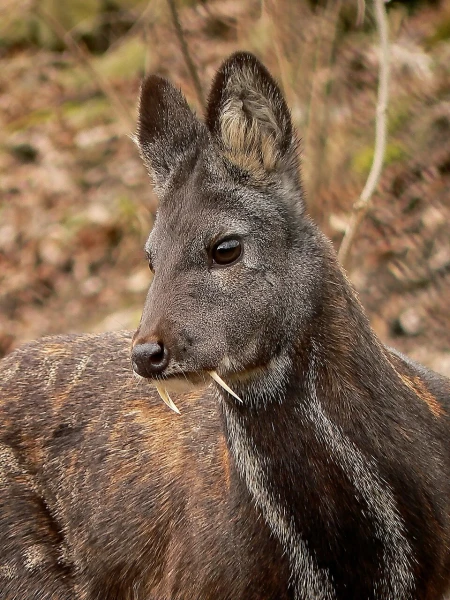
The musk deer, or Siberian musk deer (Moschus moschiferus), is a small ungulate deer-like animal, a representative of the family Moschidae. On the belly of the male musk deer is a musk gland filled with a thick, sharply smelling substance of brownish color. An adult male contains 10–20 g of natural musk in one gland — the most expensive animal-derived product.
The chemical composition of musk is quite complex: fatty acids, wax, aromatic and steroid compounds, complex esters of cholesterol. The main carrier of the musky odor is the macrocyclic ketone muscone. The volatile components of musk carry information about the age and condition of the male and can accelerate estrus in females.
The first mention of musk in Europe dates back to 390 AD. Medieval doctors Ibn Sina and Serapino were aware of it. In the 13th century, Marco Polo noted the presence of particularly valuable musk in the country of Eringul, which was apparently located in modern Mongolia or Western China. In the East, musk was added to medicines for melancholy and was also carried in pouches on the chest to prevent the evil eye and spoilage. Musk was also widely used by Arab and Tibetan folk healers as a means to enhance male sexual potency.
Musk is still widely used in Eastern medicine today. In China, it is included in the composition of more than two hundred prescriptions for medicinal products.
In Europe, musk as a medical product does not enjoy particular success, but it has found another application — in the perfume industry as a fixative for scents.
In addition to the musk gland, male musk deer have glands on the inner surface of their tails that secrete a substance with a sharp "goat-like" odor. During defecation, the feces come into contact with the gland, acquiring this smell.
In the mid-20th century (1950s), the Chinese government organized the establishment of the first farms for breeding musk deer. In 1958, such farms were established in Sichuan Province (Duzhiyang Farm, Barkam Farm, Kanding Farm), as well as in Anhui Province (Fuziling Farm) and Shanghai Province (Zhenping Farm). Until 1980, the survival rate of musk deer on farms was very low, and wild musk deer had to be constantly captured to replenish the population of animals on the farms. Furthermore, despite the low trauma of collecting musk from musk deer, there were reports of animal deaths on some farms.
Animals are captured using stationary box traps, which eliminates the development of a defensive reaction in the animals towards humans as a dangerous stimulus. Food bait — lichen or grain — is used to attract musk deer into the trap box. The captured animal is transferred to an immobilization box, the design and size of which do not allow the animal to move. The male is then anesthetized using an injection of xylazine in combination with ketamine. Immobilization and sleep last an average of 40 minutes, and full recovery of the animal's motor activity occurs after four to five hours. Before extracting the musk, a silver spatula with a groove is inserted into the pouch, through which the secretion of the gland is expelled.
After the musk is collected, the immobilized male is kept in a special box during this time. This method has gained particular popularity in the Middle East, where black musk is the most popular men's fragrance. The scent is sharp, pungent, and persistent.