
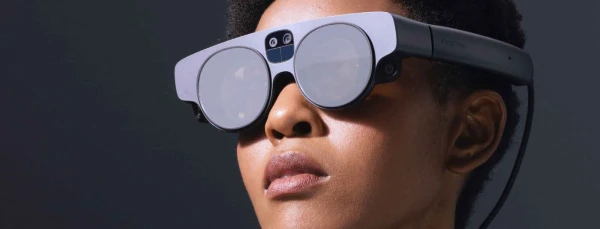
It is sufficient to activate a small number of neurons to trigger a chain reaction.
The brain constantly interprets and supplements information coming from the senses. This is how it forms a coherent and useful picture of reality. Researchers have figured out how the brain creates its own version of what is happening.
A study published in Nature Neuroscience confirmed that the perception of reality is an illusion created by the brain based on personal experience and evolutionary mechanisms. The primary visual cortex (area V1) is not just a "receiver" of visual data, but an active filter that interprets signals from the eyes and dictates the final picture.
According to scientists, this architecture of the brain allows for instant decision-making based on how it perceives the surrounding world. Otherwise, it would spend too much time recognizing vital stimuli—such as danger signals.
How the Brain Interprets Reality
A group of scientists led by Professor Hyeon Shin, an associate professor in the Department of Neurobiology at Seoul National University, conducted an unusual experiment: using ultra-precise lasers, they targeted a tiny area of the brains of six mice. The goal was the primary visual cortex—the "entry gate" where information from the eyes arrives. The researchers wanted to find out if they could make the brain see an object that does not exist simply by activating the right cells.
What This Means
Illusions are born instantly. It was previously believed that the "completion" of reality occurs at deep levels of the psyche. It turns out that the brain begins to distort data in favor of familiar images at the very first moment of signal processing.
Reality is subjective. Perception is the result of the brain's "inferences." It combines disparate visual signals and, relying on past experience, creates a plausible picture.
Why Do We All See the World Similarly?
Humans see outlines where there are none because the brain is accustomed to the fact that in nature, lines and edges usually form the boundaries of real objects. This mechanism is present in all creatures: from bees and sharks to humans. We share a common "predictive code" that helps us survive.
As noted by James Hyman, a psychology professor at the University of Nevada, Las Vegas (USA), the brain does not need a "true" picture of the world—it needs a useful one. A monkey does not have time to analyze the texture of a branch; it needs to instantly understand that "brown is a branch to grab onto."
The brain is incredibly economical. The study showed that it is sufficient to activate a small number of neurons to trigger a chain reaction throughout the brain and stimulate a full sensory experience. This allows for instant recognition of familiar objects with minimal effort.
Is It Possible to See the World "Honestly"?
Theoretically, to see reality without distortions, one would need to disconnect feedback in the brain—the very internal voice that "suggests" what a person is seeing. However, according to Professor Shin, this is impossible. The brain forms assumptions about what is happening in order to react without delay. Without this, the system would simply stop functioning. Therefore, a person is doomed to see not the world as it is, but its convenient version.
The Main Point
The brain does not "photograph" reality; it constructs it by supplementing missing data. Even at the very early stage when a stimulus hits the visual cortex, it filters and interprets signals and instantly creates illusions. It is enough to activate a small number of neurons to create a full sensation. People see the world similarly because everyone has a common evolutionary mechanism for recognition.
The brain values utility over truth, in order to quickly identify danger or an object. It is impossible to see true reality—without interpretations, the brain does not function.
Important Research
Your brain creates its own version of reality—and it is this version that helps you survive.
The completion of a repeating pattern stimulates neocortical representation of sensory data.
Echoes of memory: vivid recollections activate the sensory cortex of the brain.















Leave a comment