Due to systemic shortcomings, the flight had to be postponed for a year.
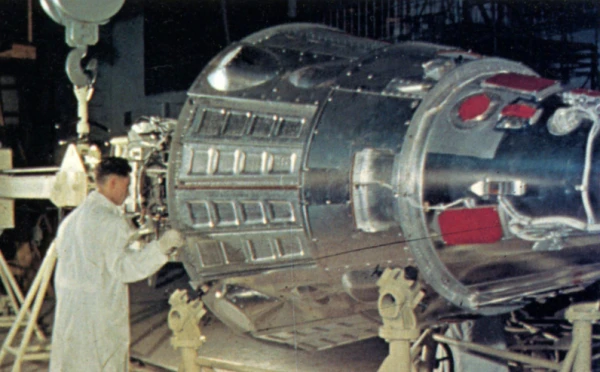
Initially, Sergey Korolev and the Soviet leadership did not plan to launch a simple metal sphere into space. In January 1956, an ambitious plan was approved: to launch a heavy scientific laboratory into orbit - "Object D".
This was a true giant weighing over a ton (from 1000 to 1400 kg). On board, they planned to place 300 kg of equipment to study the ionosphere, the Earth's magnetic field, and cosmic radiation.
Keldysh enthusiastically engaged in the work and from December 1955 to March 1956 held a series of meetings with scientists who were interested in studying near-Earth space in one way or another. Each meeting was dedicated to one issue: cosmic rays, the ionosphere, the Earth's magnetic field, and so on. Three questions were discussed: what an artificial satellite could provide for this area of science, what instruments needed to be placed on it, and which scientific group would take on their design.
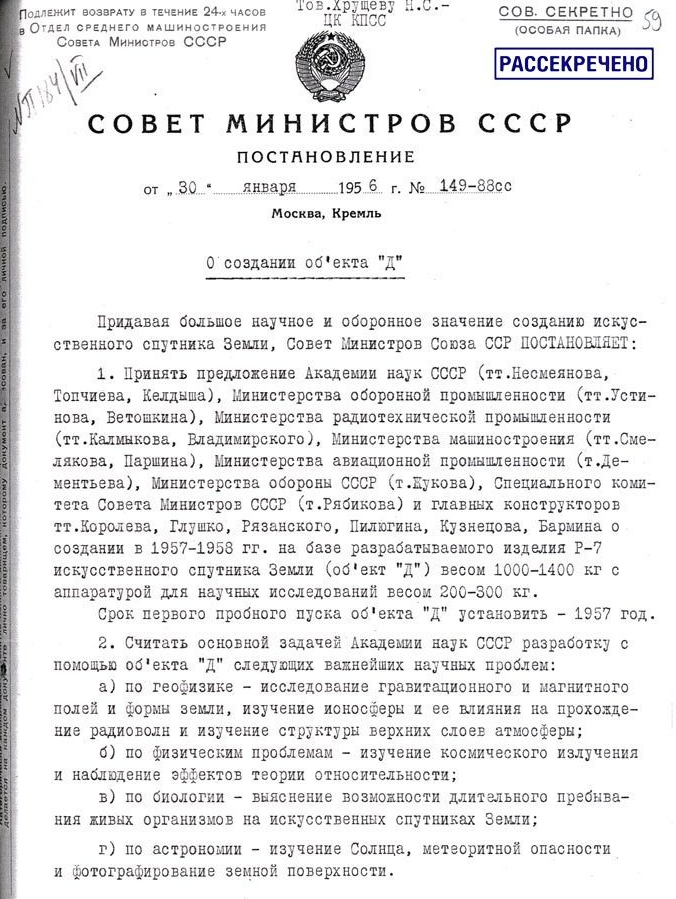
The serious approach to the matter contributed to the fact that on January 30, 1956, a resolution of the Council of Ministers No. 149-88 "On the creation of object 'D'" was adopted. It stated, in particular:
"To accept the proposal <…> to create in 1957-1958 on the basis of the developing product R-7 an artificial Earth satellite (object 'D') weighing 1000-1400 kg with scientific research equipment weighing 200-300 kg.
The deadline for the first test launch of object 'D' is set for 1957."
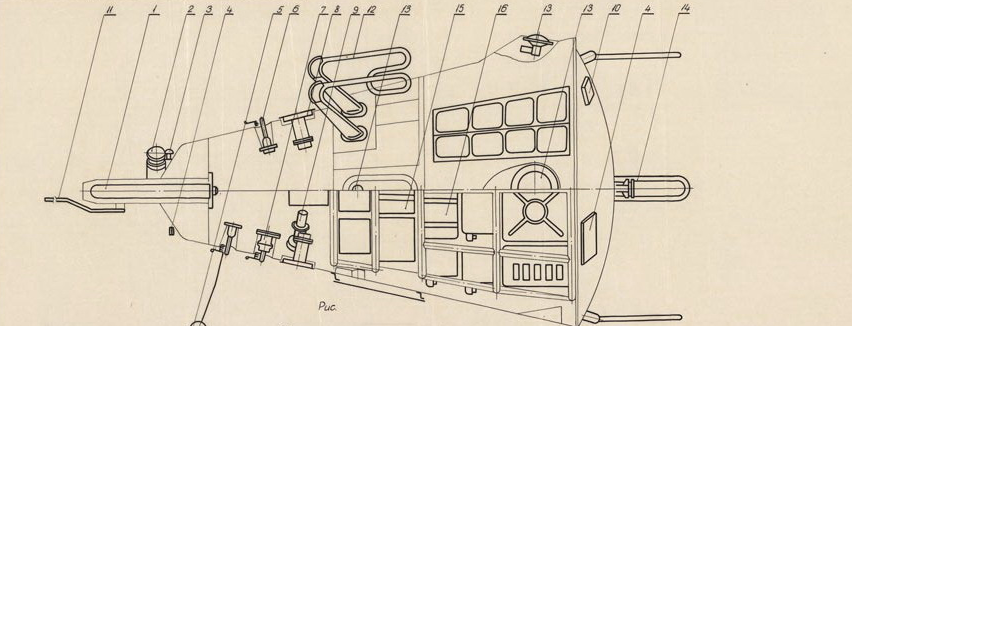
Having received the long-awaited resolution, Korolev immediately began to implement his plans. By July 1956, the preliminary design of object 'D' (product 8K71D) was ready. After considering various options, they settled on a conical shape with a spherical bottom. Specifically for the launch of the satellite, the R-7 rocket (8K71) was upgraded to version 8A91, which differed from the original by the boosting of engines (including control chambers). The material part was manufactured by Experimental Plant No. 88 of OKB-1.
In the fall of 1956, it became clear that the planned satellite launch was under threat of failure due to difficulties in creating scientific equipment. A note titled "On the work on object 'D'" was sent to the Central Committee of the Communist Party of the Soviet Union on September 28; it outlined the content of Keldysh's report at a meeting of the Bureau of the Presidium of the Academy of Sciences. Among other things, the academician noted:
"It should be emphasized that a number of ministries, for example, the Ministry of Radio Engineering Industry, significantly delays the production and delivery of various products and materials.
The situation is particularly tense regarding the use of semiconductors on object 'D' and the creation of a silicon solar battery as a power source for the equipment and telemetry. The Ministry of Nonferrous Metallurgy of the USSR and the Ministry of Chemical Industry significantly delay the supply of pure silicon and quartz.
Among the shortcomings of the work of the Special Commission under the Presidium of the Academy of Sciences of the USSR on object 'D', it should be noted that to date, astronomers have not been involved in optical observations of object 'D' and proposals for the small object 'D' have not been prepared.
In addition, the Special Commission delayed the issue of coordinating the technical specifications for the equipment for photographing the Earth's surface."
The idea arose to postpone the launch date to April 1958. Such a long delay was categorically unacceptable to Korolev, and then he made a "voluntaristic" decision that became historic. On November 25, OKB-1 proposed the development and launch in April-May of the following year of a "Simple Satellite" (object PS-1) weighing up to 100 kg. Designer Boris Yevseyevich Chertok recounted in his memoirs the words of Konstantin Davidovich Bushuyev:
"SP (Sergey Pavlovich) gathered our entire team and suggested temporarily stopping work on 'object D', and everyone should make a 'simple satellite' in the remaining month 'even if it’s on our knees'. We already calculated with the ballisticians that we could launch about 80 kilograms into orbit with an apogee of 1000 kilometers. SP believes this will be a sensation. We need to not only make this football but also create a fairing and a special separation system for it. <…> SP terrorizes us with messages that someone throws at him or that he invents himself, allegedly the Americans announced that they would launch their satellite under the 'Vanguard' program in October. Keldysh believes they can launch no more than 10-15 kilograms, but they will make a lot of noise."
The new initiative was approved, and on February 15, 1957, a resolution of the Council of Ministers No. 171-93 "On measures related to the conduct of the International Geophysical Year" (approved by the resolution of the Presidium of the Central Committee of the Communist Party of the Soviet Union No. P76/III) was issued, which provided for the launch of a simple satellite into orbit, checking the possibility of observing the satellite and receiving radio signals from it. An important point - the launch of object PS-1 was allowed only after one or two successful launches of the R-7 rocket.
The management of the design and manufacture of the lightweight version of the satellite at OKB-1 was entrusted to two engineers - Mikhail Stepanovich Khomyakov and Oleg Genrikhovich Ivanovsky. The radio transmitter was designed by Konstantin Iosifovich Gringauz and Vyacheslav Ivanovich Lappo. Special signals for the transmitter were devised by Mikhail Sergeyevich Ryazansky. The nose fairing of the rocket, which protected the satellite from atmospheric effects during the launch phase, was designed by a group led by Sergey Osipovich Okhapkin.
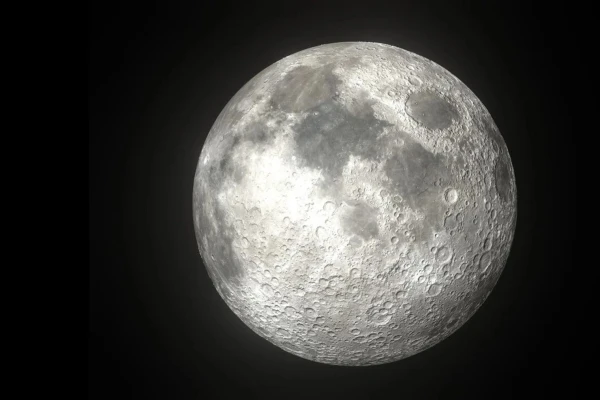
The satellite appeared very simple in design, but it was being created for the first time; there were no ready analogs of an orbital artificial object in technology. Quite quickly, the designers concluded that PS-1 should be made in the shape of a sphere. The spherical shape allowed for the most complete use of the internal volume with a smaller surface area. Korolev insisted on the spherical shape - probably, he was inspired by the image of a "small moon".
Everyone who worked on the satellite at that time later noted that the chief designer attached special importance to the aesthetics of the first spacecraft: the aluminum sphere was polished to a pure shine and placed on a velvet-lined pedestal. Korolev foresaw that PS-1 would become one of the symbols of the 20th century, appearing on stamps and medals, postcards, and monuments, so he demanded maximum expressiveness with elegant simplicity in its appearance.
As for object 'D', it was sent into orbit on May 15, 1958, under the name "Third Artificial Satellite" and at that time became the largest scientific achievement of the USSR.
<iframe width="560" height="315" src="https://www.youtube.com/embed/1CqDeFGBz-g?si=yUyi6lj7yQ0sDLSR" title="YouTube video player" frameborder="0" allow="accelerometer; autoplay; clipboard-write; encrypted-media; gyroscope; picture-in-picture; web-share" referrerpolicy="strict-origin-when-cross-origin" allowfullscreen></iframe>