
The genetic heritage turned out to be distributed unevenly.
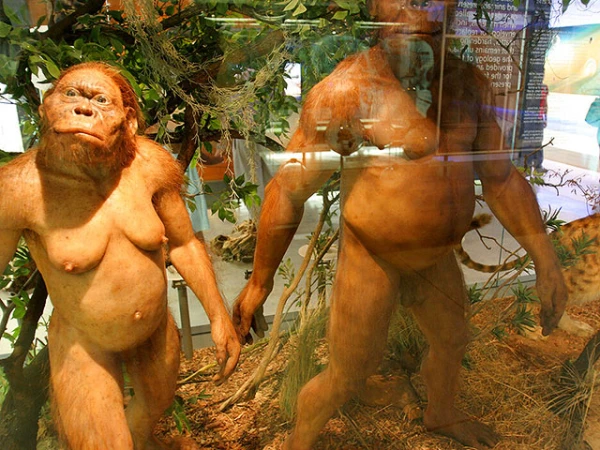
Tens of thousands of years ago, modern humans moved north and encountered their ancient relatives – the Neanderthals. Contacts occurred between the two species, and sometimes they formed mixed unions. New genetic data has shown a significant bias in these connections: most often, it involved unions between Neanderthal men and modern human women.
According to scientists, this model of interbreeding may explain why traces of Neanderthal DNA are almost absent in the human X chromosome. "The ancestors of modern humans formed in Africa, while the ancestors of Neanderthals evolved and adapted to the conditions of Eurasia," explained Sarah Tishkoff, a professor of genetics and biology at the University of Pennsylvania and the lead researcher. However, she noted that this separation was not final. For hundreds of thousands of years, groups of people moved into areas inhabited by Neanderthals and then returned. During such encounters, mixed unions occurred, and the parties exchanged segments of DNA. As a result, modern humans of non-African descent typically retain a few percent of Neanderthal genetic heritage, while African populations generally have a lower proportion.
Tishkoff points out that it is difficult to determine how many times such contacts occurred, but in her opinion, they happened more often than previously thought. Moreover, Neanderthal DNA in the genome of modern humans is distributed unevenly. This is particularly noticeable on the X chromosome, where there are regions almost devoid of Neanderthal ancestry – so-called "Neanderthal deserts."
A new study published in the journal Science proposed a different explanation for this phenomenon. Scientists analyzed the DNA of modern humans found in three Neanderthals – Altai, Chagyr, and Vindija – and compared it with genetic data from sub-Saharan African populations that lack Neanderthal heritage. If there were biological incompatibility between the species, traces of modern human DNA would also be absent on the X chromosomes of Neanderthals. However, the results showed the opposite: their X chromosomes contained 62% more human DNA than the other chromosomes. This essentially mirrors the distribution pattern of Neanderthal DNA in modern humans.
Since women have two X chromosomes while men have only one, it is important to determine who was the father and who was the mother. If unions between Neanderthal men and modern human women occurred more frequently, then fewer Neanderthal X chromosomes would be preserved in the human population, whereas in the Neanderthal population, more human X chromosomes would accumulate.








Leave a comment