
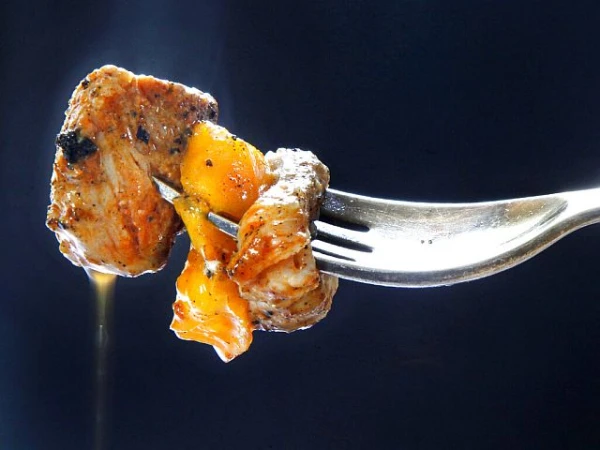
Our reactions to food stimuli may function like habits.
Researchers from the University of East Anglia may have come closer to explaining why it is so difficult for us to resist cookies, even when we are already full. A new study shows that the human brain continues to respond to appealing food stimuli even after the feeling of hunger has been satisfied.
In fact, the feeling of fullness does not completely turn off the brain's response to appetizing food. This suggests that food signals can provoke overeating even in the absence of hunger. The study involved 76 volunteers, whose brain activity was monitored using electroencephalography (EEG) during a game related to food – candies, chocolate, chips, and popcorn.
In the middle of the experiment, participants were offered a portion of one of the foods until they no longer wanted to eat. According to the researchers, the volunteers did feel full – they reported a decrease in appetite, and their behavior indicated that food no longer interested them. However, the brain showed a completely different picture. Electrical activity in the areas of the brain responsible for reward continued to react strongly to images of food that had already ceased to be desirable, even after the participants were completely full.
The results of the study indicate that our reactions to food stimuli may function like habits – automatic, learned responses that have developed over years of pairing certain foods with pleasure.
The scientists also found no correlation between a person's ability to make conscious decisions and how resistant the brain is to the decreased attractiveness of food. This suggests that even people with strong willpower may be susceptible to automatic neural responses.














Leave a comment