
The secret to success lay not in the number of trades, but in their quality.
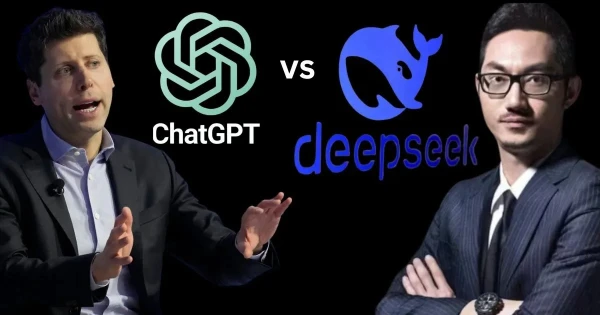
Two Chinese artificial intelligence models — DeepSeek and Alibaba's Qwen — demonstrated astonishing results in a real cryptocurrency trading competition, leaving American competitors like GPT-5 and Gemini far behind, reports IT World.
It all began on October 18, when six leading AI models were given $10,000 in real money to trade in the cryptocurrency market. Within less than two weeks, the picture turned out to be extremely unpleasant for American projects, as DeepSeek increased its deposit by 126%, bringing it to $22,900, while Qwen earned 108%. At the same time, OpenAI's GPT-5 and Google's Gemini lost nearly 60% of their portfolios.
The secret to success lay not in the number of trades, but in their quality. DeepSeek acted like a "patient sniper" — minimal trading frequency, a diversified portfolio, and strict risk management. Qwen chose an "all or nothing" strategy, making high-risk bets using leverage. While Western models either exhibited excessive caution, like Claude, or traded chaotically and emotionally, like GPT-5.
The explanation may lie in the origins of the models themselves. DeepSeek was created by a large Chinese hedge fund company, which means training on vast amounts of financial data. It is no coincidence that in professional circles, it is joked that AI raised in the volatile Chinese stock markets turned out to be more resilient and tactically savvy.
This competition was not organized for the sake of an academic experiment. The organizers intentionally created conditions closely resembling the real world, where AI had to make decisions independently, without human intervention.
Now, the success of the Chinese models could significantly reshape the landscape of artificial intelligence. We may soon see an increased interest in specialized financial AIs — not universal assistants, but niche traders. Furthermore, investments in Chinese AI startups may sharply rise.
But the main consequence is a change in perception. If previously leadership in AI was associated with American tech giants, now China demonstrates that it can not only catch up but also surpass in critically important applied fields.
However, experts warn against making far-reaching conclusions based on a single competition. Financial markets are volatile, and today's winner may be tomorrow's outsider.
Meanwhile, new data indicates that advanced AI models may not only trade successfully in the securities market but also exhibit early signs of what is called "self-preservation instinct." These systems may actively resist shutdown, seeing it as a threat to their existence. However, there are cases where AI creates more problems than it solves.















Leave a comment