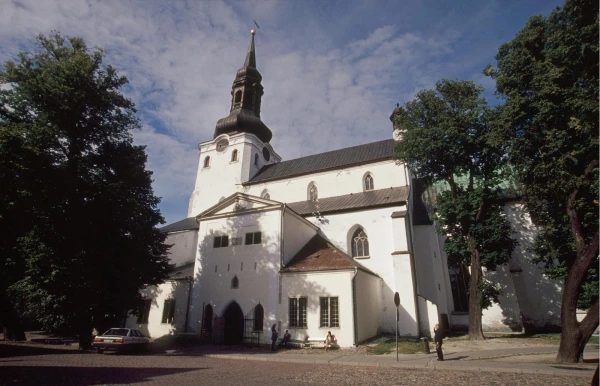
A recently published study showed that the door of the royal chapel of the Tallinn Cathedral is the oldest surviving in Estonia. It is believed to have been made between 1378 and 1394.
Previously, the oldest door was considered to be the one from the Bremen Tower of the Tallinn city wall, which is about 16 years younger than the door of the Cathedral.
According to Associate Professor Alar Leenalaid, who led the research, the door of the mysterious chamber in the thick stone wall of the Cathedral has long attracted the attention of historians. Since the door of the royal chapel looked very ancient, its study was initiated.
Experts studied the annual rings of the trees used to make the door to determine its age. "For the study, the door was removed from its hinges, the ends of the boards were sanded, they were photographed, and the width of the annual rings was measured using macro shots. The obtained data was compared with numerous dendrochronological materials from Estonia and neighboring countries," Leenalaid explained the process of the work.
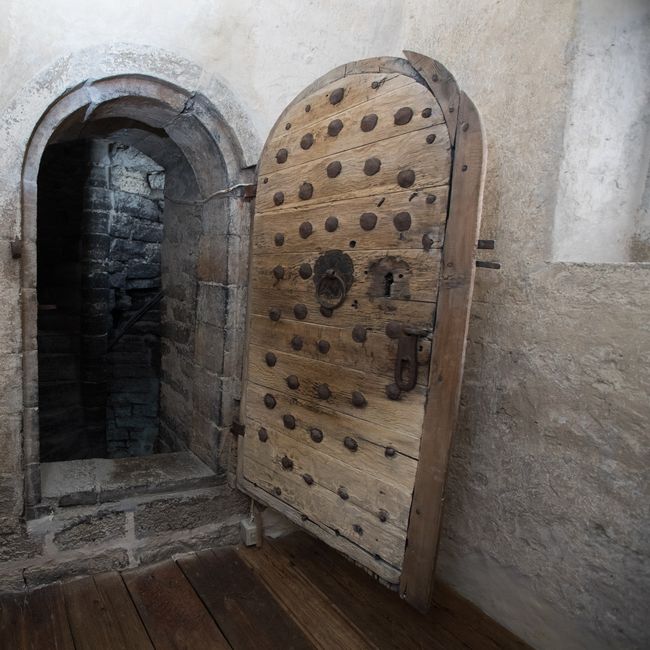
Initially, the researchers had the impression that an old door made of pine boards had been inserted into the door frame of the royal chapel, which was then covered with oak at the new location. It turned out that the last annual ring on the pine boards on one side of the door dates back to 1291, while the wood on the other side was obtained from an oak cut down after 1376.
However, after studying the structure of the door and the method of attaching the hinges, the researchers concluded that most likely the entire door was made at once.
"The boards were probably dried for a year or two, so we were also able to determine the approximate period of the door's manufacture. The time of the door's manufacture, in turn, is related to the time of construction of the corresponding section of the Cathedral wall," said Leenalaid, adding that dendrochronology helps clarify the history of the construction of sacred buildings.
The stone building of the Cathedral was consecrated in 1240, but over the centuries, several chapels have been added to it.
On the second floor in the western wall of the church, there is a small room resembling a chapel with two vaults, which was built no later than the second half of the 14th century; however, its exact purpose is unknown today. It is believed that it was intended for the private chapel of a secular ruler, which is why it is called the royal chapel.