

The government spends millions on IT systems that no one uses, while similar work in the private sector costs significantly less. Lawyer Arthur Zweisalnieks calls for an urgent review of questionable projects.
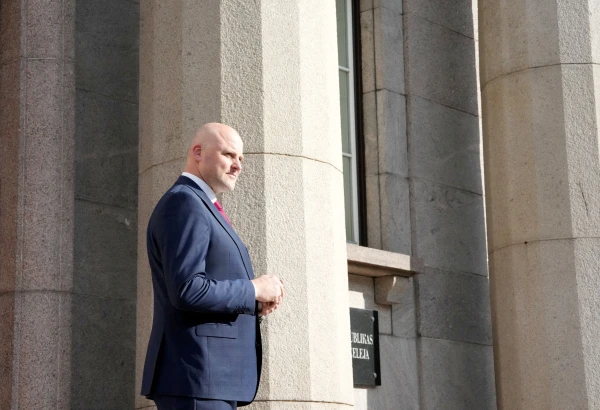
The current government has little time left to implement reforms, but the chosen direction in the field of public administration and control over budget expenditures is correct. This opinion was expressed by jurist Arthur Zweisalnieks during the broadcast of the program "Preses klubs" on TV24.
According to him, one of the most problematic areas in Latvia remains public procurement, especially related to the development of information technologies, databases, and various digital platforms.
"We constantly see public procurements where any reasonable person can understand that excessively inflated amounts are being requested. In the private sector, the same work could be done two or three times cheaper, and sometimes even ten times cheaper," the lawyer stated.
Zweisalnieks noted that in recent years, a significant number of databases and digital systems have been created with public funds, the quality of which raises questions. Moreover, some of them, according to him, are practically not used after launch. "They often turn out to be of poor quality, and a logical question arises — why was such money spent on them?" he emphasized.
In the lawyer's opinion, the government needs to adopt a stricter approach to evaluating such projects and not be afraid to suspend those whose effectiveness is in doubt. "Where we see really serious problems, projects need to be stopped, evaluated, and only then resumed if they are truly necessary," believes Zweisalnieks. As an example, he mentioned social assistance projects of municipalities, which cost significant funds but did not yield the expected results.
The lawyer also drew special attention to the modernization of government agency websites. "There have been cases where agencies had normal, functioning websites, and after the redesign, they became half-destroyed and less user-friendly," he noted.
According to Zweisalnieks, the scale of the problem is so serious that it requires not only administrative scrutiny but also a deeper analysis of the circumstances surrounding the implementation of individual projects. "There is a deep swamp there. There are questions that deserve the most thorough investigation. It is necessary to literally reassess from scratch and figure out what exactly was happening there," the lawyer emphasized.













Leave a comment