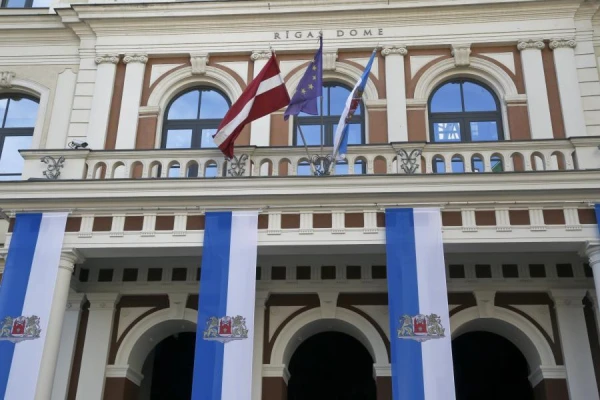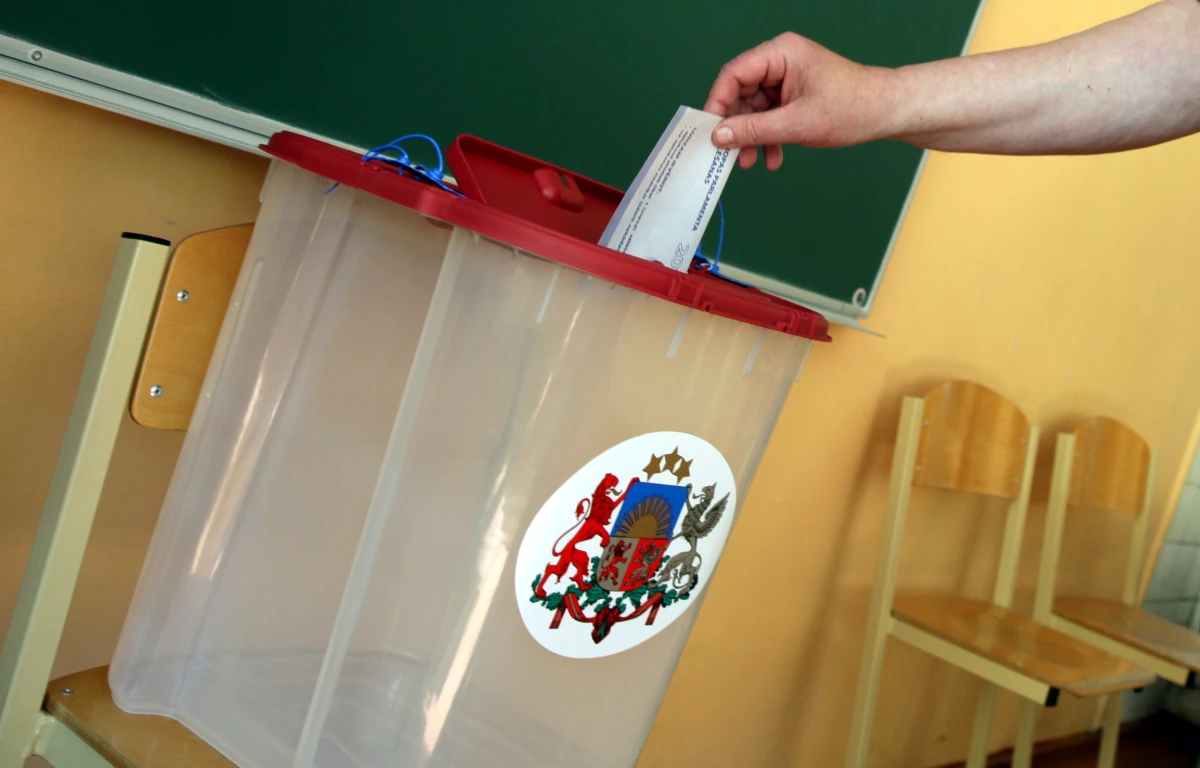
Thus, the doors of the Central Election Commission for submitting candidate lists have opened. The first to enter were representatives of the National Alliance—currently one of the ruling parties, which, according to ratings, has a good chance of entering the 15th Saeima.
Let us remind you that the acceptance of candidate lists will end on July 5. According to the Central Election Commission's own forecasts, at least 14 parties and associations will participate in these elections.
The battle for 100 coveted seats
The following political forces have already announced their readiness to fight for the coveted 100 seats in parliament (along with the officially registered list of the National Alliance): "New Unity," "Latvia First," the United List, the Union of Greens and Farmers, "Stability!", "Progressives," "Sovereign Power" - Young Latvians, "Harmony," the New Conservative Party, "We Change the Rules," the Gobzems list, "For the Development of Latvia," "Rising Sun"...
As you can see, there are already 14 lists forming. Since the maximum number of candidates on a list is 125 and the leading parties (at least those represented in the current Saeima) will try to present a full list, it is easy to calculate that 1000-1500 candidates will be competing for parliamentary mandates.
It is worth noting that in the last Saeima elections, four years ago, as many as 19 parties and associations participated, with 1829 candidates declared, meaning there were more than 18 contenders for each parliamentary seat—a competition that even the most prestigious university would envy!
It cannot be ruled out that small parties that participated in the 2022 elections will also declare their candidacies for the current elections.
From left to right
We see that the parties and associations that have already announced their readiness to compete for seats in the 15th Saeima effectively "cover" the entire political spectrum—this includes the left flank, the right, the center, and, by established tradition, the "Russian-speaking flank."
At least four political forces will be fighting for the votes of Russian-speaking voters—"Latvia First," "Sovereign Power" - Young Latvians, "Stability!" and Harmony (the political forces are indicated based on the results of the latest public opinion poll).
On the right or right-national flank, the United List, the National Alliance, the Union of Greens and Farmers, and "We Change the Rules" will compete against each other. The "Rising Sun" and the New Conservative Party will also attempt to capture part of this nationalistically inclined electorate.
Interestingly, the protest party "We Change the Rules" will also try to gain some votes from the left and left-center flank, just as the Union of Greens and Farmers will attempt to attract part of the centrist-oriented electorate, which "New Unity" is also targeting. The "Progressives" remain true to their left ideology—at least if we consider the policy of supporting sexual minorities as strictly leftist.
The aforementioned "Latvia First" and "Sovereign Power" - Young Latvians do not lose hope of successfully competing in the Latvian protest field, somewhat competing—at least in the regions—with the party of director Hermanis, "We Change the Rules."
Experience from previous elections shows that the lower the turnout, meaning the less active the voters are, the more unexpected the election results can be—meaning that the five percent barrier can be crossed by those political forces whose ratings today do not predict entry into the 15th Saeima.
Interesting statistics
Interestingly, the trend of turnout in Latvian elections was broken in the last elections—until October 2022, turnout had been decreasing from election to election. However, apparently in light of the mobilization of the electorate against the backdrop of the war in Ukraine, the turnout in the current Saeima elections was higher than in 2018. Specifically: in 2018, the turnout was 54.56%, while in October 2022, it was 59.43%.
Interestingly, although the number of voters has decreased over the last few decades, the number of eligible voters has increased. Over the past 33 years, since the elections to the 5th parliament, the Latvian electorate has noticeably grown: at the beginning of 1993, there were 1 million 243 thousand citizens eligible to vote, two years later, when electing the 6th Saeima, there were already 1 million 328 thousand, and in 2002, after the cancellation of the so-called "naturalization windows," there were already 1 million 395 eligible voters in Latvia.
This year, there are 1 million 541 thousand! This is a result of the naturalization boom of 2004-2006, when after Latvia joined the European Union, non-citizens rushed to take exams in order to be able to emigrate with an EU citizen passport. Today, the children of naturalized non-citizens have reached adulthood and have effectively obtained Latvian citizenship along with their parents. Who will they vote for? And will they even go to the polls?