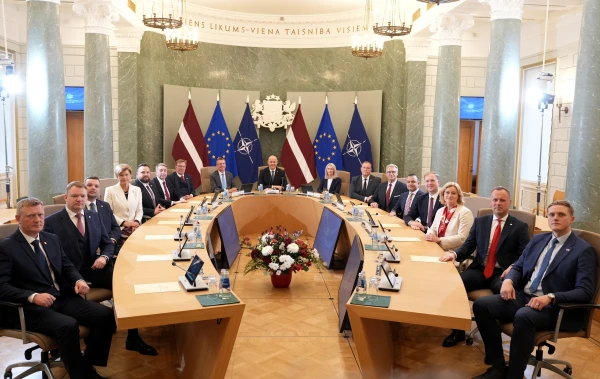
Next week, the Saeima commission will attempt to finalize work on the questionable amendments to the Consumer Rights Protection Law.
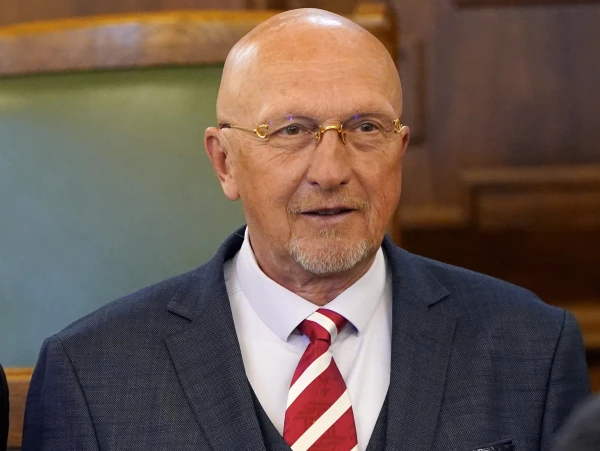
Culture Minister Nauris Puntulis (National Alliance) remains the last minister who has not resigned from his parliamentary duties. Last night, in an interview with Latvian TV, Puntulis explained this dual role by his desire... to wait for the adoption of amendments to the Consumer Rights Protection Law. He did not clarify which amendments he was referring to. We will clarify - Puntulis was eager, while still a deputy, to wait for the approval of his proposals that would effectively prohibit service providers (for example, a store seller, hairdresser, consultant at a car dealership, receptionist at a workshop, etc.) from responding to customers in Russian and other foreign languages! Ironically, this amendment was introduced into the Consumer Rights Protection Law, although in fact it is not a protection of consumer rights, but a restriction (narrowing) of those rights. At the stage of the already third reading, Puntulis slightly adjusted his proposals, allowing the seller to communicate with the customer in the official languages of the EU. A similar amendment was also proposed at that time by deputy, and now Minister of Education Ilze Indriksone from the same National Alliance.
The Ministry of Justice has prepared an alternative proposal, which states that the service provider - for example, the same seller - must first start a conversation with the customer in the state language and only then, if the seller does not object and the customer requests, can the seller switch to foreign languages. At the same time, all written information - for example, menus in restaurants or cafes - can only be in the state language, as well as in the official languages of EU countries and candidate countries for the EU and OECD countries. In other words, providing the customer with a menu in Russian, even at their request, will not be allowed.
It is noteworthy that very similar amendments were submitted by the State Language Center, which, by the way, is under the control of the Ministry of Justice. The nuance of the amendments from the State Language Center is that the service provider may agree to communicate with the customer not in the state language, but only... if it is not the Russian language, since the amendment speaks of the right to oral communication in the official languages of EU countries and candidate countries for the EU and OECD countries.
If the Economic Affairs Commission manages to review these amendments next Tuesday, the Saeima may approve them in the final reading at the last plenary session before the long summer break on June 18.