
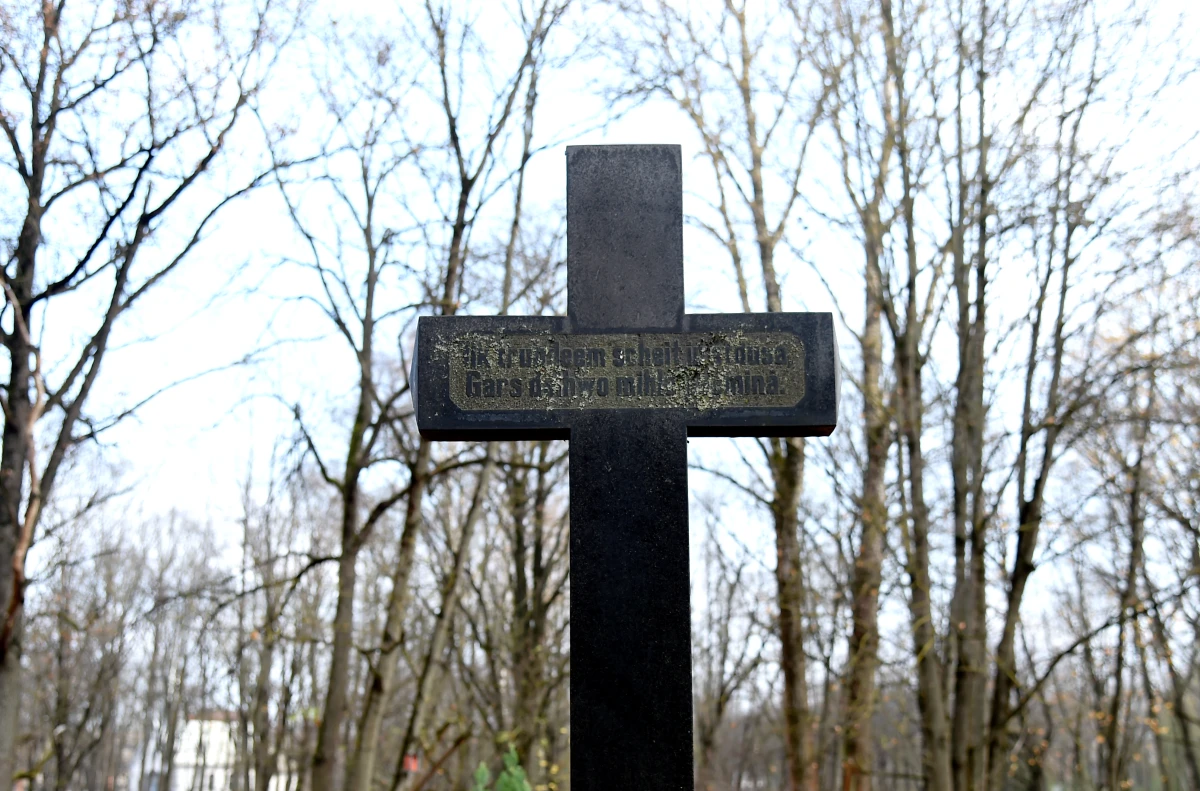
The topic of the capital's necropolises, which was covered in a conceptual message about the development of Riga's cemeteries until 2035, did not provoke much debate at the last city council meeting. Apparently, due to its too grim content.
Meanwhile, the report identified 18 interrelated challenges focused on four sets of issues:
-
exhaustion of cemetery capacity for traditional burials;
-
insufficient resources (financial and human);
-
data and regulatory imperfections;
-
increasing burden on the environment and infrastructure.
City authorities currently manage 22 cemeteries covering a total area of 452.35 hectares, of which 2 are open, 15 are partially closed, and 5 are closed cemeteries.
The number of burials over the past decade has remained stable (about 6200 per year), however, the structure of burials has changed significantly: the share of traditional burials (in graves at cemeteries) has decreased, while the share of cremations has increased from 11.5% (in 2015) to 28.9% (in 2024).
"The capacity of cemeteries has generally reached saturation level, especially in partially closed cemeteries, and the possibilities for new burials are concentrated in the Jaunciems and Bolderāja cemeteries. At the same time, there is a growing need to expand the network of columbaria and create new alternative forms of ash burial," the report states.
In Riga, the design of 5 columbaria has been carried out, one of which has already been implemented – at the I Forest Cemetery. "The report does not analyze or take into account external shocks – such as a pandemic, war, or large-scale natural disaster," the document states.
Meanwhile, statistics show significant fluctuations: in 2021, 7886 people were buried, last year – 6250. This is a reduction that is pleasant to face...
On the other hand – the fewer living people in the country, the fewer funerals can be expected in the future. On an uninhabited island, cemeteries are not needed at all.





Leave a comment