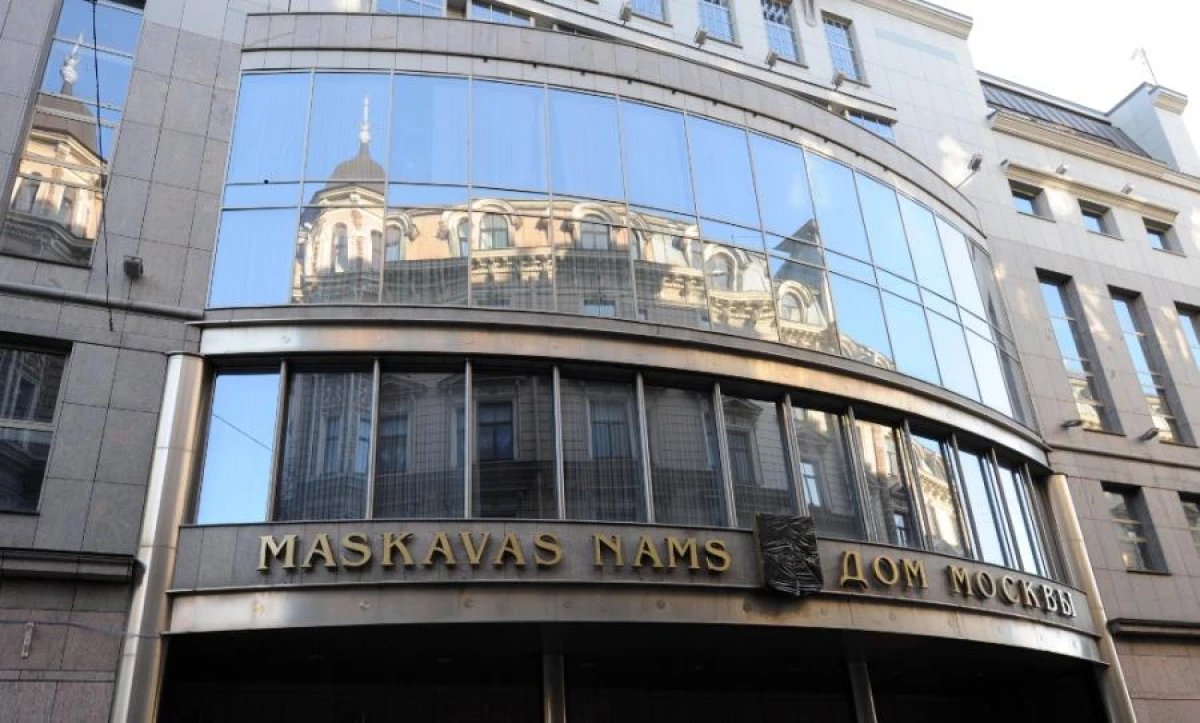
The Riga City Court begins hearing the criminal case against the former head of the Moscow House, Eduard Tsehoval. According to the prosecution, he continued to rent out premises and receive income despite EU sanctions and the freezing of related assets.
On Monday, the Riga City Court will begin hearing the criminal case against the former head of the Moscow House, Eduard Tsehoval, who is accused of violating European Union sanctions imposed against Russia following its invasion of Ukraine.
According to the indictment, Tsehoval, while heading the representation of the Moscow Center for International Cooperation in Latvia, continued to use the property on Marijas Street despite the existing restrictions.
The prosecution claims that after the sanctions were imposed, the financial assets of the institution were frozen, and the property itself was prohibited from being used for income-generating purposes. Nevertheless, according to the investigation, the premises continued to be rented out. Investigators believe that this ensured further financing of the representation's activities and the receipt of funds in circumvention of the sanctions regime.
What is important to know: the case concerns not the fact of property ownership itself, but the alleged use of the property after the EU restrictions were imposed. European sanctions prohibit deriving economic benefits from frozen assets and property controlled by individuals included in the sanctions lists.
According to the prosecution, the Moscow Center for International Cooperation was under the control of structures linked to the leadership of Moscow, against which EU sanctions are in effect.
Initially, the case also involved the former head of the institution, Svetlana Zaitseva. However, her materials were separated into a separate proceeding as she is outside Latvia and has been declared wanted.
The criminal proceedings were initiated by the State Security Service in November 2023. After the investigation was completed, the materials were forwarded to the prosecution for charges to be brought.
Alongside the criminal process, the fate of the building itself continued. In early 2024, the Saeima adopted a special law on transferring the Moscow House to state ownership in the interests of national security.
Later, the property was transferred to the Ministry of Finance. It is planned that after the building is sold at auction, the proceeds will be directed to support Ukraine. However, to date, the property has not been successfully sold at auction.
The court process will be one of the most notable cases in Latvia related to the practical application of EU sanctions against Russian state structures and associated assets.