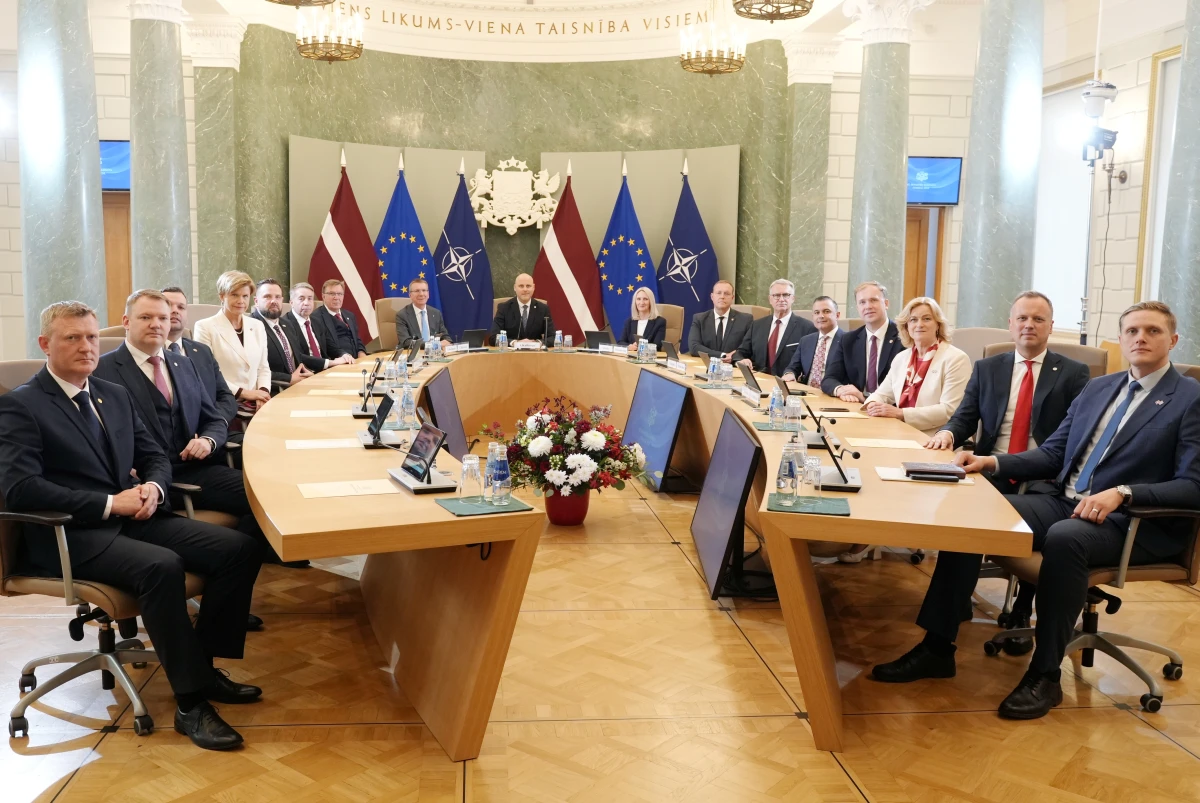
It is worth noting that this is the first government formed after the restoration of independence that was created on the eve of elections – actually 4 months before the elections. The official election campaign will kick off this week.
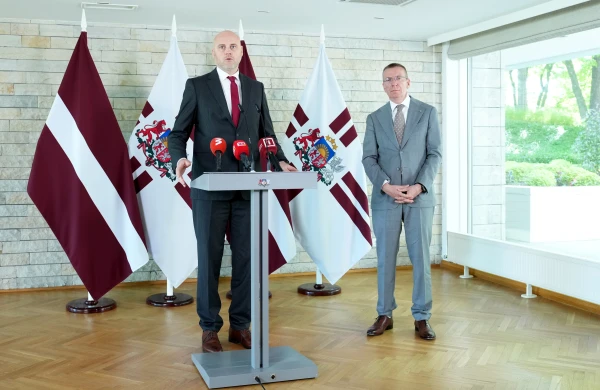
The ministers gathered briefly in the cabinet: how long will Kulbergs' government last?
Even if the politicians "try very hard" after the October elections in the Saeima and delay the formation of a new government, the new government will still be created no later than January next year – it is hardly likely that the newly elected deputies will want to enter the new year without a full budget for 2027, that is, to live according to this year's budget estimates.
Abik ELKIN
Thus, the government formed last week by Kulbergs will still be the shortest in the recent history of Latvia – a maximum of 7 months.
Looking back, we had two "short-lived" governments – at the end of the 90s, Kristopans' government lasted only 9 months. The same duration was achieved by Emsis' government in the year Latvia joined the EU and NATO.
It is certain that this record for the brevity of tenure will be broken by Kulbergs' government. Although it cannot be ruled out that Kulbergs may again become prime minister after the elections. In any case, this is what the supporters of the "united" and generally conservative coalition hope for, who fear the victory of Shlesers in the elections.
However, Kulbergs and Co.'s future will, of course, depend on the election results. The current government, consisting of four political forces, currently has 63 votes in the Saeima (not counting independent deputies). It will be very difficult for these 4 parties to repeat this result! Especially if Kulbergs himself does not manifest in any way.
And moving mountains in 4-5 months, especially in the context of an election campaign, will be extremely difficult.
Twice Prime Ministers
Will Kulbergs be able to enter the Cabinet of Ministers twice? We will see. For now, it is worth noting that in the recent political history of Latvia, only five politicians have become prime ministers twice – Ivars Godmanis (with a long break), Aigars Kalvitis (before and after the elections), Laimdota Straujuma, Valdis Dombrovskis, and Krišjānis Kariņš. The latter also holds the record for the longest tenure as prime minister – a total of 4 years and 6 months. We dare to assume that hardly anyone will be able to repeat this result in the near future, let alone break this record.
If in politics there is a precedent – Andris Škēle entered history as the three-time prime minister of the Republic of Latvia.
Calm After Privatization
In general, after 2011, the lifespan of governments in Latvia has increased on average. This is explained by:
-
Firstly, the privatization has ended, and with it, the struggle between political groups for the remnants of state property has also ended. The consequence of this struggle was the frequent overthrow of "foreign" prime ministers and the appointment of "their own".
-
Secondly, politicians know that voters do not like all this turmoil with government resignations. Therefore, they have calmed down somewhat.
In the current Saeima, which will soon go down in history, there was an opportunity to create as many as five different options for a majority coalition. This is an extremely rare case – usually, due to "red lines", it is realistically possible to create a maximum of two options for a ruling coalition.
Looking for Prime Ministers Among Themselves
It is noteworthy that in all these 35 years since the restoration of independence, we have had only one non-partisan prime minister – Andris Škēle, who, however, later could not resist and created his own party – the People's Party. And as a representative of the People's Party, he headed the government two more times.
It should be noted that Škēle would never have become prime minister if the Saeima had not twice voted against a particular government option. After that, it became clear to politicians: the Saeima would not vote for a party candidate for prime minister, and a neutral candidate needed to be put forward. And here Škēle appeared...
No such situations have arisen since then – and even if certain candidates from parties could not gather a majority in parliament, the next candidate from another party was put forward. This happened in the previous Saeima, when neither Gobzems nor Bordans could create a coalition, and ultimately a representative of "New Unity" Kariņš emerged. As it later turned out – he appeared for a long time.
Four Tasks for Kulbergs
If we talk about the current government, Kulbergs faces four main tasks.
- The first task is to successfully campaign together with the United Union in the elections. This is quite feasible if 1) the administrative resource is used wisely (i.e., the opportunity for the prime minister and ministers from the "united" to constantly appear in the news, reminding voters of themselves); 2) do not get involved in any unpleasant story. In this sense, Kulbergs' warning that his government will have to make unpopular decisions sounds rather implausible. Who would want to cut the branch of administration on which the "united" successfully climbed before the elections?
It is obvious that before the elections, neither the partners in power nor their own party members will allow Kulbergs to make "unpopular" decisions. It is no coincidence that the coalition agreement states that the ruling parties do not advance initiatives that cause objections from partners. In other words, if at least one of the coalition parties opposes, such an initiative is put under the rug.
By the way, Andris Kulbergs, judging by his first days in office as prime minister, will try to show that he is practically a people's prime minister – very close to voters and not detached from real life. This is indicated by his video reports on social media directly from his office.
-
The second task is to show that the new government is at least somewhat better than the previous one. This task is more than achievable, as even if Kulbergs and Co. wanted to, they would not have time to sink to the level of the extremely unpopular and helpless Siliņš government.
-
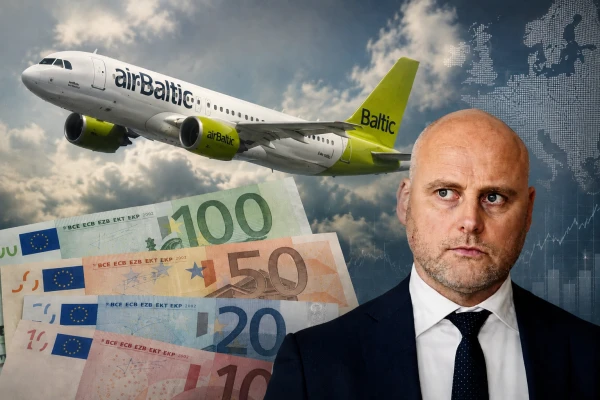
The third task is to try to extinguish the fire in airBaltic and somehow hold on until the elections without providing the airline with new loans. Even better, find and show the public some signs of improvement in the situation of the scandalous airline. Something like this is already happening – at the end of last week, it was loudly announced that airBaltic would return 6 million euros – out of the 30 borrowed.
-
And finally, the fourth task is to come up with some perks, pleasant gifts for voters. Otherwise, they might end up losing the elections.
...In any case, the emergence of a new government has created a certain intrigue. Even those who do not like these new-old ruling parties still assume that it will not get worse. Although...