
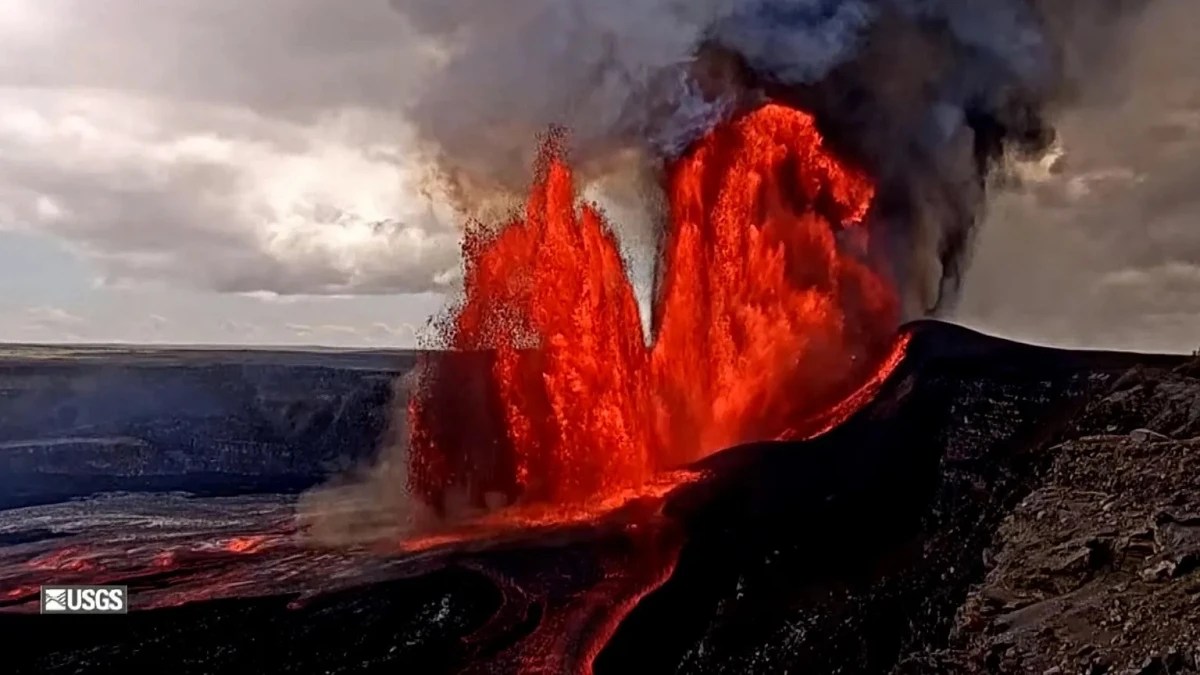
One of the most active volcanoes on the planet — Hawaii's Kilauea — has once again reminded of its power. During the new eruption that began at dawn on June 1, fountains of molten lava rose to a record height not seen in the last 40 years, while the surroundings were covered in volcanic ash and glassy strands known as "Pele's hair."
Record Eruption in Hawaii
Kilauea Volcano, located in Hawaii, has once again demonstrated its power. Its 48th eruption began on the morning of June 1. By around five o'clock in the morning, specialists from the United States Geological Survey (USGS) were observing lava fountains reaching heights of over 100 meters.
However, the real record was set shortly after six o'clock in the morning. From the northern vent of the crater, lava erupted to a height of about 200 meters, surpassing the previous record that had stood for nearly four decades.
Millions of Cubic Meters of Lava and Ash Rain
The eruption was not limited to impressive fountains. Over nine hours, the volcano expelled approximately 5.5 million cubic meters of lava into the surrounding environment. Streams of molten magma flowed down the slopes, while huge volumes of ash and volcanic materials settled on the adjacent areas.
A column of volcanic ash and gases rose to a height of over 7.5 kilometers. In the area of Hawaii Volcanoes National Park, there was a real rain of tephra — fine pyroclastic particles. They covered homes, roads, and cars even eight kilometers away from the crater.
Additionally, the air was filled with what are known as "Pele's hair" — the finest golden strands of volcanic glass, named after the Hawaiian goddess of volcanoes.
Volcano Under Constant Surveillance
According to Discover Magazine, Kilauea remains one of the most closely studied and monitored volcanoes in the world. For over a hundred years, scientists have tracked its activity, noting the slightest changes.
After the eruption concluded, specialists recorded what is known as a seismic swarm — a series of small underground tremors caused by the movement of magma and tectonic processes. Although such phenomena can pose a danger, they are well known to scientists and help to better understand the mechanisms of the volcano's operation.
After a massive collapse of part of the summit in 2018, Kilauea remains extremely active. Since the end of 2024, new eruptions have occurred on average every few weeks.
Despite the impressive power of the current eruption, specialists emphasize that modern monitoring systems allow for the early detection of signs of Kilauea's activity. As a result, residents of Hawaii and tourists receive timely warnings, and scientists continue to gather unique data on the behavior of one of the planet's most famous volcanoes.















Leave a comment