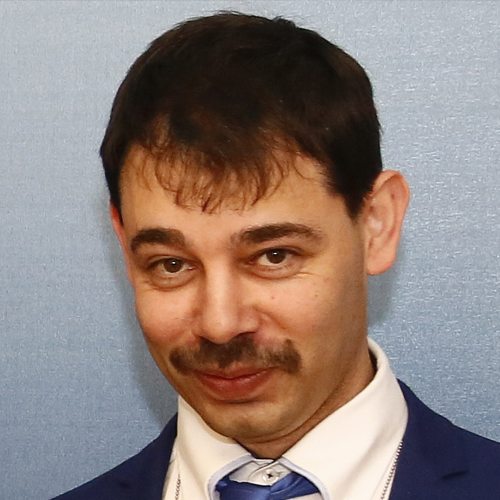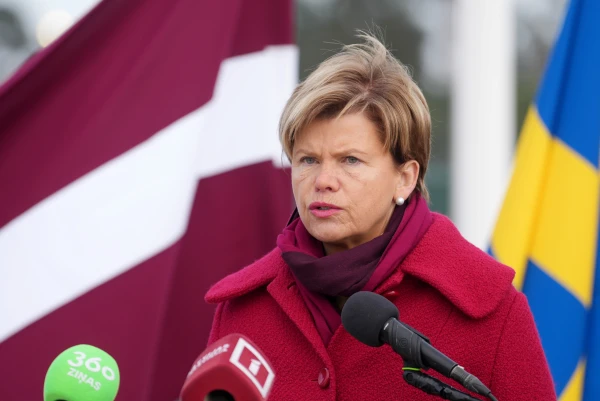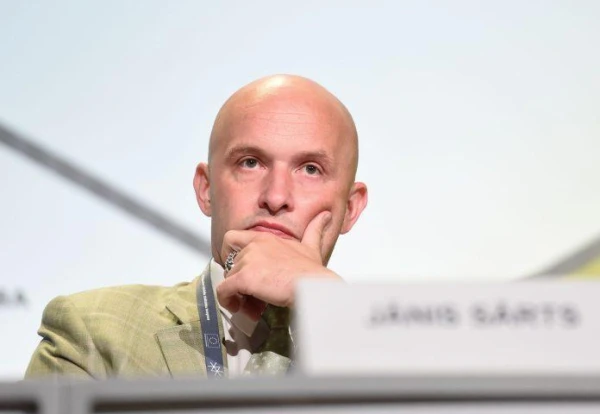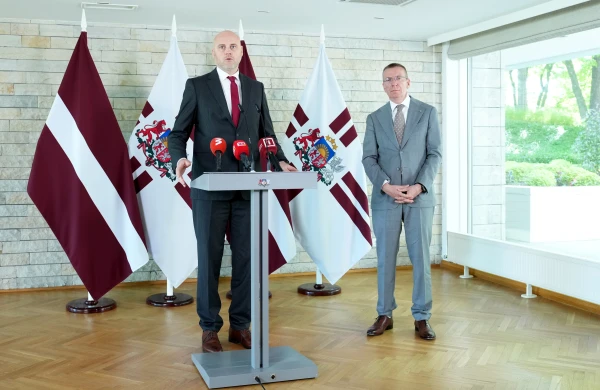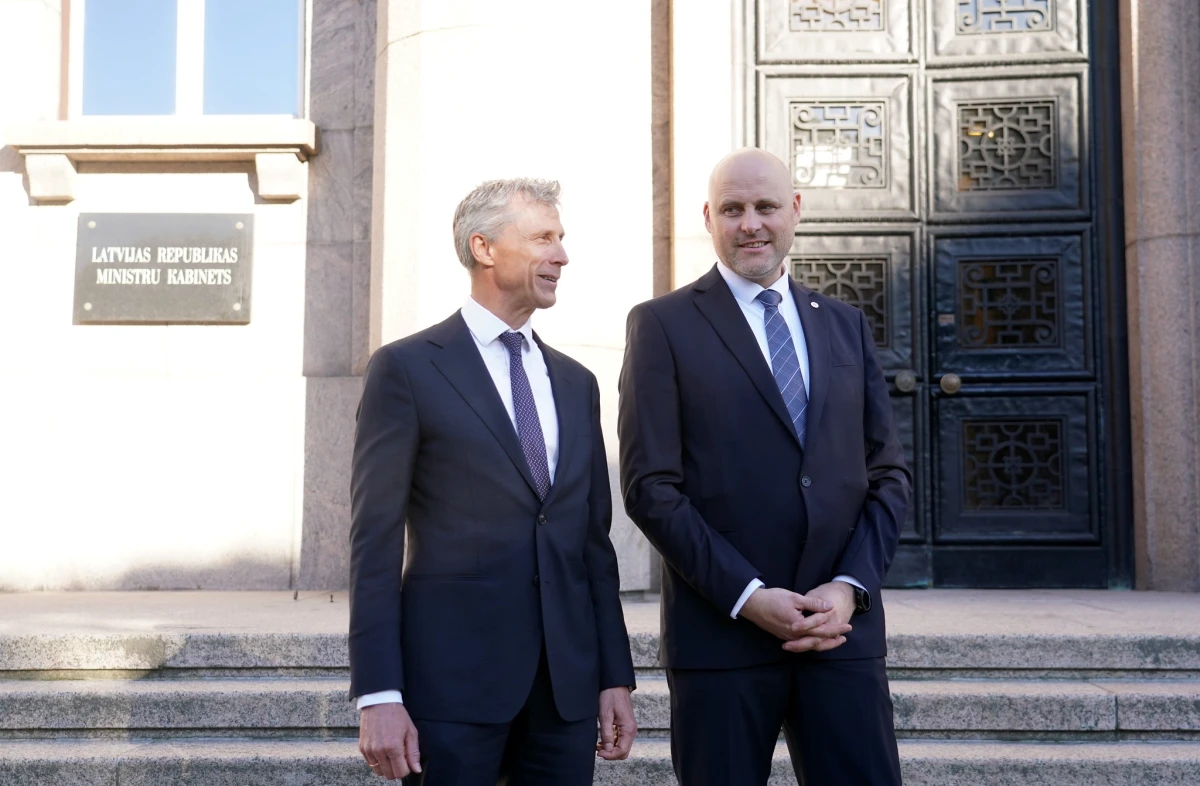
"It takes effort to ruin everything in 4 months!" said the new Prime Minister of Latvia Andris Kulbergs in an interview with Latvian TV, responding to a journalist's question about whether it was too risky to 'let' the very radical politician Janis Dombrovskis from the National Alliance into the Ministry of the Interior.
In fact, if one tries hard enough, a lot can be ruined in just 4 months — which is how much time is left until the elections to the Saeima.
However, let’s not talk about what can be ruined and broken, but rather about what the new government has planned to do in various areas.
Basic Pensions
Let’s start with the social sphere. The Ministry of Welfare, at the political urging of the ‘Greens and Farmers’, is very eager to launch the process of creating so-called basic pensions.
How they will be calculated is still unknown. But, judging by the experience of other countries, basic pensions should at least correspond to the real minimum subsistence level.
However, until the elections, politicians are only willing to discuss providing such basic pensions to people of retirement age — 85 plus:
Firstly, this group of seniors is already not very numerous — about 20,000 people;
Secondly, this is the category of Latvians who retired back in the 1990s, and for the overwhelming majority of them, their pensions are meager for this reason.
It is clear that, considering the elections, the new government will try to inform pensioners in advance about increased pension indexing — hoping for their votes in the October elections. And if lucky, for the votes of their children and grandchildren as well.
Family Benefits
Minister of Welfare Reinis Uzulnieks has also spoken about increasing family benefits that are paid for each child in the family.
The head of the ministry promises to increase the benefit for one child from the current 25 euros to 50 euros, and for two children — from the current 50 euros per child to 65 euros per child. It is clear that this will not be implemented before 2027. And since the 2027 budget will be adopted by the new Saeima, it is uncertain whether Uzulnieks will be able to fulfill this promise.
Meanwhile, the minister has also promised that starting in 2028, a mechanism for regular review of the benefit depending on the economic situation may be introduced, as well as the commencement of benefit payments from the moment of the child's birth.
At the same time, the Ministry of Welfare will promote a decision to include the time of parental leave in the work experience for parents who cared for children during the period from 1991 to 1995, when social contributions were not paid.
Medical Expenses
Should we expect changes in the healthcare system? The government declaration states that "health is a common priority of the government. Assessing the budgetary possibilities, we will prioritize increasing healthcare funding, aiming to increase healthcare expenses to 12% of the total government expenditures."
However, it is clear that this year, it is only realistically possible to increase medical expenses if there is a genuine review of the administrative expenses of all ministries. And even then, at best, it will be possible to scrape together about 7-10 million.
However, given the acute shortage of funds in healthcare, this is still better than nothing. For now, the Ministry of Health is trying to extinguish the fire in the old tradition — by reallocating funds within the healthcare budget.
Living on One Salary
What should we expect from the government in the fiscal sphere? Andris Kulbergs, even before taking office, recklessly threatened to review the fund for bonuses and incentives, meaning a significant cut in the bonus fund.
However, in the government declaration — under pressure from the defender of public administration in the form of the ‘New Unity’ — the wording has been somewhat softened: "We will completely review the principles of bonus and monetary reward payments, integrating them into a motivating and results-oriented pay system."
One can speculate on what this bureaucratic phrase means. Probably, the system will be changed in such a way that bonuses for officials will be paid for specific achievements and not necessarily in December — as was the case in the good old days, as a 13th salary. And not to everyone indiscriminately on a quota basis.
Kulbergs will also attempt to review the expenditure part of the budget (primarily — funds for administrative expenses, procurement, business trips, etc.), not only for the next year but also for this year.
However, to do this, it will be necessary to "open" the 2026 budget. If the prime minister really wants to reshape the long-accepted and functioning budget, he needs to do all this in the next couple of weeks — on June 19, the Saeima goes on a long vacation until the end of August. And then the climax of the election campaign will begin...
Compensation for Drones
A political innovation is the government’s intention to compensate for damage that may be caused by the possible arrival or, more precisely, the falling of drones on various objects in Latvia.
"We will develop a compensation mechanism to cover the damage caused by unmanned aerial vehicles," states the declaration of Kulbergs’ government.
Interestingly, the ‘Greens and Farmers’ have already come up with an initiative this week to give this promise a "reverse" and resolve the issue of compensating for damage that has already been caused by the arrival of drones in Latgale. Under current legislation, since a state of emergency has not been declared, the government is not obliged to compensate anyone. Therefore, the ‘Greens and Farmers’ propose to adopt a special regulatory act allowing such financial support to be provided.
Quotas for Foreigners
It is also evident that, first and foremost, the new government will make decisions that do not require funding.
Thus, the politicians of the National Alliance have already managed to convince their partners of the necessity to introduce quotas for the acceptance of foreigners.
Here’s what is stated in the declaration: "We will limit the issuance of new long-term visas and residence permits to foreign citizens. Considering the capabilities of the competent authorities, we will determine an acceptable number of citizens from third countries. We will ensure strict control over the issued residence permits and compliance with the conditions of stay. We will establish a ban for unscrupulous individuals inviting foreigners."
Introducing quotas will be quite simple — it is enough to support the amendments proposed back then by deputy Janis Dombrovskis to the new immigration bill. The bill is currently at the stage of its third (final) reading.
...It is clear that the Kulbergs government will not move any mountains, but it is unlikely to be worse than under the stagnating Silin government. Although…