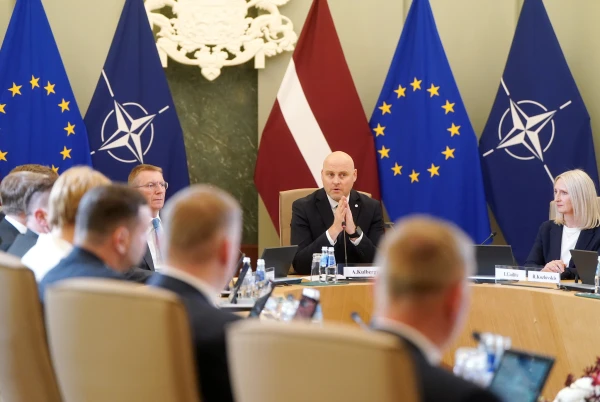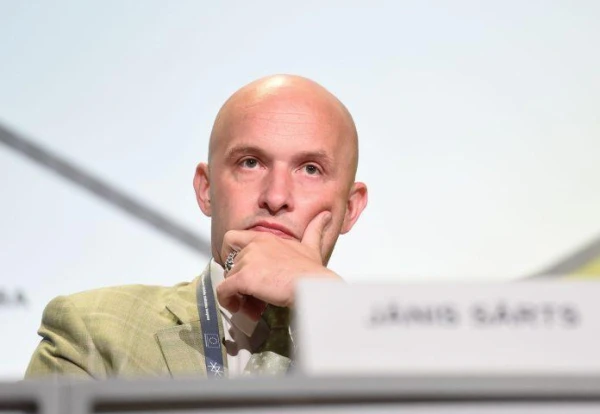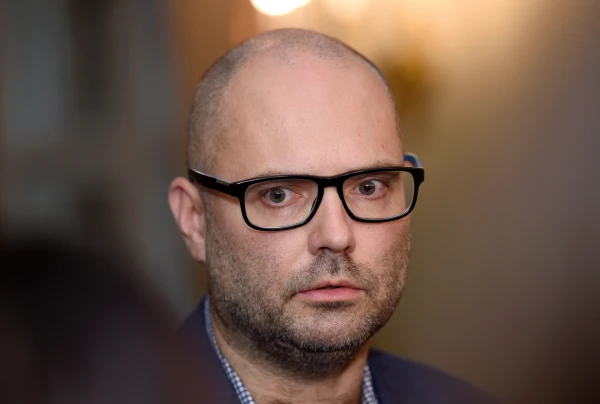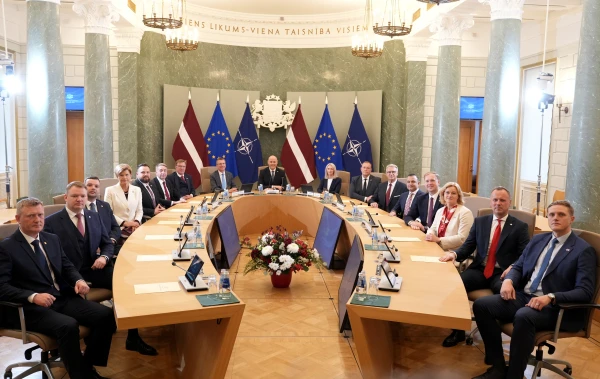
On Thursday, the Saeima approved the new government of Andris Kulbergs. Most of the politicians in it have already served as ministers. However, the leadership of the particularly important Ministry of the Interior during these turbulent times has been entrusted to Janis Dombrova from the National Alliance, who has no such experience.
Coalition partners and predecessors advise him to set aside loud statements about newcomers to Latvia and other topics, possibly made in a fit of youthful maximalism. However, on his first day in the position of Minister of the Interior, Janis Dombrova began by instructing all employees of the Ministry of the Interior to perform their duties and communicate with residents and colleagues only in Latvian, reports the TV3 program "Nekā personīgi."
A member of the Saeima with a degree in history has become the Minister of the Interior. Janis Dombrova's predecessors in this position note that in this ministry, trust from subordinates must be especially earned.
Dombrova was one of the most vocal politicians of the National Alliance on issues of the state language, borders, migration, and the influence of Russia. In the Saeima, he worked on the defense, foreign affairs, European affairs, and citizenship, migration, and public integration commissions. For some time, he held the positions of chairman and secretary of one of the most closed structures — the National Security Commission. He has no experience in executive power. Now, as Minister, Dombrova will be responsible for the work of the police, border guards, and the Citizenship and Migration Affairs Office.
In his statements, Dombrova has been outspoken about Russian speakers, newcomers, sexual minorities, and compensations paid to the Jewish community. He referred to foreign students as "kebab fryers," and compared the possibility of a person without Latvian roots becoming a Latvian to a cat living in a stable that does not become a horse.
Concerns about Dombrova also exist with the new Prime Minister. However, he hopes that the Minister of the Interior will be able to tone this down.
"Personally, I had concerns. Yes, but it should be understood that in opposition we work together, and to work in opposition, one must be much brighter and much louder. But becoming a minister, these statements need to be set aside because a minister cannot be a politician of only one specific faction. A minister must care for the entire sector. This means that political ambitions need to be partially put aside and understand what is important for the state. And I really hope that Mr. Dombrova will succeed in this. He has not yet tested himself in such a position. Nor have I been tested in such a position myself," said Prime Minister Andris Kulbergs.