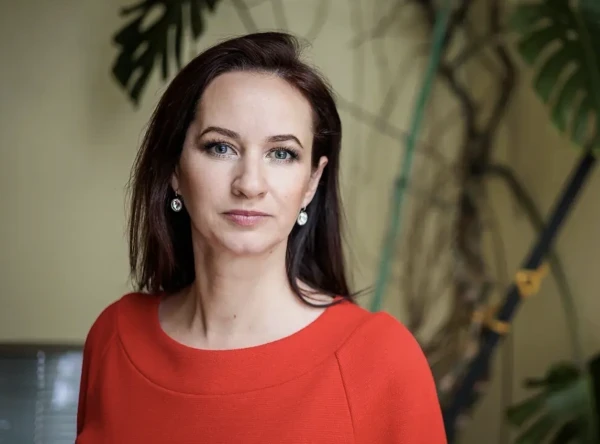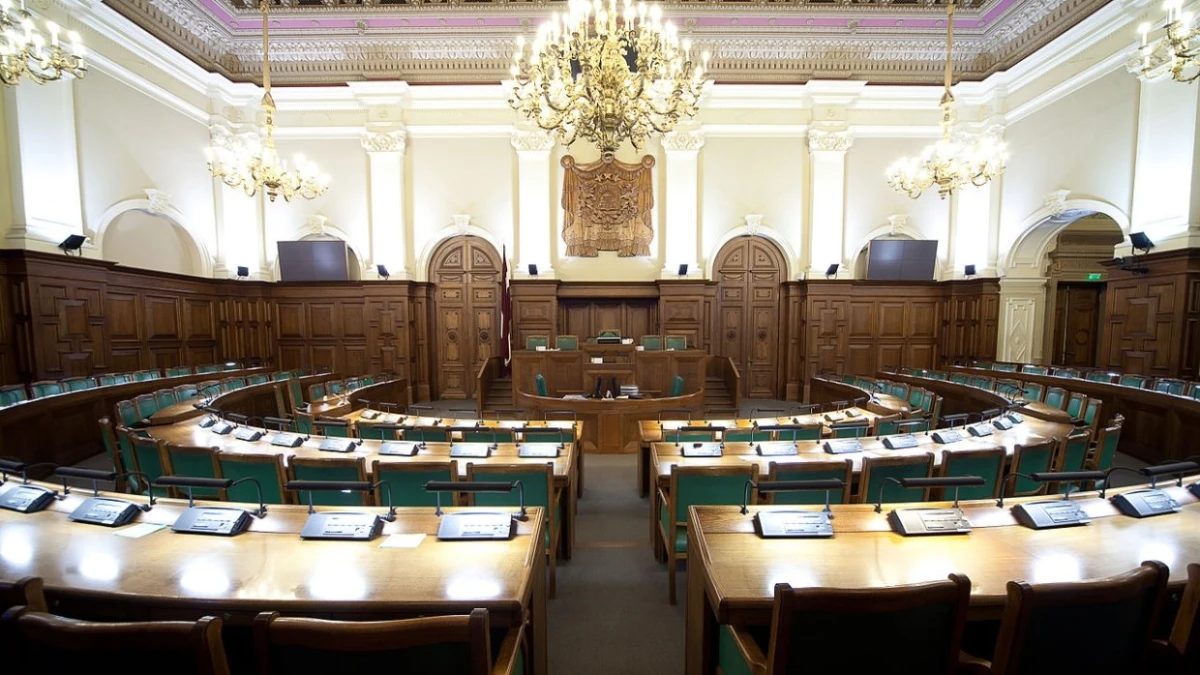
"The experience is interesting, but I will not continue further," said independent Saeima deputy Skaidrīte Abrahams. She became the first refuser of the current parliament, stating that she would not run for the next term.
Disappointed and Leaving
Based on her previous interviews, it can be concluded that, firstly, she is disappointed with Latvian politics in general and with her work as a deputy in particular. The work is ineffective, decisions are often made irrationally, as these decisions are dictated by political expediency rather than by the position of experts.
Secondly, her deputy, Abrahams, was "finished off" by the coalition discipline, which prescribes acting according to the agreements made by the party leadership in the coalition, and... remaining silent if something is not liked.
Decided to Resign
Towards the end of the previous Saeima's term, that is, four years ago, veteran political figure Inguna Rībena announced her intention to leave big politics. She had been a member of parliament for two decades, having previously worked as a deputy in the Riga City Council and even served as the Minister of Culture.
During this time, she changed three parties — she entered the capital's municipality on the list of the "Saimnieks" party, successfully ran for the Saeima in 2002 from the "New Era" party, and since 2014 represented the nationalist party "TB-LNNK" in parliament. But then she left this political force as well. Ultimately, she honestly stated that she was disappointed with politics. It took her about a quarter of a century to understand this, during which time she received quite substantial salaries.
At the same time, Mārtiņš Bondars also decided to leave big politics. He might have stayed, but it was evidently not possible to speak the right political slogans while being under investigation for the liquidated "Latvia's Krajbank."
Served the People and That's Enough
One way or another, contrary to popular belief, not all deputies cling to their seats with a death grip and cannot imagine themselves outside the political "feeding trough." To be fair, there are few of them in Latvia.
Yes, there are parliamentarians who are so accustomed to their deputy life that not getting into the Saeima becomes a tragedy for them. But this "deputy disease" usually affects those who have been deputies for a very long time — three or more terms. It is understandable from a human perspective: they have indeed become accustomed to deputy life; moreover, they have already lost their previous "human" professional qualifications.
By the way, former public servants often remain on the labor market for quite a long time, meaning they genuinely cannot find work. Again, unemployment benefits for former deputies are certainly higher than for former janitors or welders. There is no rush.
Of course, those who were deputies for one or two terms find it easier psychologically and practically to leave the Saeima and become ordinary citizens again.
Why Are They Leaving Their Warm Seats?
But let's return to the "refusers." Why do deputies refuse to run for the next Saeima, and sometimes even resign their mandates before the current term ends? Of course, each case is individual, but let's name the most common reasons.
First reason – disappointment in politics and the realization that expectations have diverged from reality. To be fair, this feeling arises not only among principled people but also... among random individuals in politics. Yes, in almost every Saeima of each term, one can observe such random individuals — they may not have even expected to be elected and did not fully understand where they were going and what awaited them. After all, alongside a stable and very good salary, they become public figures — many are simply not ready for such a change. Not to mention that deputies become "politically significant figures" for a long time, under scrutiny (income declaration, additional checks, especially in banks, etc.).
Second reason – an incompatible character. A person is unable to work in a team and quickly either leaves the party from which they were elected or is "removed." If such a person also lacks charisma, recognizability, and does not shine with intelligence, then they simply have no one to run with in the next elections — there is no political force willing to include them in their list. Of course, this refers to a political force that has a real chance of overcoming the five percent barrier. In parties that engage in political self-satisfaction and garner less than one percent in elections, the doors are always open.
Third reason – the politician has already become so scandalous and/or has found themselves involved in a criminal case that it is better for them to at least temporarily retreat into the shadows. A vivid example is Artuss Kaimiņš, who managed to tarnish his reputation so much during one parliamentary term that he became toxic for all parties and effectively left the political scene.
Backup Airfield
The recent history of Latvian parliamentarism shows that for random people in politics, the first experience usually becomes the last — they never return to politics, and voters quickly forget that such individuals were deputies. If a person does have a certain political talent, then after a pause, they may still make an attempt to return to politics, sometimes quite successfully.
If we talk about the current Saeima, then surely Abrahams will not be the only deputy we will not see on the candidate list for the 15th Saeima. Rumor has it that one or two deputies who recently left the "Stability!" faction may also leave politics. The expectation that they would be immediately invited by some other parliamentary party did not materialize.
Interestingly, there are currently 17 independent deputies in this Saeima — of these, 4 became independent involuntarily, as their faction disbanded, while the remaining 13 left the factions and, accordingly, the parties from which they were elected. Of these 13, five public servants have already found a "backup airfield," meaning they have joined other political forces and will run for the new Saeima from there.
It is not a fact that they will be successful — the experience of the last 8 years, that is, two parliamentary terms, shows that the composition of the Saeima is renewed by 40–50 percent after elections.
Compensation and Unemployment Benefits
If a deputy does not get into the next parliament (they are not elected or do not run), they receive compensation amounting to three monthly salaries — this is about 7-8 thousand euros after taxes — enough for the initial period.
Of course, former deputies also have the right to unemployment benefits if they do not manage to find work quickly. However, many are not in a hurry to return to work.