
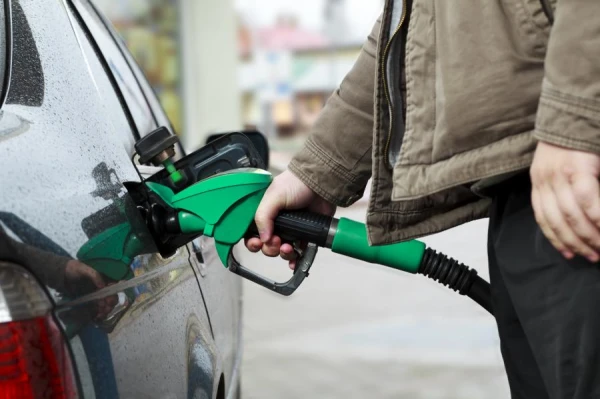
On Tuesday, the government approved a fiscally neutral bill prepared by the Ministry of Finance to reduce the excise tax on diesel fuel by approximately 15% to mitigate the impact of the sharp rise in fuel prices on the economy and the population.
According to calculations by the Ministry of Finance, this could reduce fuel prices by approximately 8.6 cents per liter, including value-added tax.
Under the proposal from the Ministry of Finance, the excise duty rate on diesel fuel will be reduced from 467 to 396 euros per 1000 liters.
The government also approved a reduction in the excise duty on marked diesel fuel for farmers, for which the excise duty rate is set at 21 euros per 1000 liters.
According to calculations by the Ministry of Finance, this could reduce the price of marked diesel fuel by approximately 5.9 cents per liter, including value-added tax.
It is planned that the reduced excise duty rate on diesel fuel and marked agricultural diesel fuel will be in effect from April 1 to June 30, 2026.
According to the Ministry of Finance, as a result of the reduction in the excise duty rate, Latvia will have the lowest rate among the Baltic countries. Currently, the lowest excise duty rate on diesel fuel in the Baltic countries is in Estonia at 428 euros per 1000 liters, while in Lithuania it is 553.6 euros.
At the same time, the Baltic countries - Lithuania, Estonia, and Latvia - are coordinating actions to reduce market shocks and the impact of fuel prices on the population. Estonia initially planned to raise fuel excise duties from May 1, but now intends to abandon this step, while Lithuania is preparing solutions similar to those of Latvia.
The bill provides a temporary solution to the emergency situation caused by global disruptions in oil supply. Since the end of February, oil and fuel prices have increased significantly - in Latvia, the retail price of diesel fuel has risen by approximately 30% and is around 2 euros per liter.
The Ministry of Finance notes that the rise in fuel prices creates a significant burden on businesses and households, as well as affecting the operation of the public sector, including emergency medical services, security agencies, and the defense sector. According to estimates by the Ministry of Finance, without intervention, the additional costs to the Latvian economy could amount to about 50 million euros per month.
At the same time, the Ministry of Finance predicts that the fiscal impact of the reduction in excise duties on the state budget could be close to neutral, as the increase in fuel prices raises value-added tax revenues.








Leave a comment