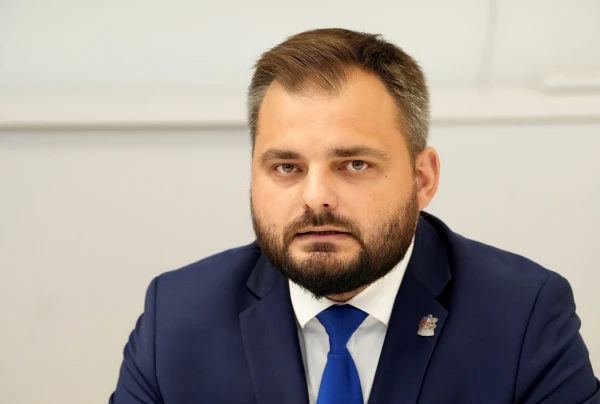
The head of the State Security Service, Normunds Mezviets, stated that in the event of a new Russian invasion, the consequences would be catastrophic, reports nra.lv citing The Telegraph. "I understand very well that if the Russians come here for the third time, it will not only be the end of our statehood, Latvia as a state, our sovereignty, it will also be the end of Latvian ethnic identity... they will kill us all," Mezviets said.
He noted that the hybrid war coming from Minsk is "becoming increasingly aggressive," and that in Belarus, migrants are being trained to confront European border guards.
According to him, migrants are prepared for clashes in special camps, after which they are directed to the borders of the European Union — to Poland and the Baltic states. In recent years, tens of thousands of people have been smuggled across the border as part of Russia's escalating hybrid campaign against the West.
Speaking from a windowless bunker at the headquarters of the State Security Service, comparable to Britain's MI5, Mezviets stated that the tactics of Belarus and Russia have changed over time. "I remember the early years — they were quite calm... but over the last year, things have become much more aggressive," he noted.
According to him, the Belarusian authorities use various methods of psychological influence on migrants before attempts to cross the border. One such method he mentioned was an "information operation" against Latvia.
Before being sent to the border, migrants are shown videos allegedly featuring testimonies from people who are beaten and expelled by "cruel border guards." However, Mezviets stated that upon analyzing these videos, clear forgery was revealed — the "scars" shown are not real. "Even without being a great expert, I can say — these are not real scars," he noted, adding that it is likely a case of primitive makeup.
He also warned of a more serious threat — according to available information, migrants are being trained to act more aggressively.
Mezviets did not disclose all the details of the intelligence data, but reported that Belarus has created infrastructure at the border, including warehouses, hotels, and camps for training migrants before they are sent to Latvia.
Polish authorities had previously reported alleged existing underground tunnels for smuggling migrants across the border. Mezviets noted that Latvia has not yet detected such tunnels, but has been observing a significant concentration of Belarusian forces aiding illegal migration from the very beginning.
With irony, he added that from a professional standpoint, such operations are "very interesting" and "strategically quite smart," noting that he would be better prepared for them if necessary: "I understand how such operations can be carried out. If I ever have to do this, I will be better prepared for it. From a professional point of view, it is very interesting. This concept is very good, very smart... strategically quite smart."
As a Latvian, he understands better than most of his European colleagues the consequences of ignoring the threat posed by Russia.
"I understand very well that if the Russians come here for the third time, it will not only be the end of our statehood, Latvia as a state, our sovereignty, it will also be the end of Latvian ethnic identity... they will kill us all," Mezviets said.
According to him, several Western intelligence agencies believe that the Kremlin may be ready to attack NATO within five years.
In recent years, the alliance has faced attempts at destabilization, including covert sabotage against infrastructure and logistical chains supporting Ukraine. One of the key targets of intelligence, according to Mezviets, has become the European railway network.
This raises particular concern in the Baltic states, which will require the transfer of significant military resources by rail in the event of a possible invasion. Russia, he said, has long been gathering intelligence on NATO's troop transfer routes.
He cited the example of the detention of a Russian agent who was gathering information about Latvia's railway system — security regimes, bridges, and other facilities necessary for potential disruption of logistics.
Commenting on recent railway accidents in Spain that resulted in dozens of deaths, Mezviets noted that in such cases, it is natural to consider the possibility of sabotage, although these incidents were officially deemed technical.
According to him, the covert confrontation between Russia and the West will continue for many years to come.