
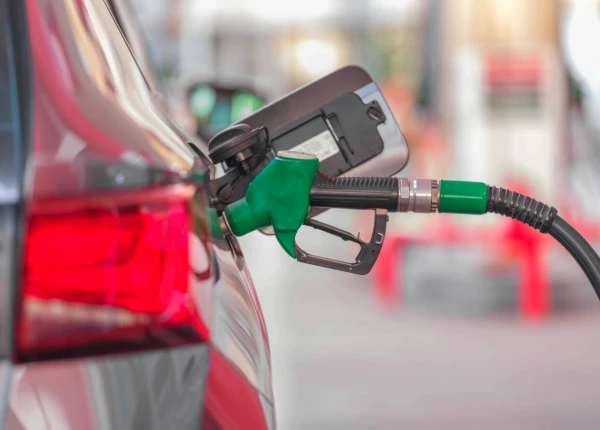
A petition has been launched on the public initiative portal "Manabalss.lv" for a temporary reduction of the excise duty and value-added tax (VAT) on fuel for up to 12 months.
The representative of the initiative is Martins Roze. He writes that fuel prices in Latvia have a significant impact on family budgets, business expenses, and the overall level of inflation in the country.
"Geopolitical instability in the Middle East and fluctuations in the global oil market lead to rapid price changes that the residents of Latvia cannot influence," says Roze, adding that excise duty and VAT make up a significant portion of the final fuel price.
The current system does not provide for an automatic or temporary mechanism to reduce the tax burden in the event of exceptional increases in global prices to stabilize the domestic market, the initiative states. This leads to increased transportation, food, and service costs, a decrease in people's purchasing power, and reduced competitiveness of businesses.
The current situation particularly negatively affects residents of the regions, who often do not have sufficient access to public transport and directly depend on private transport, says Roze. In his opinion, such a situation requires a flexible tax mechanism that responds to exceptional circumstances and protects public interests.
Roze proposes to temporarily reduce the excise duty on fuel for up to 12 months to the minimum threshold values established by the European Union (EU). He calls for a reduced VAT rate on fuel where legally possible under EU legislation.
At the same time, Roze urges the inclusion of a mechanism in the legislation that allows the Cabinet of Ministers to reduce the tax burden on fuel for a certain period in emergencies if global oil prices exceed a certain threshold.
As stated by the Minister of Economy Viktor Valainis, the government will make a decision on this issue depending on the development of fuel prices and the impact of the war. If the consequences are short-term, there will be no need to reduce the excise duty, but if forecasts indicate that military actions will be prolonged, active decisions will follow.
As reported, since the escalation of the conflict in the Middle East on February 28 of this year, the average price of diesel fuel at the largest gas station networks in Latvia has increased by about 25%, while the price of 95-octane gasoline has risen by 7-9%.











Leave a comment