
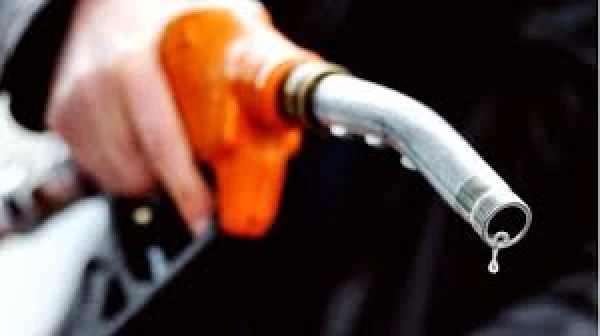
Latvia could release up to 40,000 tons of oil reserves to the market, said Minister of Economy Viktor Valainis to reporters on Thursday, as reported by LETA.
The minister explained that following the statement from the International Energy Agency (IEA) about releasing oil reserves to the market, a procedure has been initiated in Latvia to assess the available fuel volumes on the market. Currently, a survey has been sent to market participants regarding the physically stored reserves in Latvia, the volumes available to traders, as well as the situation in the fuel market, including pricing policy. After receiving the information, a decision will be made on further actions regarding the use of Latvian reserves.
He noted that currently the availability of physical fuel stocks in Latvia is stable and there are no significant supply risks at the moment. At the same time, the development of the global market is difficult to predict, so it is necessary to maintain a cautious approach and assess various possible scenarios.
Valainis emphasized that when making a decision about releasing reserves to the market, it is important to achieve the maximum possible impact on the market situation and fuel prices while maintaining the primary goal of the reserves — to ensure resource availability in case of a real fuel shortage in Latvia.
The minister noted that the IEA member countries jointly make decisions about releasing reserves in response to a potential fuel shortage in the global market. Each country, based on the volume of its reserves, decides to release them to the market, thereby signaling that despite the approximately 20% fuel shortage caused by military actions, this shortage will essentially be compensated.
Valainis added that it would be beneficial for the Baltic countries to coordinate actions with Poland in this matter, which is one of the largest wholesale fuel suppliers to Latvia. According to him, such an approach could create a more significant positive effect on the regional market.
"If these reserves are released to the market, it will provide a short-term result. It cannot have a long-term effect. From Latvia's side, we are talking about 40,000 tons — this would be enough for 10–14 days," the minister said. He noted that in this case, it is Latvia's participation in joint efforts to stabilize the global market.
At the same time, Valainis emphasized that Latvia should approach the use of reserves cautiously. According to him, the situation in the oil market has been very unstable in recent weeks, so it is important for the state to retain as much physical reserves as possible.
The minister also expressed his personal opinion that reserves purchased and owned by the state in Latvia should not be released to the market, as the development of the situation in the near future remains difficult to predict, so in the interests of the state and the economy, these reserves should not be touched. Latvia is considering the possibility of using so-called option contracts — "tickets."
Speaking about the potential impact on consumers, the minister noted that it is difficult to predict this at the moment. If the reserves are sold at market price, the impact on fuel costs may be insignificant, while a greater effect would occur if the government applied additional support mechanisms. In Valainis's opinion, one of the most effective solutions could be a reduction in the excise tax on fuel.
Valainis also noted that, given the differing views between the Ministry of Economy and fuel traders, it is planned to propose the introduction of a temporary tax on excess profits to prevent unjustified profits in the context of price fluctuations. This would allow for market situation control, and if the profits of market participants significantly exceed the normal level, excess profits in the form of taxes would be directed for the benefit of society using fiscal instruments.
If market participants compete in good faith and do not gain additional profits from the current situation, excess profits will not arise. Otherwise, it will be clearly visible in the companies' financial reports, the minister emphasized.
Responding to a question about reducing the excise tax on fuel, the minister noted that the government will make a decision considering the development of fuel prices and the impact of military actions. If the impact is short-term, there will be no need to reduce the excise tax, but if forecasts show that military actions will drag on, appropriate decisions will follow.
Also, in response to a question about whether fuel traders were able to explain "every added cent" to the fuel price, Valainis noted that he did not receive such confidence.
Valainis emphasized that the issue of the fuel market is on the agenda of all responsible institutions.
As previously reported, in the largest networks of gas stations in Latvia, the average price of diesel fuel has increased by approximately 25% since the escalation of the conflict in the Middle East on February 28 of this year, while the price of 95 octane gasoline has increased by 7–9%.







Leave a comment