
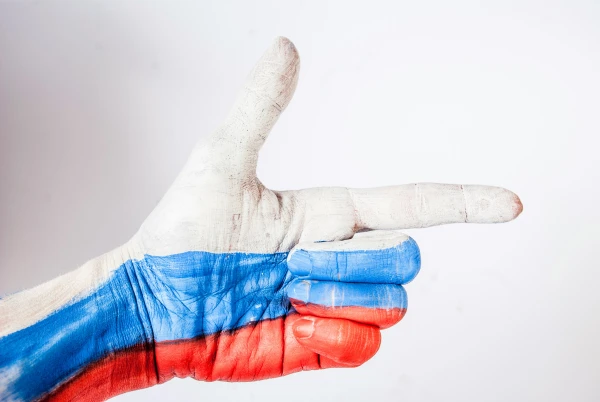
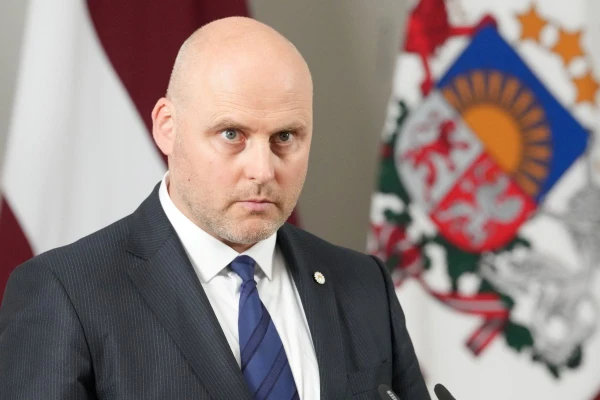
Russia's statements about a possible war with Europe are largely rhetoric, as it lacks the necessary military resources while waging war in Ukraine. At the same time, in the near term, the European Union (EU) faces more serious risks related to a possible escalation of hybrid attacks from Russia, said Janis Kapustans, a lecturer at the Latvian National Defense Academy, to the LETA agency.
In response to a question about the increasing tension in relations between Russia and the EU, Kapustans reminded that after the restoration of independence of the Baltic states and the collapse of the USSR, the situation was almost the opposite — Russia had significantly better relations with the EU than with NATO. According to him, at that time, major EU countries, including Germany and France, actively invested in Russia, large companies operated there, and Russia was interested in cooperation with the EU.
Kapustans emphasized that the situation changed radically after the start of the full-scale war in Ukraine in 2022. Although the EU is often criticized for its cumbersome nature and bureaucracy due to the presence of 27 member states, he noted that the Union responded harshly — in Kapustans' opinion, even harsher than the USA — by imposing sanctions that were tightened over time.
He reminded that the EU plans to gradually abandon the import of Russian gas: certain restrictions will come into effect as early as 2026, with a complete abandonment scheduled for 2027, including countries like Hungary and Slovakia, which are still purchasing Russian gas. This, according to him, demonstrates the EU's ability to act and the effectiveness of the tools at its disposal.
Kapustans also pointed to the influence of the administration of US President Donald Trump, reminding that with the beginning of his term, US policy towards the EU became "rather unfriendly," and Russia is trying to exploit this situation. He noted that in negotiations regarding Ukraine, the USA is trying to engage in dialogue with Russia while simultaneously interacting with Ukraine, largely sidelining Europe.
As an example, he cited the so-called 28-point plan, which included a provision for the reconstruction of Ukraine funded by the EU. This, in his opinion, would mean a situation where the USA and Russia negotiate among themselves, while the EU pays without participating in the negotiations. Kapustans emphasized that the EU can provide financial assistance only if it is involved in decision-making, not when "others decide that Europe will pay."
According to him, these negotiations emphasize that Ukraine should forget about joining NATO, but its possible accession to the EU is allowed. At the same time, Kapustans reminded that the decision on EU membership is made not by the USA, but by EU institutions — the European Parliament and all member states. He noted that the USA can influence some EU states, including Hungary, which has so far blocked Ukraine's movement towards the EU, and suggested that such attempts will continue.
He emphasized that accession to the EU is carried out according to the Copenhagen criteria, and the "trump card" of the USA, or as Trump himself says — "cards," are their connections with several EU states, including good relations with Hungarian Prime Minister Viktor Orban, Italian Prime Minister Giorgia Meloni, as well as influence in Poland and the Baltic states.
At the same time, Kapustans emphasized that Germany and France have a significant influence on decision-making in the EU. He noted that France has alternated between cooperating with the USA and competing with it at different times, so, in his opinion, the French and other founding countries of the EU are unlikely to allow a situation where the USA announces Ukraine's accession to the EU, and this happens automatically.
According to him, there are also groups in the EU that do not want to see Ukraine as part of the Union. Kapustans expressed doubt that Ukraine would be accepted into the EU in the coming years. He emphasized that the accession process is slow, lengthy, and complex, and also pointed out the large agricultural sector of Ukraine — its acceptance would require significant EU resources to support Ukrainian farmers.
Kapustans reminded that the EU accommodated Ukraine by quickly granting candidate status, but cited Turkey as an example, which is also a candidate but has not made significant progress towards accession. He added that in the case of Ukraine, the issue of corruption should also be considered, pointing to reports of possible misappropriation of aid funds and the growing wealth of elites, although it is impossible to prove this 100%.
In response to a question about the current relations between Russia and the EU, Kapustans stated that Russia currently has a very negative attitude towards the EU, as it has imposed extensive sanctions. He noted that he does not see any signals of the EU's readiness to lift sanctions against Russia in the near future, even if the USA were to propose lifting its own.
He also mentioned the EU's aviation restrictions — a ban on Russian aircraft using the Union's airspace, as well as other measures. Kapustans reminded about the instrumentalization of illegal migration by the Belarusian regime after the falsified elections, emphasizing that the EU has effective tools that complicate Russia's position.
He noted that trade volumes between the USA and Russia were insignificant even before the war, while the geographical proximity of the EU defined a different position. Although trade in certain areas continues, many sectors have ceased direct cooperation, and sanctions act as a significant economic lever. Kapustans expressed doubt that relations with Russia could be quickly restored, pointing out that the Baltic states, Poland, and the Nordic countries are unlikely to be interested in returning to the previous model.
Speaking about the prospects for the next year, Kapustans stated that Russia will definitely continue and intensify hybrid attacks, as it is unable to conduct an open war. He emphasized that warnings about the need for preparation over the next five years should be seen as a call to strengthen defense capabilities and develop combat capabilities.
According to him, the Baltic states, Poland, Finland, Sweden, and other Northern countries could become a serious regional power if they manage to unite. He also noted that Germany, as one of the European powers, is actively increasing its military capabilities, particularly by forming its brigade in Lithuania.



Leave a comment