
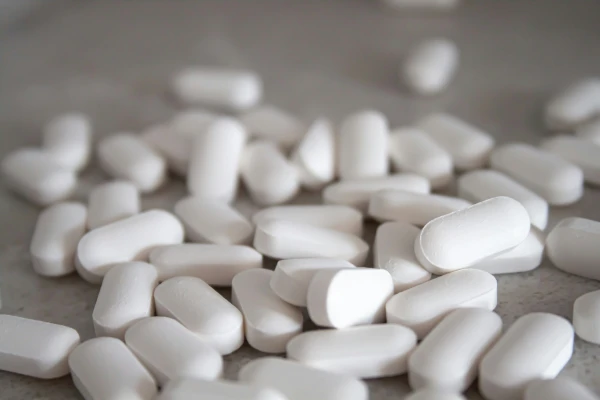
The recently adopted state budget for the next year finally provides funding for the creation of a reserve of critically important medications. The Ministry of Health has compiled a list of the 250 most necessary drugs and plans to start procurement at the beginning of next year. However, a plan for their circulation in crisis conditions has still not been developed. Major medication distributors and pharmacies are ready to participate, but still do not know what exactly they are expected to do, reports the program Nekā personīga (TV3).
In January of this year, a new model for drug pricing replaced a system that had been in place for 20 years — the lower the manufacturer's price, the higher the allowable markup. Now the markup is fixed. This has reduced the profits of distributors and pharmacies, leading them to resist the reform and threaten a shortage of medications. However, over the year, there has been no change in the availability of medications — 98% of registered drugs continue to be reliably supplied in Latvia.
"The unavailability of medications was a problem both before and after the reform, and it is a problem of European scale. Such low prices may not motivate manufacturers to participate in such a small market as Latvia. Therefore, we need to look for other ways to replace the deficient medications," explained Janis Libkens, a board member of the Latvian National Association of Pharmaceutical Supply.
The Ministry of Health anticipated a decline in profits. To compensate for this, a new fee for pharmaceutical services was introduced. Depending on the location of the pharmacy, this fee is either 1.5 or 2.5 euros. The customer pays 75 cents, and the rest is covered by the state. This year, 9.4 million euros have been allocated for this in the budget.
As previously reported by the program Nekā personīga, concerns arose in the spring that funds would not be sufficient until the end of the year, as the ministry did not take into account that a large number of paper prescriptions were still in circulation.
"By the end of the year, we will have all the data. We will know exactly how many prescriptions the residents of Latvia used this year. At the very beginning of the year, we saw a sharp increase in the number of prescriptions, then in the summer there were fewer, and now we are at an average level," stated Health Minister Hosam Abu Meri.
In 11 months, pharmacies have processed approximately 2 million more prescriptions than last year, so the fee for pharmaceutical services has already cost almost 3.7 million euros more than planned. Next year, 15 million euros have been allocated for this. The ministry plans to completely exempt group I disabled individuals from this fee, and to cover it in full for medications costing up to 10 euros. The new rules may come into effect in the summer.
Despite the problems, the minister is confident that the first year of the reform has been successful. In the next year, markups may be revised — increased for expensive medications. Already at the beginning of the reform, pharmacies indicated that purchasing medications costing, for example, more than 500 euros was unprofitable, as the allowable markup of 2 euros does not cover transportation and storage costs.
There is also consideration of introducing a cap on the fee for pharmaceutical services if a resident receives more than 5 prescriptions per month. There are approximately 82,000 such residents. This has not yet been discussed with the industry. A decision is also expected regarding the formation of strategic reserves of medications.
To create a reserve of 250 critically important medications in the country, 9 million euros have been allocated from the budget for the next three years. Major distributors are also ready to participate, but the ministry has yet to present them with a clear plan for ensuring the circulation of medications.
In Latvia, there are three levels of forming a stock of medications — individual, where people purchase and store medications themselves; institutional — where hospitals and other institutions do this; and state level. Such a stock is necessary to ensure that the population has access to vital medications in a crisis situation. It is also a protection against supply disruptions, which more and more European countries have been facing in recent years.
The European Commission compiled its list two years ago — it included more than 200 active substances. This year, a similar list has finally appeared in Latvia. In November, the government approved it as part of an information report on the supply of critically important medications. Of the 250 medications included in the list, about one-fifth can be produced in Latvia.
"All calculations are there — how many medications are needed, how much will be required if, for example, production needs to be supported, how much storage costs, who to cooperate with… I think this is a very good document, and next year the process will begin. I mean procurement, and of course, we have cooperation with other Baltic countries. A pharmaceutical package will also be adopted soon — we also voted in the Council of Europe, it seems, on December 2. So, there may also be joint procurement," explained Hosam Abu Meri.
Until now, the main problem has been a lack of funding. However, there were also no precise calculations. In the fall, the Ministry of Health reported that about 15 million euros were needed. In the recently approved state budget for 2026, 3 million euros have been allocated for this over the next three years. The minister did not respond to whether this is sufficient.
– Nekā personīga: Will we be able to prepare these reserves on time?
– We are working all the time.
– But it cannot be said exactly when they will be fully ready, right?
– As for procurement, I say: in January we will have a meeting, and we will start the process of procuring reserve medications […]
– And is there a conceptual plan — where they will be stored?
– Yes. There is a plan for storage and for the system of how their circulation will proceed, because each medication has its own expiration date. […] Therefore, it is necessary to agree that this will be a process in which medications are constantly updated.
Large distribution companies could also be included in the storage and circulation of medications. The Latvian National Association of Pharmaceutical Supply unites the three largest wholesalers in the country — Recipe plus, Tamro, and Magnum Medical. Last year, they provided more than 60% of all medication supplies in Latvia. Since the approval of the information report, the ministry has not conducted negotiations with distributors.
Janis Libkens explained:
– Association members have unequivocally confirmed their readiness to participate in this system, but a clear action plan is needed from government institutions on how the circulation of medications will occur.
– Until now, you have not seen such a clear plan?
– No, we haven’t seen it. […] Of course, we would like it to be faster. We hoped that this would be implemented in 2022 or 2023. But now... soon 2025 will end, and it will be 2026 — we can only hope that by the summer of 2026, this issue will finally be resolved and a conclusion will be reached.
Pharmacies may also be involved in the circulation of medications. For example, in peacetime, they would sell medications to prevent them from expiring, and in a crisis situation, they would become points for distributing them to the population. However, pharmacists are not involved in discussions about supply issues in crisis conditions.
"In my opinion, pharmacies should be included, at least with general information — how exactly they should act, because pharmacies have such a serious resource as medications, as well as disinfectants and hygiene products that may be especially needed in a crisis situation. But right now, I do not understand how we should act in the event of an emergency — I hope there will not be one. It is important not to concentrate only in the largest cities or in Riga, as many of our members are scattered across small towns and rural areas. We need to at least understand the basic principles — how to act in such a situation, as we are also part of the healthcare system," pointed out the chairperson of the Pharmacy Association, Agnese Ritenē.
The ministry informed the program that it intends to present a specific plan for industry participants at the beginning of next year.
There is also an idea on the agenda to develop local production of medications in Latvia. The minister hopes to attract funding for this from Europe. For now, this is just an idea — there is no specific plan.





Leave a comment