

By 2030, Latvia must connect its railway line to the European gauge. Despite the fact that a year ago the government approved the first phase of the “Rail Baltica” project worth 5.5 billion euros, there is effectively no specific plan for how European rails will be implemented, reports Latvian Radio.
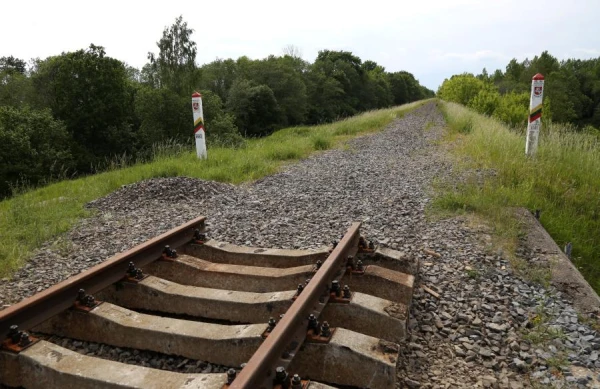
According to unofficial information from Latvian Radio, it is possible that from Salaspils to Skulte, the train will continue to run on the existing broad gauge of 1520 mm, while from Skulte to the Estonian border, the construction of European standard rails is planned. In this case, trains capable of operating on two different types of gauges will be required.
It is reported that there are few manufacturers of such equipment, but this will significantly reduce costs.
Earlier, the Ministry of Transport sent a draft order to the government for approval to reallocate 849,970 euros to cover the expenses of the joint venture of the three Baltic States - AS “RB Rail”. The ministry explains that this amount is "intended to cover the indirect costs of 'RB Rail' that cannot be financed from EU funds but are necessary to ensure the continuous operation of the enterprise."
According to the latest data from “RB Rail”, the cost of the first phase of the “Rail Baltica” project in the Baltic States may reach 14.3 billion euros, of which 5.5 billion is in Latvia. At the same time, the Ministry of Transport assures that potential savings could amount to up to 500 million euros through the optimization of technical solutions and other factors.
The total project costs, according to the cost-benefit analysis, could reach 23.8 billion euros. In the previous analysis in 2017, the cost was estimated at 5.8 billion euros.
It should be noted that the “Rail Baltica” project involves the creation of a European standard railway line from Tallinn to the border of Lithuania and Poland, to ensure further connection with other countries in Europe. In the Baltic States, it was initially planned to build a new line of 870 km with a European gauge (1435 mm), designed for train speeds of up to 240 km/h.













Leave a comment