
This working week, the deputies of the Saeima decided to dedicate to… “budgetary sufferings”: that is, to the final reading of the budget-2026 and the package of bills related to the budget.
Notably, the debates on the bills included in the budget package lasted all Wednesday — from 9 a.m. to 9 p.m., but the entire package, consisting of 47 documents, was not reviewed by the parliamentarians. The reason is the heated debates on almost every proposal from the opposition.
“The pale-faced has a forked tongue”
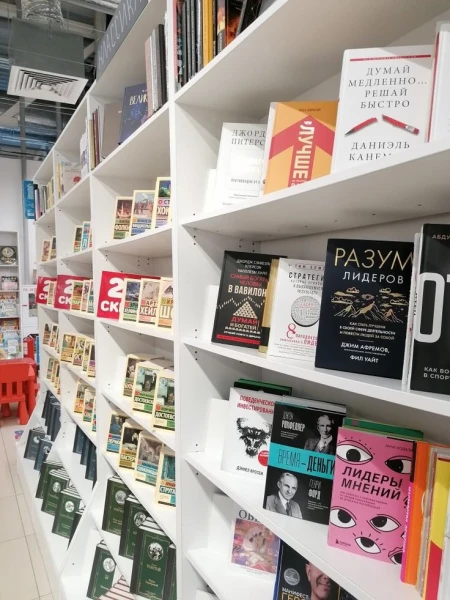
The lively debate was also sparked by Latvia's legislative innovation — the attempt to divide tax rates… by language. Yes, this refers to an amendment to the Value Added Tax Law, which deprives the 5% VAT rate for periodicals (newspapers and magazines) in the Russian language, as well as books in Russian and subscription electronic publications in Russian.
For these publications “in a foreign language,” starting from January 1, the rate is set at 21%, meaning the rate increases by 16 percent immediately! At the same time, alongside the state language, the reduced rate is maintained for periodicals and books in other official EU languages and languages of EU candidate countries, as well as the Organisation for Economic Co-operation and Development (OECD). This clearly discriminatory amendment against Russian media and books was proposed to be noted by opposition deputies.
“I have one question. Do you think this is fair? For me, my native language is Russian, and now I will have to pay more. If, for example, my native language were Latvian, I would pay less for newspapers. Is that right? Is that fair? We also spoke with entrepreneurs. They said that if this law is passed, they will simply move elsewhere — in Estonia and Lithuania, there is no such division. I urge you to support our proposal and not divide people by language,” noted an opposition deputy from the podium.
A blow to business
Her colleague echoed: “Recently, I was invited to a bookstore — there were books in Latvian, English, and Russian. They have a lot of books in Russian, and they have been running this business here in Latvia for 10 years; the woman has completely dedicated herself to it. She honestly says that they will simply have to close the store…
Yes, in any case, I would still urge to look at this more than just as a language issue, at the fact that people are reading books less and less, especially children, especially the younger generation, and especially those growing up in bilingual families; they also need a chance. And what will happen now? If, for example, a children’s book cost 15 euros, now it will cost much more.”
Distorted cultural space
Although formally the author of this “wonderful” tax proposal is the Ministry of Culture, it turned out that the idea originally belongs to another figure — the head of the parliamentary faction of “New Unity,” which he proudly announced from the parliamentary podium:
“Dear colleagues! Through tax policy, we must support our state language, the cultural space of the European Union, and our values. I will not hide that I was the author of the proposal that called on the government to abolish the reduced VAT rate for the press that does not publish in the languages of EU countries and in the state language. We must maintain the reduced VAT on newspapers and books published in the state language. But we are not obliged to subsidize publications in those languages that are not connected to our cultural space.”
I do not know another country like this
Yes, it turns out that the Russian language, which is considered native by 37 percent of the population of Latvia, is not connected to the cultural space of Latvia, while the languages of countries that are part of the OECD — for example, Korean, Turkish, Japanese, Norwegian — are very closely related to the Latvian cultural space! The logic is ironclad!
This admission was reacted to by a deputy from another opposition party, who was disappointed with the previous speaker: “If so openly, then I am very, very disappointed in Mr. just because he came up with such an idea... Specifically, this idea that we will now differentiate taxes by languages. It would be about the same as if we were in power, we would say: if you have books with liberal content, you will have one tax; if you have content that is, say, conservative, then another.
I cannot imagine any country in the world where the tax rate would be different depending on the language. I asked this question to artificial intelligence, whether there is such a country where the tax rate depends on the language. The answer is — there is no such country! So we will be the first here! Is this not evidence of how far we have gone?!"
A million-dollar scandal
“And about the fiscal effect. According to estimates, by depriving Russian media of the benefits, we will receive 1 million euros in the budget. We are talking about one million — one million! — on 18 billion in expenses, you saved one million, thus splitting society. Congratulations!” said the deputy.
Interestingly, the deprivation of the reduced VAT rate specifically for publications in Russian is presented as a kind of technical amendment — as if this is not a tax increase, but merely the application of the standard tax rate.
“This is a lie and a deception that they are trying to spread here and are also trying to spread even outside our country, that we are increasing the tax or we are imposing some additional tax now on the press or on books in Russian. No, the VAT rate for Russian-language publications and books will be the same as it was before the benefits. We are simply giving benefits, meaning we stimulate, and thus we particularly protect content in the state language because we do not need to stimulate, protect, and pay for content in Russian. That’s how it is. And do not mislead that it is otherwise,” stated a representative of the National Alliance from the podium.
...In the end, the parliamentary majority supported the increase of the existing VAT rate on Russian periodicals and literature.














Leave a comment