
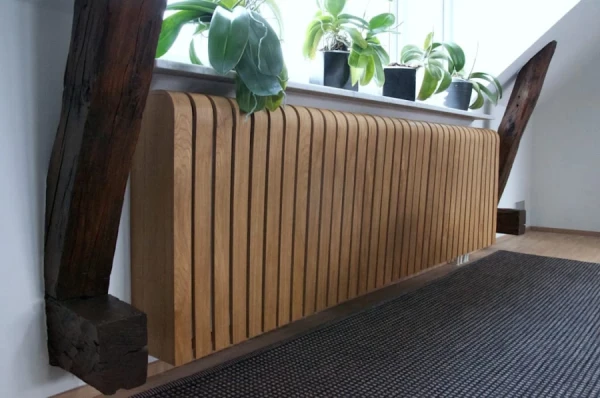
Heating radiators are often perceived as a necessary but not the most aesthetic detail of the interior. However, designers assure that radiators can not only be masked but also turned into a full-fledged decorative element. This can be achieved using textiles, color accents, decorative panels, or even furniture constructions.
Masking with Textiles
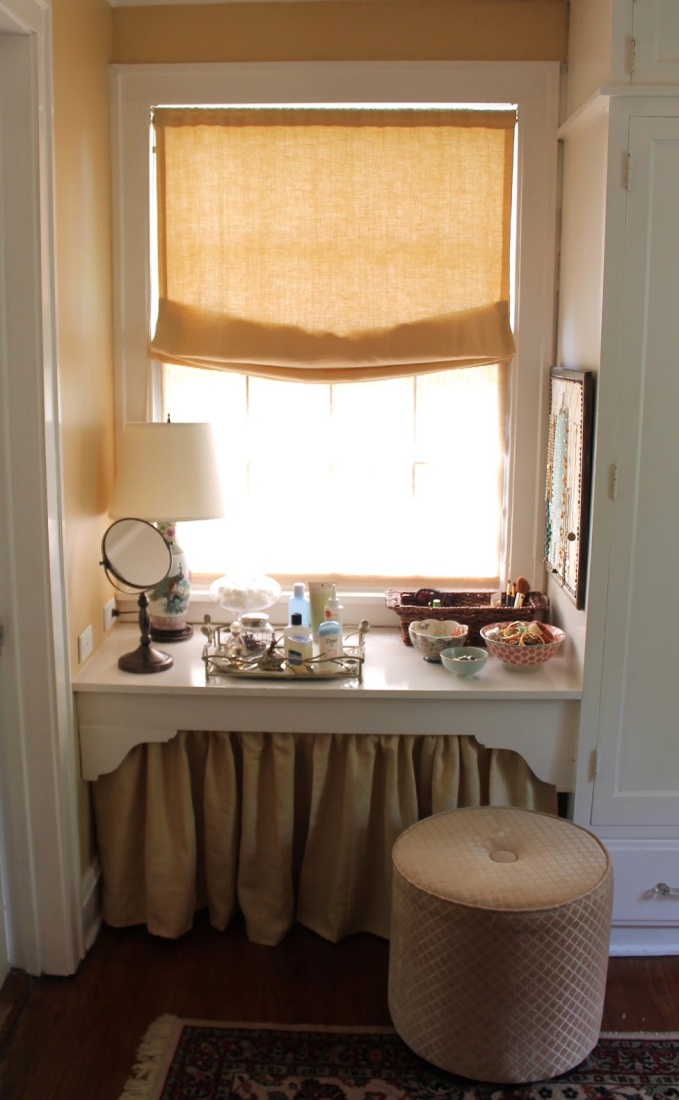
One of the simplest ways to hide a radiator is to use curtains or light fabric panels. Long drapes visually cover the radiator and make the interior look neater. It is important to leave a small gap between the fabric and the radiator to allow heat to circulate freely in the room. Dense or blended fabrics based on cotton or linen, which hold their shape well and are heat-resistant, are suitable for such solutions.
A Bright Accent Instead of Masking
Sometimes, there is no need to hide the radiator at all — it can be turned into a decorative element. For example, painting the radiator in a contrasting shade that echoes the colors of the furniture, textiles, or accessories. Special heat-resistant paints are usually used for metal and cast iron models. Before painting, the surface is cleaned of the old coating and primed to ensure the color lasts longer.
Decorative Screens and Boxes
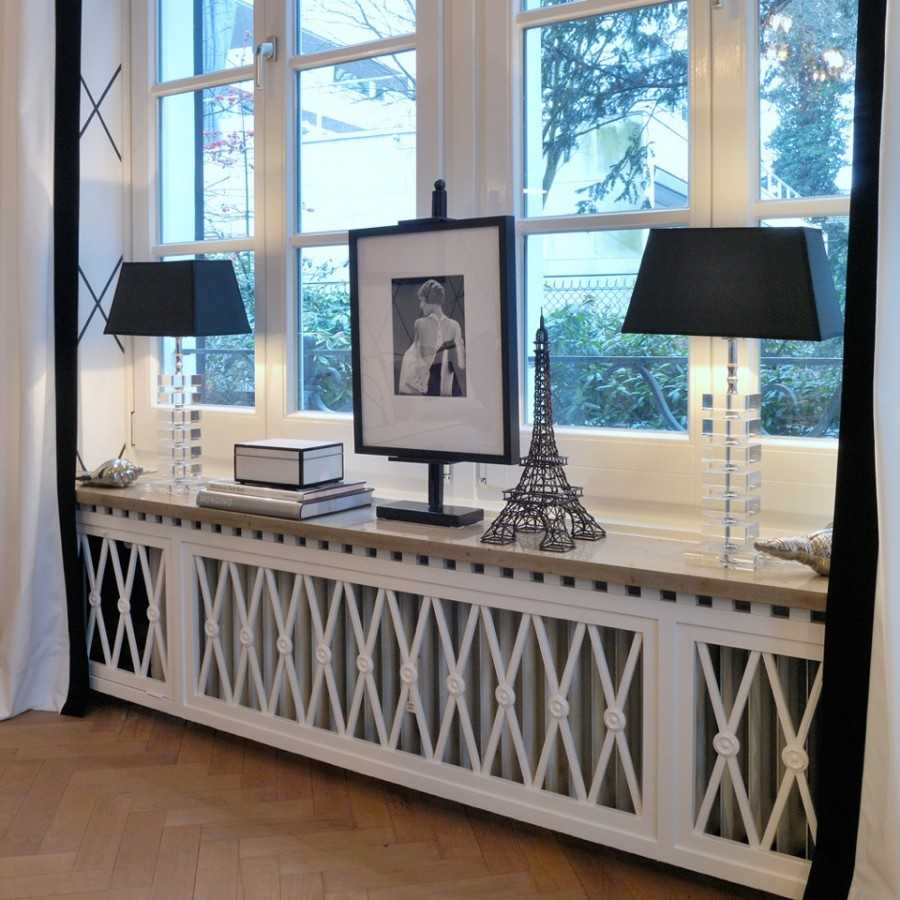
If the radiator needs to be completely hidden, designers recommend using decorative screens or boxes. They can be made from wood, MDF, metal, glass, or other materials. Perforated panels or grilles allow air to circulate freely and maintain the heat output of the radiator.
Such constructions can become part of the interior: wooden panels create a cozy atmosphere, metal ones are suitable for minimalist spaces, and glass panels are sometimes adorned with patterns or prints.
Integrating the Radiator into Furniture
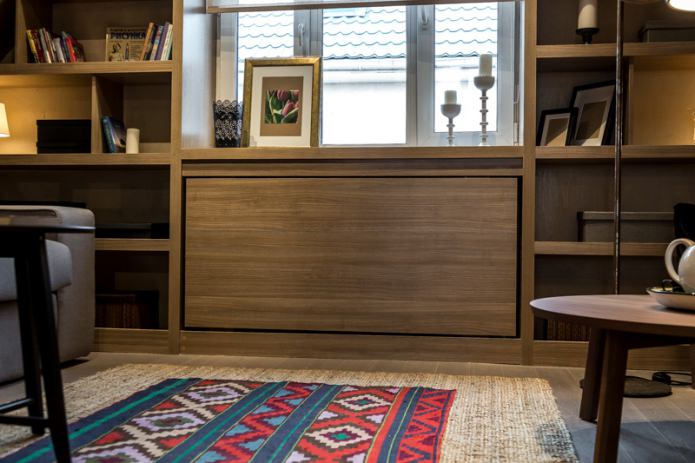
Another popular technique is integrating the radiator into furniture. A bench, cabinet, or console with perforated fronts can be installed under the windowsill. In small rooms, this solution is especially practical: the space under the window turns into a storage area or workspace.
In the kitchen, the radiator is often hidden behind an extended countertop, while in an office or children's room, it can be concealed behind a compact cabinet or shelf.
The Radiator as Part of the Style
If there is no need to hide the radiator, it can be made part of the overall design. Dark radiators look good in loft or minimalist interiors, while white ones harmonize with Scandinavian and classic styles. In vintage spaces, old cast iron radiators are sometimes intentionally left exposed, accentuated by decorative furniture or plaster elements.
Relaxation Area by the Window
In spacious rooms, the radiator under the windowsill can be transformed into a cozy relaxation area. A box with a perforated grille is installed, and a mattress, blanket, and decorative pillows are placed on top. This creates a small window seat — a comfortable spot for reading or resting.
Designer Radiators
If an interior update or renovation is planned, ordinary radiators can be replaced with designer models. Modern radiators come in vertical, tubular, or floor-standing styles, with a variety of shapes and colors, and often become a full-fledged decorative element of the room. However, such solutions usually cost significantly more than standard options.
...Heating radiators do not necessarily have to be hidden. They can be decorated with textiles, highlighted with color, concealed behind decorative panels, or integrated into furniture. With the right approach, the radiator becomes not a problem in the interior, but a part of a well-thought-out design of the space.













Leave a comment