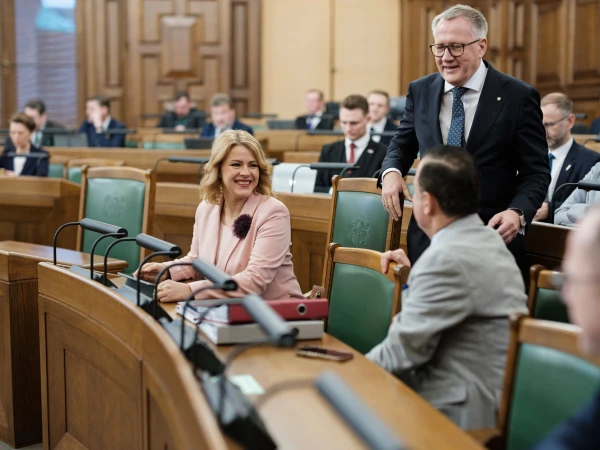
The decisive budget battles have begun in the Saeima. Only after their completion will the fate of Silina’s government be clear.
Don’t Look Down on Minutes
The chairman of the last Supreme Soviet of the USSR entered history with just one phrase: "We have a regulation! Finished or not finished, three minutes and that’s it!" Yesterday, the Saeima also began work on adopting the budget package and the budget for 2026 by changing the regulations.
Instead of the usual 5 minutes, MPs were allowed to debate for 3 minutes the first time and 1 minute for a repeat. What can be said in one minute using only normative vocabulary is a mystery. But that’s the regulation!
In any case, the reduction of time for debates did not speed up the discussion of the country’s main financial law and the bills included in the budget package at all. By the second half of the working day, the MPs had managed to consider only a little more than half of the budget bills, meaning that they had not even approached the budget itself yet.
At the same time, the parliamentarians had already decided that there would be no all-night vigils — if the budget agenda could not be fully reviewed by 21:00, the discussion would continue the next day, and if necessary, on Friday and even Saturday!
Forgot to Ask the Opposition
On the eve of the budget review, Prime Minister Evika Silina stated unequivocally that the opposition "has no substantial arguments to criticize the budget." In fact, there are plenty of arguments! And yesterday, the opposition MPs proved this!
Firstly, they reminded that the budget begins to be formed only in the summer and that the MPs — at least from the opposition — were not involved in this process at all. The budget project itself is completely opaque, and it is unclear where the sums for various programs come from.
"Yes, I am also absolutely dissatisfied with the way the budget is developed. I am dissatisfied that in the summer, when you gather together, only the coalition participates, and there is no opportunity for the opposition or independent representatives to participate. And I think that budgeting would benefit if you did not limit yourselves to coalition politicians. After all, it should be taken into account that there are people with experience both in the opposition and among independents," stated independent MP Skaidrīte Abama, voicing the position of many colleagues in the hall.
Only Cowards Pay Off Debts?
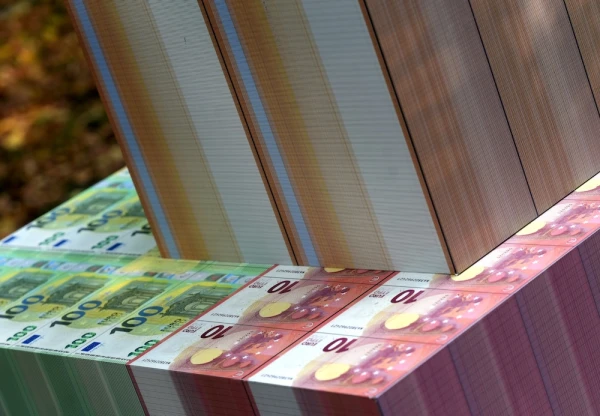
Secondly, the opposition accused the ruling party of reckless accumulation of state debt.
"It’s a pity that the Prime Minister is not participating in these debates because this and the next statement are indeed very fundamental questions that the Prime Minister should have addressed with her clarification. We are living beyond our means; we are not earning as much as we have borrowed. Moreover, our lending conditions are not as good, and the interest rates are not as favorable as in other countries to continue borrowing.
The total debt of Estonia is half that of Latvia. In actual figures, this means that not for repaying the loan, but only for interest on the loan over a five-year period — if we are not increasing the country’s external debt — we are paying international creditors about three billion euros over a five-year period. This is money that goes down the drain, so to speak, just for servicing debts. Compared to the same period, Estonia will spend 1.7 billion less. What does this mean? It means that Latvia’s lag behind Estonia will grow if we do not find a fantastic way to quickly increase our overall gross domestic product. This is the reason why Estonia, with a much smaller economy and population, has been able to surpass Latvia," lamented MP Jānis Dombrava (National Alliance).
And Salaries Keep Rising
Thirdly, the opposition accused the ruling party of being unable to reduce or at least not increase administrative expenses, primarily on salaries in public administration and in the budget sector as a whole.
"You say this is a security budget. It’s all about security. But economic security is no less important. And in this case, you leave the reduction of expenses for the next year, 2027. This means you want to borrow without justification not for security, but for your needs that exceed your capabilities and live on credit.
You said that this year the maximum growth of your salaries is 2.6%. The question is how you calculate that! Yesterday, the State Treasury published statistical data showing that salaries have increased by at least 5.7 percent! This means it will continue; you will keep increasing salary expenses," said MP Andris Kulbergs (United List).
The Glass is Half Full…
To "calm" the population and primarily the voters, MP Gatis Liepiņš from the "New Unity" party attempted from the parliamentary podium, throwing out numbers:
"Firstly. Latvia will have one of the lowest budget deficits next year among the eastern flank NATO countries: In Estonia — 4.5 percent, in Finland — 3.6 percent, in Poland and Romania even more — 6.5 percent of GDP. In Latvia — 3.3 percent of gross domestic product. It will be lower only in Lithuania, where it will be 2.7 percent of gross domestic product.
Secondly, Latvia’s state debt remains among the smallest, and there are many countries with much larger debt obligations. For example, Poland, Germany, Finland have more debt than Latvia, not to mention Italy, France, or Greece.
Regarding the costs of servicing state debt. In 2028, it will amount to 712 million euros. And we are frightened by this figure. We cannot look at just one number. We also need to look at the size of the economy and how much servicing debts costs the country’s economy. In 2028, it will amount to 712 million euros, or 1.5% of GDP. In Latvia’s recent history, there were years when we paid more for debt servicing. This was the case in 2010 when we paid 1.9 percent of GDP. And in 2015, we paid 1.6 percent of GDP for servicing state debt."
Everything would be wonderful if… Latvia still did not occupy the last places in the EU in terms of economic growth rates, investment inflows, innovations, export volumes, and GDP. And in the Baltics, we are consistently last. Or consistently lagging behind — depending on how one prefers to phrase it.
What Happens After the Budget?
As for the budget for 2026 itself, it will surely be adopted — all three coalition parties have decided that the main financial law should be adopted, and only then continue to clarify relationships.
Whether this clarification will end with the collapse of Silina’s government and the creation of a new government is known to no one. However, according to rumors from the corridors of power, the main rebels — the "green farmers" — have already changed their minds about leaving this government and creating a new one.