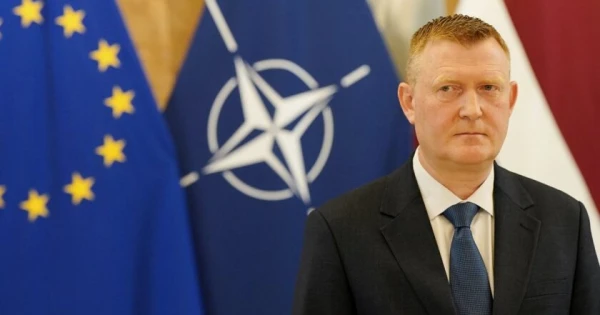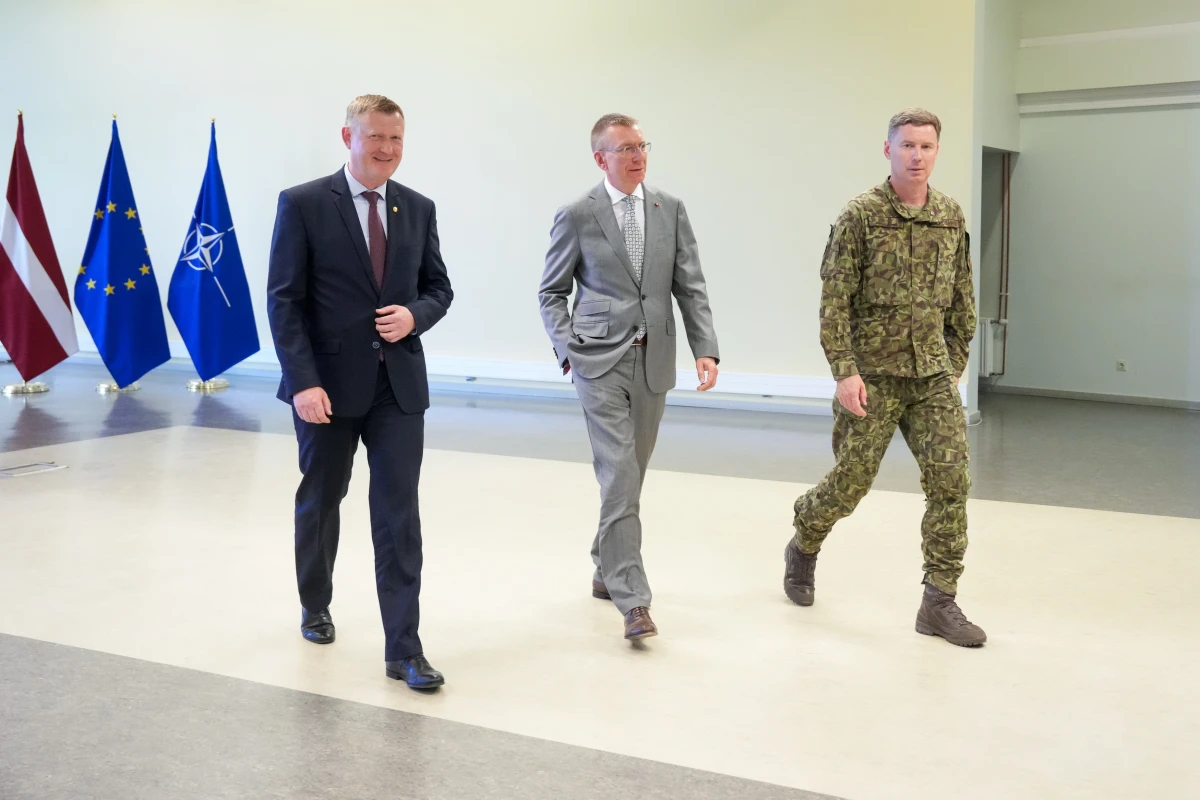
On Thursday, June 25, under the leadership of the President of Latvia Edgars Rinkēvičs, a meeting of the Military Council took place at the Joint Headquarters of the National Armed Forces (NAF) in Riga, bb.lv was informed by the office of the President of Latvia.
The President listened to a report from the National Armed Forces on the development of military potential and the improvement of the capabilities of the professional service, Zemessardze (National Guard), and the State Defense Service — both in terms of personnel resources and infrastructure and armaments.
Considering the upcoming summit of heads of state and government of NATO countries, which will take place on July 7–8 this year in Ankara (Turkey) and will be led by President Edgars Rinkēvičs, one of the main topics of the meeting was the fulfillment of NATO allies' target indicators for the development of military potential.
The Minister of Defense, the Commander of the National Armed Forces, and representatives of the NAF informed the participants about the alignment of NATO goals with the priority and urgent needs of Latvia, especially regarding the operational deployment of drones and counter-drone systems, as well as the necessary restructuring of funding within the existing defense budget.
A meeting of the President's Military Council with the leaders of local governments in the regions of Latgale and Vidzeme also took place at the Joint Headquarters of the NAF.
During the meeting, representatives of the NAF presented current information on the security situation and threat assessments emanating from Russia, including in the context of the ongoing Russian aggression against Ukraine.
The main focus was on developing air defense capabilities, strengthening the Baltic defense line, and creating infrastructure to counter the mobility of the enemy on the eastern border of the country.
In the presence of the commanders of the 2nd Vidzeme and 3rd Latgale brigades of Zemessardze, cooperation between the National Armed Forces and local governments in the regions of Vidzeme and Latgale, as well as the role and tasks of local authorities, were also discussed.
"Incidents involving drones and declared air alerts in several municipalities have already prompted a review of previous action algorithms and an awareness of the volume of work still to be done in the area of civil-military cooperation. It is important to continue interaction with both the defense ministry and the structures of the Ministry of the Interior, especially regarding civil defense," emphasized Edgars Rinkēvičs.
The meeting was attended by the leaders of the municipalities of Augšdaugava, Alūksne, Balvi, Gulbene, Jēkabpils, Krāslava, Madona, Ludza, Preiļi, Rēzekne, Smiltene, Valki, and Valmiera, as well as representatives from the cities of national significance Daugavpils and Rēzekne.