
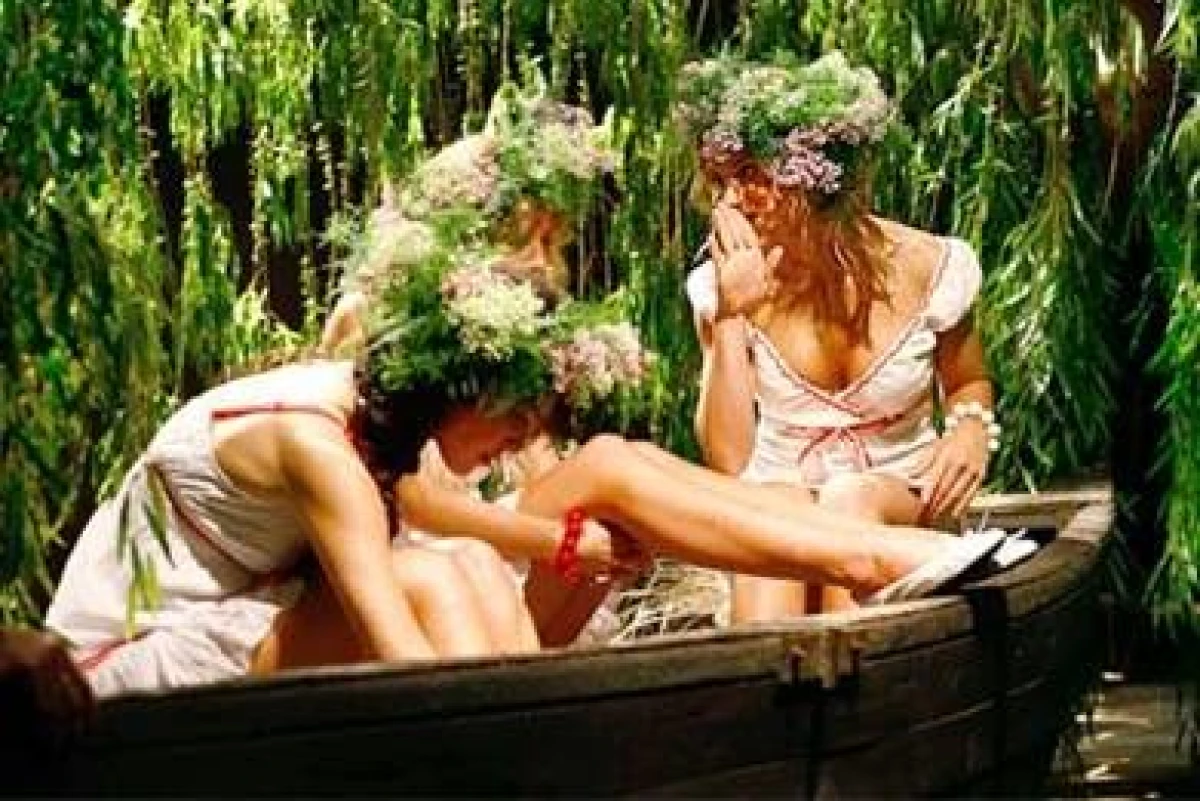
The naked run during the Līgo festival is by no means a new phenomenon. In many places in Latvia, this tradition is sincerely upheld. For some, it is a fun entertainment, while for others, it is a tradition linked to ancient Latvian rituals of fertility and purification.
However, as noted on the Facebook account of lawyer Lauris Klāgiss, it is worth considering: is public nudity always a harmless amusement, or can it, under certain circumstances, attract the attention of law enforcement?
Historically, naked runs are associated with beliefs about fertility, health, and gaining the strength of nature. However, Lauris Klāgiss reminds us that, from a legal standpoint, the line between tradition and offense can be surprisingly thin.
The lawyer points out that in judicial practice, public nudity has been assessed as hooliganism in certain cases, especially when such actions disturb public peace or offend others.
The situation can become even more complicated if such an event is accidentally witnessed by children.
“Judicial practice regarding public nudity is quite insensitive to ancient Latvian traditions. According to court rulings, the display of genitalia in public places is often classified as hooliganism (Article 231 of the Criminal Law) if it disturbs public peace and demonstrates obvious disrespect for society. If the actions do not reach the threshold of the Criminal Law, administrative liability for petty hooliganism comes into play.
Courts have punished people for nudity at gas stations or even in hospital reception areas. Although in Kuldīga the run takes place at three in the morning and it is formally permitted to run in shoes while covering the head with a bath hat or a Jāņi wreath, the line between a “local cultural event” and an administrative offense on a public street is very fragile,” states the page of lawyer Lauris Klāgiss on Facebook.
“What happens if this festive euphoria is accidentally witnessed by minors? Here, the law is no longer joking.
If the naked run takes place in the presence of children, it can be reclassified from harmless fun to a criminal act against morality and sexual integrity (Articles 161 or 162 of the Criminal Law).
Judicial practice has established the conclusion that the display of genitalia and indecent acts in the presence of minors are serious violations. Therefore, if you organize or participate in such a run in an open public space where minors may accidentally be present, the risk of ending up in court is quite real.
Shouldn’t all of this take place strictly behind a high fence? From a legal standpoint — absolutely. To protect both yourself and random passersby, naked runs should take place in completely enclosed and fenced areas. Some organizers have already understood this.
For example, the naked run in Ventspils takes place as part of a festival, which is a paid event and, accordingly, fenced off from random “nude” observers (including in the sense of those who have not paid for entry).
In turn, at the Livonian Solstice Festival in Pāle, a precise regulation has been developed: the distance is only 50 meters — from the oak to the swimming spot in the lake, and during the run, it is permitted (and preferable) to cover oneself with hands or a wreath. Unfortunately, public streets and bridges do not meet the criteria for a closed area, so although the tradition has taken root there, from a legal standpoint, it walks on very thin ice.”
The lawyer explains that in connection with this tradition, another problem must be mentioned — the desire to film everything, take photos, and publish them on the internet.
“If you, as a spectator, decide to film this run and publish it, be very careful. Posting intimate materials in the electronic environment without the person’s consent can lead to penalties. So be prudent before chasing after ‘likes’ and sharing such footage with your followers on Facebook.”
People on social media have also expressed their opinions on this topic.
Some point out that the presence of children at such events is the responsibility of the parents.
“There’s no need to take them to such events.”
With humor, another person commented on the situation: “Demographics need to be raised somehow.”
And someone else remarked that the same actions are evaluated differently by society under different circumstances. “Naked people run organized in bath hats and jump into a pond — everyone is happy and satisfied. On an ordinary day, some Valdis or Valery walks the same route naked, and the result is completely different,” he wrote, calling for a discussion on the boundary between tradition, socially acceptable norms, and the application of the law.
Meanwhile, other commentators urged against excessive legalism. “Traditions should not be touched and made into clickbait,” wrote one of the social media users.











Leave a comment