“Good afternoon, could someone tell me more about the EHIC? Specifically – does this insurance work in the USA and Canada? What does the EHIC cover, and how can one get reimbursement? Who pays for all this?”
Evia Shtalberga, head of the public relations department of the National Health Service, answers:
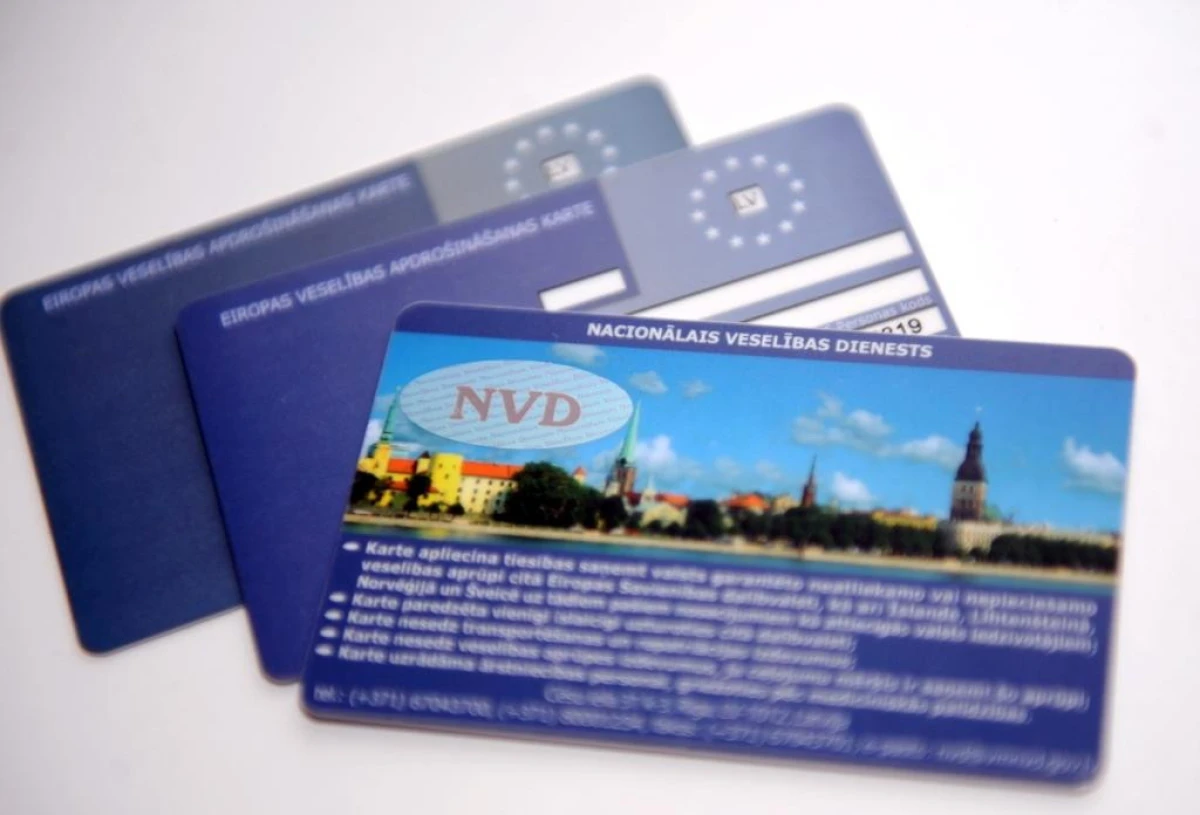
– The European Health Insurance Card or EHIC (European Health Insurance Card) is a free document that can save the holder thousands of euros in case of a serious emergency abroad. The EHIC is a plastic card that confirms that a person is a resident of one of the European Union countries, the European Economic Area (Iceland, Norway, Liechtenstein), or Switzerland, and is included in the social security system in their country. During a short stay in another EU country, EEA, or the UK, the EHIC entitles the holder to receive necessary or emergency medical care under the same conditions as local residents. Care is provided by medical institutions and doctors offering public health services. The type and extent of medical assistance in each specific case is determined by the attending physician.
Although the card is issued for free, its value in an emergency situation can be measured in tens, and sometimes even hundreds of thousands of euros. If a person has an accident or sudden illness while traveling in EU countries, as well as in Iceland, Norway, Liechtenstein, Switzerland, or the UK, they can receive necessary medical assistance under the same conditions as local patients. This means that services will be provided not at commercial rates for tourists (where the bill for even emergency medical care, let alone treatment, can be truly enormous), but at the same rates as for local residents.
In turn, the payment of these expenses will be covered by the state budget; the EHIC issued in Latvia serves as confirmation that the person is insured in Latvia.
Every year, the state covers the costs of emergency medical care for about seven thousand residents of Latvia who have used the EHIC abroad. Most often, residents of Latvia have sought medical care in Spain, Germany, and Sweden. The total amount of paid bills reaches 9 million euros.
An important point: the card does not cover patient contributions if they are required in the host country, nor does it cover medical transportation back to Latvia. For such cases, it is recommended to additionally obtain insurance from a private insurance company.
The card can be issued regardless of age – for both infants and elderly individuals. The card is valid for three years. Those who already have an EHIC should periodically check if it has expired. And, of course, always take it with them when traveling – in case of various unforeseen situations.
Obtaining the card takes just a few minutes if done in person at the customer service center of the National Health Service. An application can also be submitted electronically, and the card can later be received by mail (where and how this can be done is indicated on the website of the State Health Service - www.vmnvd.gov.lv/lv/evak)
In response to a reader's question about using the EHIC in the USA and Canada: no, such a possibility is not provided (the limitation is already embedded in the name itself – European). Therefore, if a trip is planned to countries not covered by the EHIC, it is necessary to contact private insurance companies in advance regarding travel insurance.