Almost 40% of households in our republic are at risk of energy poverty; heating costs are a significant part of the budget for needy families – more than 10-15% of their income. The EU can provide assistance in the amount of 462.7 million euros, with Latvia needing to additionally ensure 25% of national co-financing, i.e., at least 154.3 million euros.
For City and Village
In a quarter of a century, the European Union intends to fully implement climate neutrality, or "carbon neutrality" – this is a legally established goal of the EU, meaning achieving a balance between greenhouse gas emissions and their absorption from the atmosphere. In simple terms, it is the aim to reduce the net volume of harmful gas emissions resulting from human activities to zero.
"In Latvia, this transition is taking place under conditions where a relatively high proportion of residents live in buildings with low energy efficiency, the pace and speed of building renovations are insufficient, and public transport accessibility is limited, especially in rural and regional areas," the Ministry of Climate and Energy sadly noted in the spring.
Therefore, our country will ask the EU for funds, which will also reach the broad masses. Distribution will follow through the Social Climate Fund.
Who Will Receive It?
In the housing sector, which currently consumes the highest amount of energy (about 44%), we expect more than 60% of the Fund's resources to be allocated for:
-
Support for owners of multi-apartment and private houses for renovating low-energy-efficiency housing and implementing small-scale energy efficiency measures;
-
Specifically designed grant programs for low-income households;
-
Modernization of heating supply systems – transitioning to emission-free solutions, supporting the acquisition of renewable energy equipment, or connecting to centralized heating systems;
-
Support for energy efficiency measures in buildings providing social housing for municipalities, rental housing, and living services.
More than 36% of the funds will be directed to the transport sector, including:
-
Support for the acquisition of emission-free vehicles for social service and healthcare providers;
-
Support for the acquisition of electric vehicles for vulnerable households;
-
Mobility solutions for remote rural areas (30% of the population still lives in villages in Latvia);
-
Support for the acquisition of micromobility tools and technical aids;
-
Support for the creation of covered bike parking at railway stations and stops;
-
Support for the purchase of electric trains for batteries, creating infrastructure for charging.
Average Age of Cars – 15.5 Years, and We Heat with Firewood
The moral and physical obsolescence of the domestic vehicle fleet has long become a proverb – despite the fact that the last rising star of national policy has become the experienced car dealer Andris Kulbergs. It is unknown how his relationship with the government will develop, but the fact is that 65% of the country's passenger fleet runs on diesel fuel.
Similarly, the distribution of energy sources for heating is shocking. Energy consumption in households is provided by wood (40.4%), centralized heating (32.3%), electricity (13.2%), natural gas (7.7%), and oil products (heating oil, liquefied petroleum gas) – 5.6%.
In other words, wood fuel – firewood, sawdust, briquettes – takes first place in the heating sector in the country. The ministry of Kaspars Melnis ("New Unity") submitted data for 2023 for approval, but it seems that the structure has not changed much over the past three years.
"In the climatic conditions of Latvia, heating housing is a primary need that residents, especially vulnerable households, do not have functional alternatives for. In the cold season, providing heat to housing is not a matter of choice, and low energy efficiency directly increases both energy consumption and associated costs and emissions," the Ministry of Climate and Energy states.
Decarbonization of the Entire Country
They plan to start correcting the situation with the public sector. This is logical – there is no need to negotiate with a large number of small owners, and the reporting immediately generates a huge area. Latvia promises to ensure the renovation of 3% of state buildings per year; and to restore public buildings with an area of 500,000 sq. m by 2030.
By 2050, the long-term goal of the strategy is to achieve climate neutrality in the housing sector, ensuring that:
-
Almost all buildings are low or zero-emission structures;
-
The housing stock is decarbonized;
-
Renovation is carried out systematically, socially just, and economically sustainable.
Let’s Roll and Stop
As for the transport issue, in the long run, the people of Latvia will be weaned off personal excess cars:
"It is planned to promote the transition to more environmentally friendly modes of transport, including creating a railway as the 'backbone' of the transport system, developing an integrated and multimodal transport system where the railway is central to organizing passenger (and freight) flows." This is certainly a good initiative: but in our country, at the end of the 20th – beginning of the 21st century, entire railways were dismantled, such as those to Ergli or towards the Estonian border. There is no longer any passenger rail service between Ventspils and Liepaja. Meanwhile, in the not-so-European Uzbekistan, in the absence of a Brussels "tumbler," 741 km of high-speed railways were introduced, on which Spanish Afrosiyob trains fly at 250 km/h.
In Latvia, meanwhile, Uzbek builders helped lay 2 km of tram tracks in Kengarags...
At the Grassroots Level
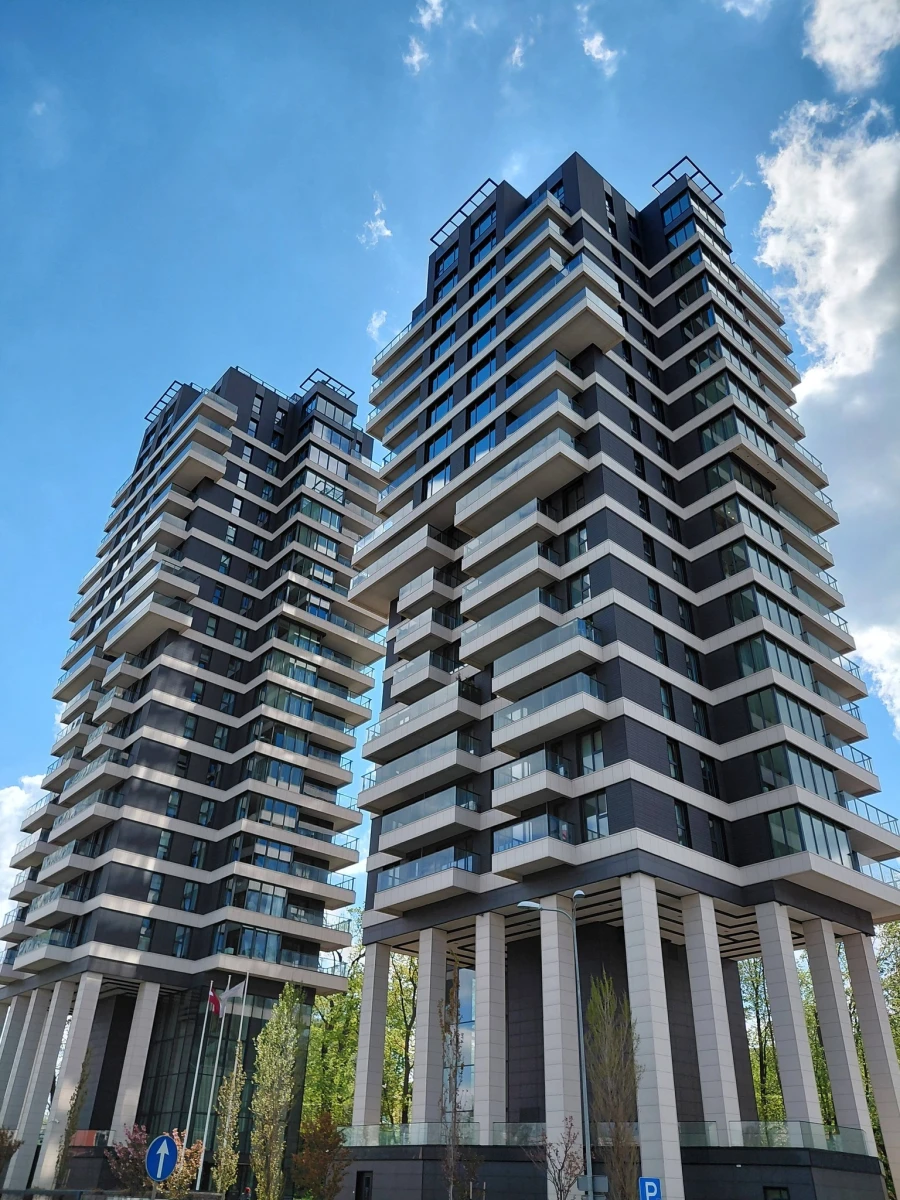
However, the practical implementation of bright plans is being hampered, primarily at the level of the multi-apartment housing stock in Riga. With the transfer of municipal housing management Rīgas namu pārvaldnieks to privatization, the only major player in the market capable of mastering the aforementioned impressive EU funds has been eliminated.
The currently created tenant associations – in fact, consisting of a few hyperactive individuals who can be counted on one hand – face the disagreement of the majority of apartment owners to participate in co-financing projects. In a significant number of apartments in "sleeping" districts, tenants or pensioners live, who for understandable reasons do not look into the year 2050.
Therefore, based on the experience of the author’s home, it can be testified – they did not take a loan from EU funds, but instead used savings to cover the roof with bitumen. It is unlikely, of course, that this will satisfy Ursula von der Leyen, although it is said that the energy emissions from nine-story buildings can even be seen from space.
HOUSING STOCK RENEWAL
Over the last quarter-century, only 7.5% of the apartments in the republic have been built.