In military communication, it is necessary to tell the public the truth about the capabilities and limitations of the armed forces, while also understanding that the public information is being listened to by potential adversaries.
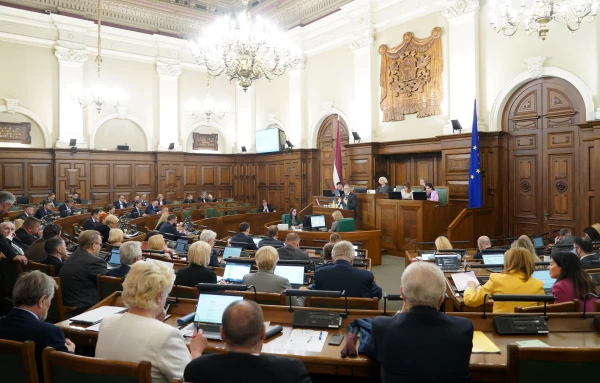
This was stated during a discussion at the Riga StratCom Dialogue conference by the Commander of the National Armed Forces of Latvia, Major General Kaspars Pūce, and the Commander of the Armed Forces of the Netherlands, General Onno Eichelsheim.
Pūce claims that the armed forces in Latvia have long enjoyed a high level of public trust. However, recent events related to drone attacks have tested this trust.
Clarity and honesty play a key role in maintaining the trust of the civilian population in soldiers and officers. At the same time, the Latvian general admitted that it is difficult for the military to disclose all details publicly because it is military secret.
Speaking about instances of drones entering Latvian airspace, Pūce stated that the most challenging task is managing public expectations. According to him, the armed forces must explain what they are capable of doing and what they are not.
In turn, Dutch General Eichelsheim reflected on the fact that public statements create a dilemma, as they may reveal limitations in resources or difficulties in ensuring the country's defense. However, in his opinion, honesty strengthens trust more than claims about the ability to protect everything and everyone when it is practically impossible.
Operation Disinformation
The Director of the NATO Strategic Communications Centre of Excellence, Jānis Sarts, asked the commanders about the need to develop information operations aimed at disinformation against the enemy, as well as the rules for using such capabilities in conditions where the boundary between peacetime and war is blurred.
Eichelsheim acknowledged that such capabilities are necessary, as states seek to influence the enemy as early as possible. However, he explained that the Netherlands is currently not using such tools in the so-called "gray zone," as it is complicated and raises issues of trust in truthful communication.
Pūce, in turn, noted that information operations, cyber capabilities, and offensive cyber operations are also part of the military capabilities that need to be developed. He compared this preparation to the development of long-range artillery, emphasizing that in the information sphere, specialists, narratives, storylines, and target packages also need to be prepared.