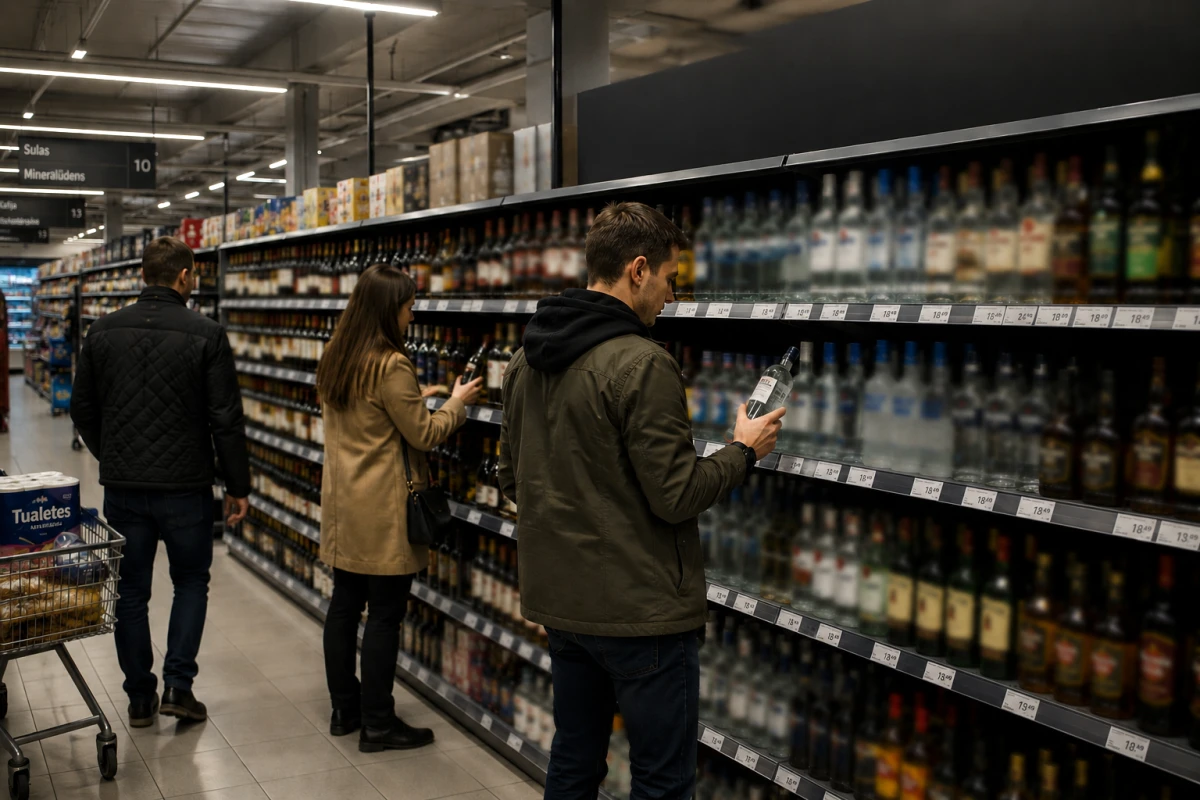
Almost a year after the introduction of restrictions on the sale and advertising of alcohol in Latvia, initial data shows a decrease in the volume of alcoholic beverage sales. However, specialists are not yet ready to unequivocally link this solely to the new rules.
In August, it will be a year since the restrictions on alcohol sales came into effect in Latvia. At that time, the hours for selling alcoholic beverages were reduced, and additional advertising restrictions were introduced. The main question now is whether these measures have affected the actual habits of the country's residents.
According to the Organisation for Economic Co-operation and Development (OECD), Latvia ranked second in Europe in terms of alcohol consumption per capita in 2024, with 11.7 liters per year. The only country with a higher figure was Portugal.
Statistics from the State Revenue Service show that in the first months of this year, the volume of alcohol supplied for consumption in the domestic market has indeed decreased.
Overall, from January to March, the decline was about 5%. A particularly noticeable drop was observed in the beer segment. In January, the sales volume was nearly 19% lower than last year's level, and in February, it was more than 12% lower.
However, by March, the trend changed: beer sales began to rise again and exceeded the figure for the same month last year by almost 4%.
This means that it is premature to speak of a long-term effect of the restrictions. The State Revenue Service emphasizes that several factors are simultaneously influencing the market. In addition to the restrictions on alcohol sales, excise tax rates have increased, along with prices for alcoholic beverages.
Moreover, consumer habits are also changing. Some residents may be switching to other types of alcohol, reducing their consumption, or even abstaining from alcohol altogether.
The Ministry of Health is also currently avoiding definitive conclusions. They note that overall alcohol consumption in the country is indeed showing a decline. According to preliminary data, it has decreased by about 0.5 liters per person, although the final figures may still be adjusted.
To assess the effectiveness of the restrictions, a longer observation period will be required. While specialists see the first signs of reduced consumption, they cannot precisely determine what portion of the changes is specifically related to the new trading rules.
Thus, almost a year after the introduction of the restrictions, it can be said that alcohol sales have decreased; however, the question of whether the actual habits of residents of Latvia have changed remains open.