
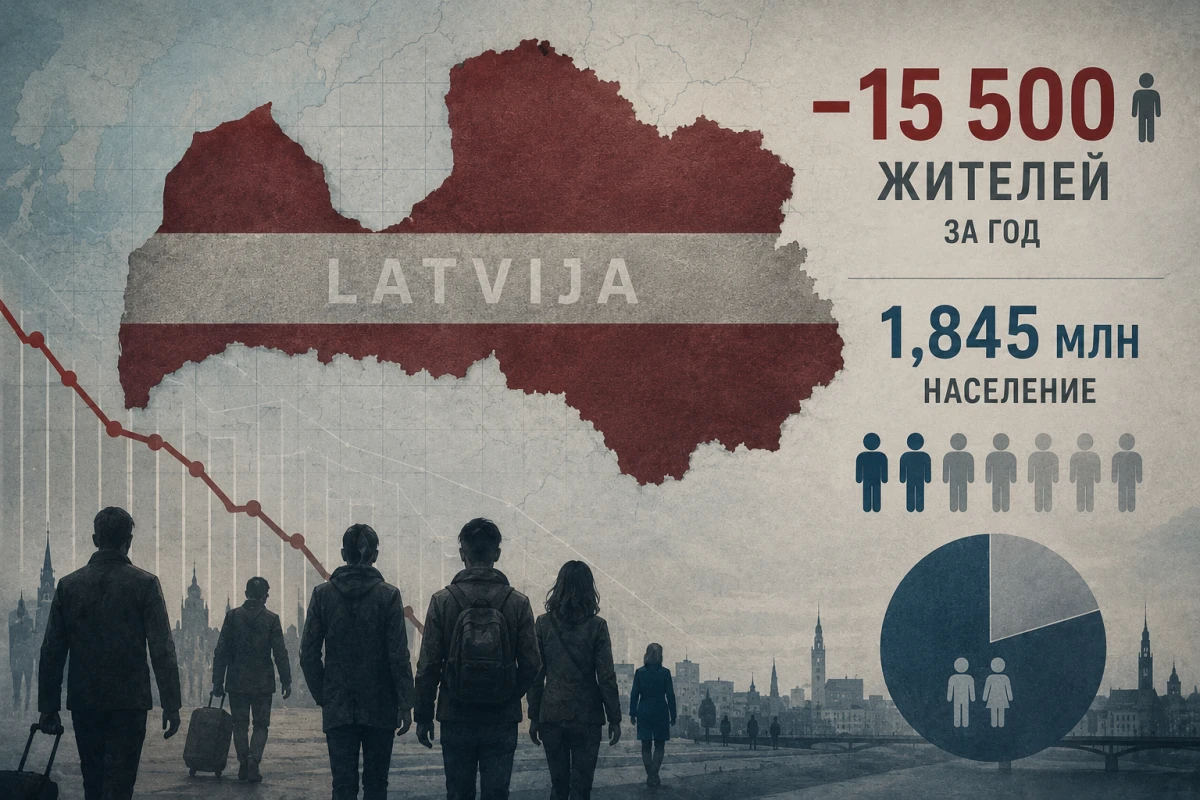
At the beginning of 2026, Latvia had a population of 1.845 million people. The population continued to decline, but the rate of decrease was the lowest in the last three years.
In 2025, the population of Latvia decreased by 15,500 people, or by 0.8%, according to data from the Central Statistical Bureau.
At the beginning of 2026, the country had a population of 1.845 million people.
The main reason for the population decline remains natural decrease. The number of deaths significantly exceeded the number of births again. Over the year, 11,931 children were born in Latvia — almost a thousand fewer than the previous year. At the same time, 26,109 deaths were registered. As a result, the difference between births and deaths reduced the population by 14,200 people.
This means that the demographic situation remains challenging: for every child born, there are more than two deceased residents of the country.
Migration also had an additional impact. Over the year, about 13,800 people arrived in Latvia, while more than 15,100 left the country. Consequently, the negative migration balance amounted to approximately 1,300 people.
However, the migration statistics look significantly better than a year earlier. The number of people leaving decreased by more than 20%, and the overall migration balance was much closer to zero.
More than half of all arrivals — over 7,600 people — were return migrants, meaning residents with ties to Latvia who returned to the country after living abroad.
At the beginning of the year, about 17,200 Ukrainian refugees lived in Latvia. This is slightly fewer than a year earlier.
Population aging continues. Currently, almost every fourth resident of the country is over 65 years old, and the average age of the population has reached 43.7 years. The youngest region remains the Riga region, while the most aged is Latgale.
Interestingly, population growth is still observed in municipalities around the capital. The most noticeable increase in residents occurred in the Marupe municipality. Among large cities, growth was recorded only in Jurmala. In Riga itself, the population decreased by about 6,100 people over the year.
At the same time, the share of Latvians in the population structure continued to grow and reached 63.8%. The share of Russians and Belarusians slightly decreased.
Almost 70% of the country's residents now live in cities, and about half of the total population is concentrated in the Riga region.
Despite the ongoing population decline, data from the past year shows a slowdown in the negative trend. However, the main demographic challenge for Latvia remains low birth rates and an aging society.



Leave a comment