
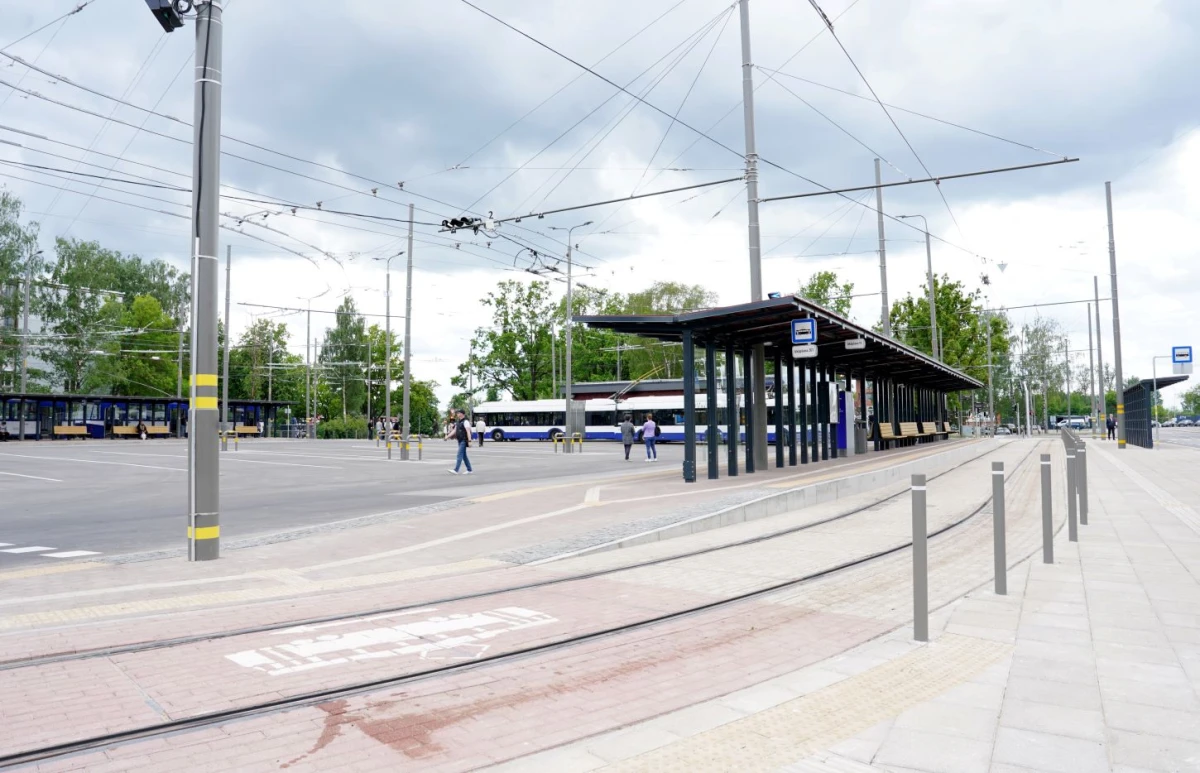
The project was funded by the European Union's Recovery and Resilience Mechanism. The extension of the tram line will improve the accessibility of public transport in Kengarags and make transfers between different modes of transport more convenient and quicker, the municipality noted.
The 7th tram route has been extended by 2.2 kilometers. As part of the project, a mobility hub, a new dispatch building, and the necessary access roads for public transport have been constructed near the intersection of Latgales and Višķu streets. Landscaping work has been carried out on the site, including the installation of spacious canopies, information boards, lighting, and the planting of greenery. Additionally, the 15th trolleybus route has been extended by 300 meters along Višķu Street to the new mobility hub.
Trams on the 7th route, trolleybuses on the 15th route, and buses on the 49th route now stop at the mobility hub.
As noted by the chairwoman of the board of "Rīgas satiksme," Džineta Innusa, the creation of the mobility hub will provide passengers with more freedom in choosing public transport and will change passenger flow, as people will now be able to transfer from the 15th trolleybus to the tram. It is also likely that the overall number of passengers will increase. Based on the company's experience, improvements in public transport infrastructure on existing routes typically lead to an 8-10% increase in passenger numbers.
The head of "Rīgas satiksme" mentioned that the next project could be the construction of a tram line in Skanste, but funding still needs to be secured for it.
The turnover of "Rīgas satiksme" last year, according to preliminary data, amounted to €53.622 million, which is 2.2% more than in 2025, and the company's profit increased to €10.474 million.
"Rīgas satiksme" provides passenger transport in the capital by buses, trams, and trolleybuses, as well as manages parking lots on city streets. The sole owner of the enterprise is the Riga City Council.











Leave a comment