
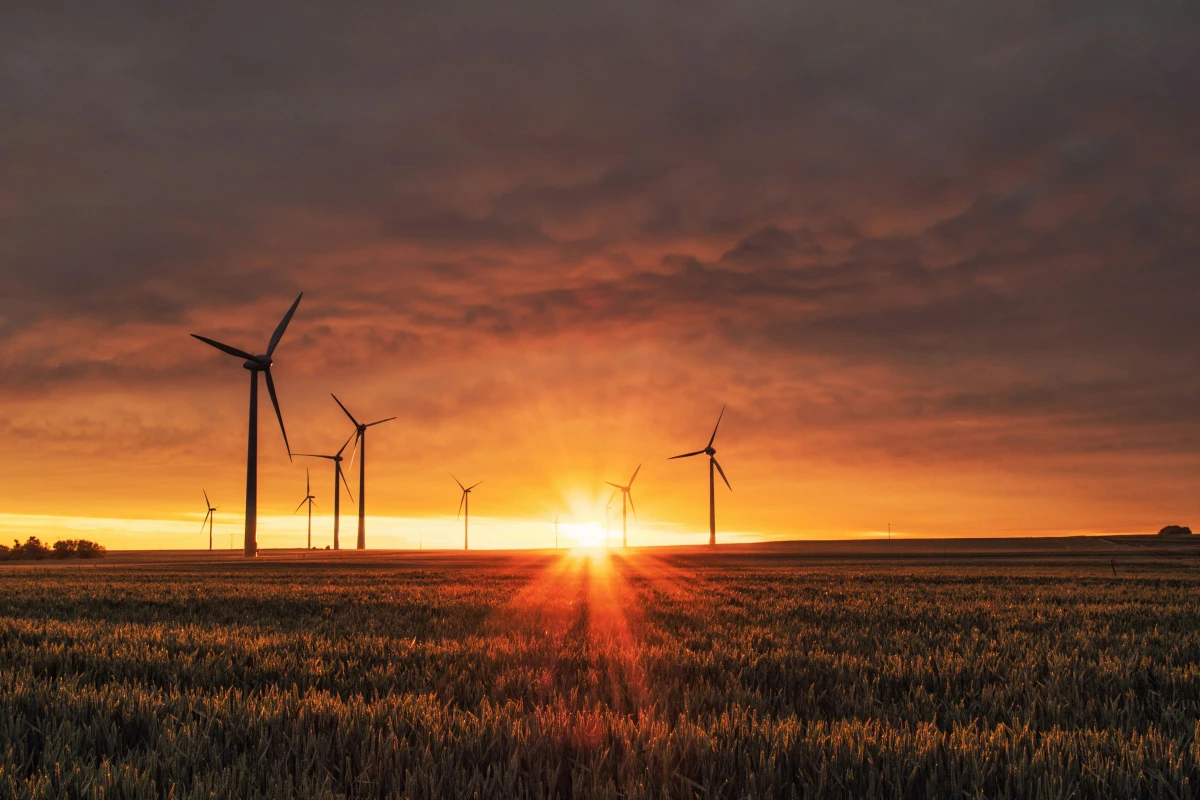
A dispute is brewing in the Jelgava municipality over the construction of a wind farm consisting of 17 turbines. Local residents and farmers have noted that part of the land where the wind turbines are planned to be placed has lost its status as particularly valuable agricultural land, allowing it to be used for the energy project.
On the border of Jelgava municipality and Lithuania, the construction of a wind farm consisting of 17 wind turbines is planned. For landowners, this could become a source of stable income; however, the project has already raised questions among local residents and farmers.
The reason for the dispute is the change in the status of part of the agricultural land.
In Latvia, only about 3% of agricultural land has the status of national significance, reports the program Nekā personīga (TV3). These are the most fertile plots, the use of which for other purposes, including the placement of wind turbines, is restricted by law. Such lands are mainly concentrated in the Jelgava, Bauska, and Dobele municipalities.
However, as it turned out, some plots in the area of the future wind farm have lost this status.
Farmer Renars Butevics stated that until 2021, both the lands he cultivates and the neighboring plots had special status. Now, part of the territory retains restrictions, while part does not, although the quality of the soil, according to him, is practically the same.
New territorial planning maps have shown peculiar "gaps" — certain plots are no longer classified as particularly valuable agricultural land. It is on some of these that the possibility of installing wind turbines is now being considered.
The Ministry of Agriculture and the Ministry of Smart Development and Regional Affairs explain that a change in status is possible based on soil quality assessment. If the indicator falls below the established level, the plot ceases to be considered land of national significance.
The local government asserts that such decisions are not made arbitrarily but based on data from relevant state institutions. However, it turned out to be difficult to establish the exact timelines for changing the status of specific plots.
Additional attention was drawn to the story of one of the major landowners in the region — member of the Jelgava municipal council Uldis Cāune.
According to his declaration, last year he received almost 44,000 euros from Utilitas Wind, the company currently developing the wind farm project. Cāune himself explains that this concerns agreements related to the possible placement of wind turbines on his lands and insists that this does not affect his work in the local government.
The project developer emphasizes that they are not seeking to revoke the protective status of the land and intend to build turbines only where permitted by law. The company also states that the initiative to change the status of certain plots did not come from them.
Meanwhile, public discussions of the project have already begun. Supporters of the construction point to the energy independence of the country, new investments, and annual payments to the local government after the wind farm is put into operation. These funds could be directed towards road repairs, landscaping, and other needs of the local community.
However, some residents believe that information about the project is not provided transparently enough. In particular, there is criticism regarding the fact that the parameters of the future turbines and some details of the project became known only later.
The dispute surrounding the wind farm touches on a broader question: how to reconcile the development of renewable energy with the preservation of Latvia's most valuable agricultural lands. This balance is likely to become the main subject of further discussions.










Leave a comment