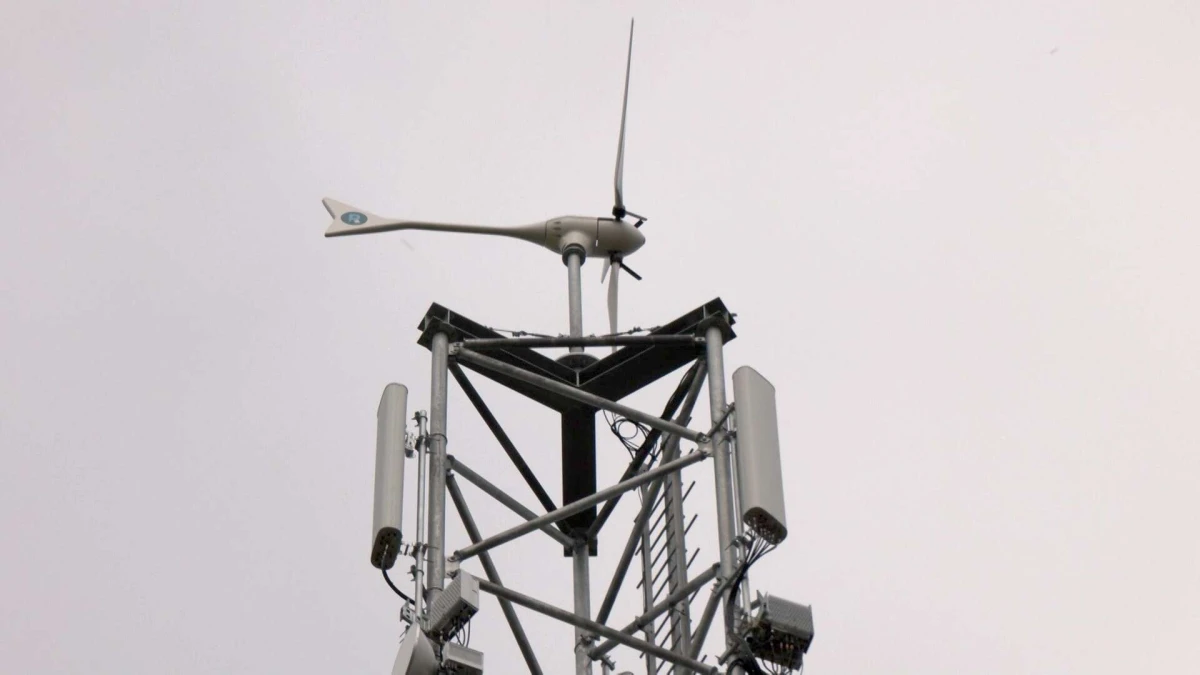
In Latvia, an autonomous mobile communication base station has been tested for several months, capable of operating almost without connection to the power grid. In the event of a crisis, outages, or security threats, such towers can help maintain communication and monitor territories.
In Latvia, testing has begun for an autonomous mobile communication base station that generates most of its energy independently — from solar and wind sources. The project is currently in a pilot phase, but in the future, it may involve the creation of a network of hundreds of such facilities across the country, reports TV3 News.
The main goal of this infrastructure is to ensure communication operates in situations where the regular power grid ceases to function. This is why the project is increasingly viewed not just as a technological experiment, but as part of the civil defense and national security system.
The station model was developed with consideration of the Latvian climate by specialists from the University of Latvia. According to the director of the Institute of Numerical Modeling, Uldis Bethers, during the warm season, the station can operate fully autonomously almost continuously.
In winter, when solar energy decreases, a backup power source is necessary — such as gas, hydrogen, or diesel fuel. Nevertheless, calculations show that such a system can operate reliably in Latvian conditions for many years.
The project is receiving special attention against the backdrop of increasing risks to critical infrastructure. In the event of large-scale power outages, mobile communication is usually also at risk, and it is essential for the operation of services, coordination, and information transmission.
Project participants believe that the capabilities of such towers are not limited to mobile communication alone. They propose placing sensors for detecting drones and airspace monitoring systems on them.
This involves round-the-clock surveillance of specific areas, especially in border regions. According to the developers, the sensors could not only detect objects but could also potentially participate in counter-drone systems, including targeted suppression of GPS signals.
The project is also viewed as an example of shared infrastructure for all communication operators. According to initiative participants, network consolidation could eliminate "blind spots" in coverage and enhance communication resilience in regions.
Elina Egle, chair of the board of the Latvian Security and Defense Industries Federation, believes that the importance of autonomous systems will only grow. She states that this is no longer just about telecommunications or "green energy," but about the state's ability to maintain control and response in crisis situations.
Currently, there is discussion about the possibility of creating more than 600 independent towers across Latvia in the future. This will require cooperation among communication operators, the energy sector, and entities responsible for protecting critical infrastructure.
The pilot project is being implemented with the support of European Union funds.
In the face of new threats, communication resilience is gradually becoming as much a security issue as energy or transportation.